
What an Arm Lift Does and How to Plan for Recovery
An arm lift, or brachioplasty, removes loose upper-arm skin to create a smoother shape. It can help when skin remains after weight loss or has lost firmness with age. Exercise can build muscle, but it cannot remove excess skin. Because an arm lift is surgery, plan for a scar and time to heal.
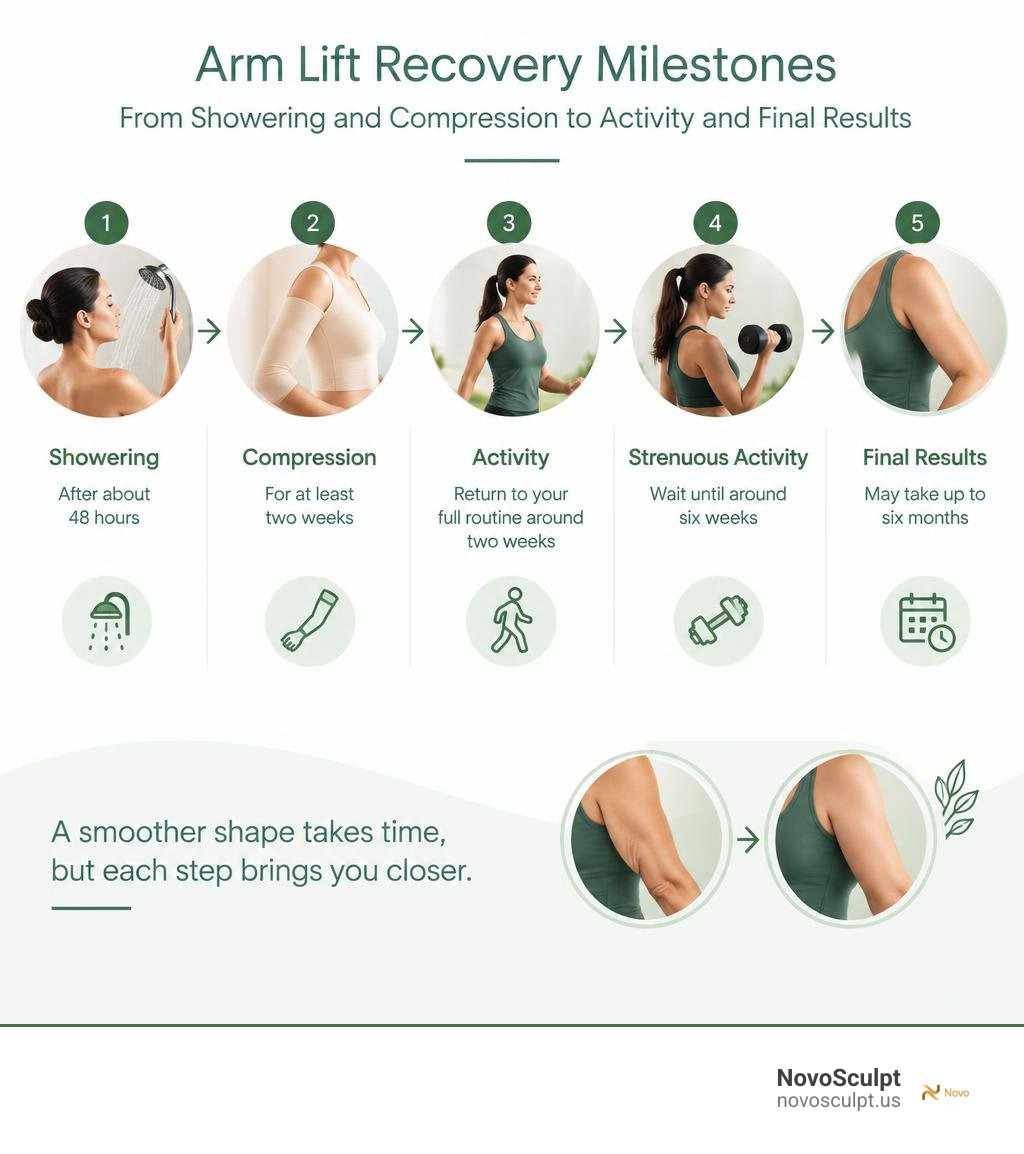
NovoSculpt’s written recovery guidance generally calls for showering after about 48 hours, wearing compression for at least two weeks, returning to full routine activity around two weeks, and waiting until around six weeks for strenuous activity. Follow your surgeon’s instructions if they differ. Final results may take up to six months to develop.
Its only physical location is in Cos Cob/Greenwich, Connecticut; it serves patients from Greenwich, Fairfield County, and nearby Westchester County, New York, without offices in those surrounding areas.
Understanding Brachioplasty: Procedures and Surgical Options
Who Is an Ideal Candidate for an Arm Lift?
Upper arm laxity occurs when skin stretches beyond its biological elasticity point. While regular fitness improves underlying triceps tone, severe skin folds cannot contract on their own. Candidates seeking body contouring for loose skin after massive weight loss or age-related tissue relaxation require a surgical approach.
Ideal candidates share specific health characteristics:
- Stable weight maintained for several consecutive months
- Good general health without uncontrolled medical conditions
- Realistic expectations regarding surgical scarring along the arm
- Non-smokers committed to strict pre- and post-operative protocols
If you are addressing broader skin laxity after weight loss, your surgeon evaluates skin thickness, fat distribution, and lymphatic health to design an effective surgical plan.
Surgical Techniques: Incisions and Liposuction Integration
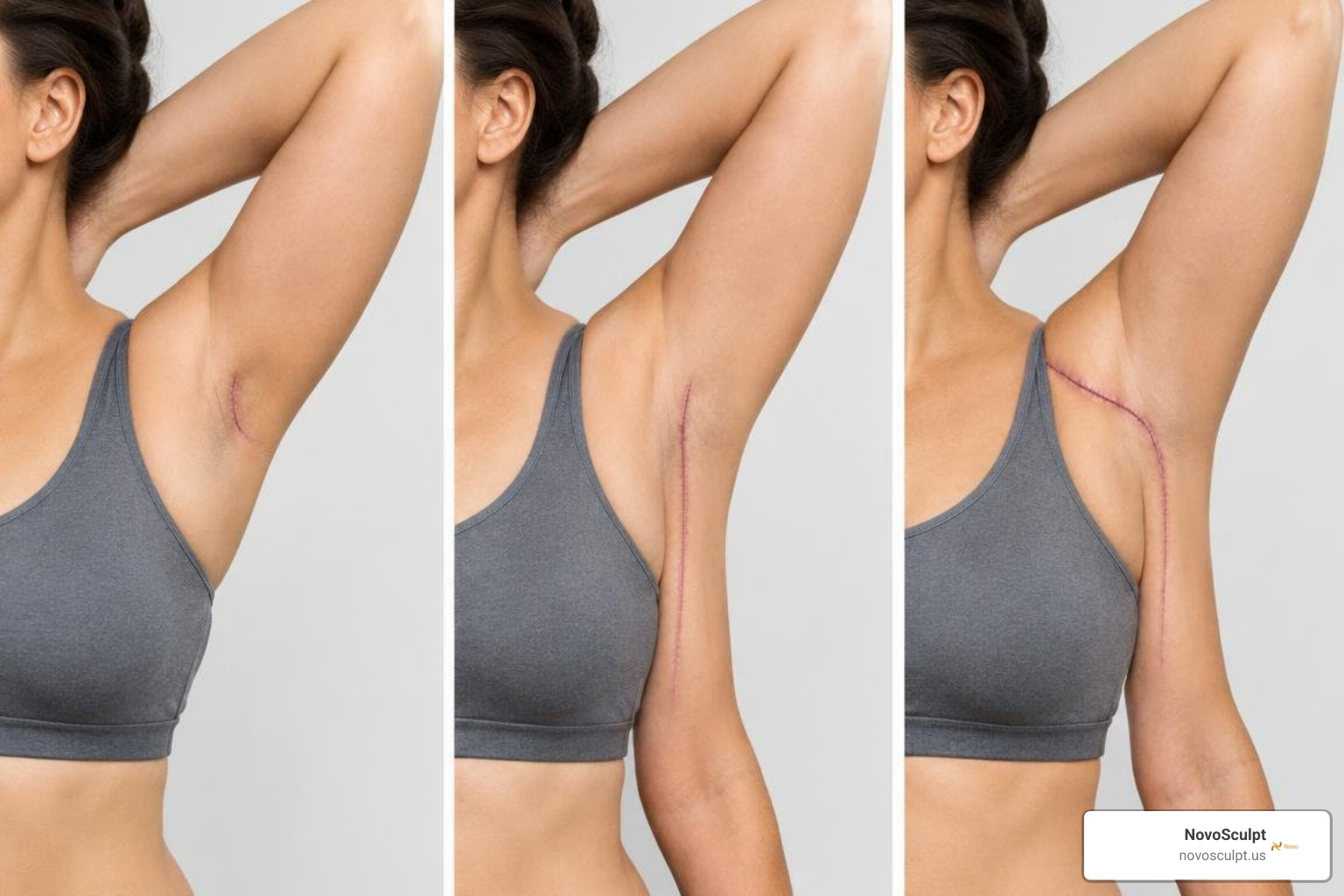
Conventional brachioplasty surgically removes excess skin and may require longer incisions. For selected patients with different anatomical needs, minimally invasive fat removal, skin tightening, or limited skin excision may be considered instead. These approaches do not have identical recovery requirements, and the appropriate plan depends on anatomy and the surgeon’s judgment.
- Axillary Crease Incision (Mini-Arm Lift): A conventional option that may be considered when laxity is limited near the upper arm. The incision is generally placed in the underarm fold.
- Longitudinal Inner Arm Incision (Standard Brachioplasty): A conventional approach that may extend from the armpit toward the elbow to remove more extensive excess skin.
- Combined / Extended Incision: In selected cases, a conventional excisional pattern may extend beyond the underarm when skin laxity involves adjacent areas.
These examples describe conventional brachioplasty options and do not indicate that NovoSculpt routinely offers every technique. A consultation is needed to determine whether excisional surgery, a limited procedure, or a minimally invasive approach is appropriate.
When arm fat removal is considered alongside skin excision, the sequence and extent of treatment depend on tissue quality, fat distribution, skin laxity, and surgeon judgment. It should not be assumed to protect lymphatic structures or reliably reduce incision tension in every case.
| Technique | Incision Placement | Scar Visibility | Best Suited For |
|---|---|---|---|
| Mini-Brachioplasty | Axillary crease (armpit) | Minimal; hidden in fold | Mild laxity near axilla |
| Standard Brachioplasty | Inner arm (axilla to elbow) | Moderate; inner arm line | Moderate to severe skin laxity |
| Extended Brachioplasty | Elbow through axilla to chest | High; extensive line | Massive weight loss; chest laxity |
Preparing for an Arm Lift: Pre-Op Protocols
Medical Preparation and Medication Guidelines
Proper preparation directly influences healing quality and complication rates:
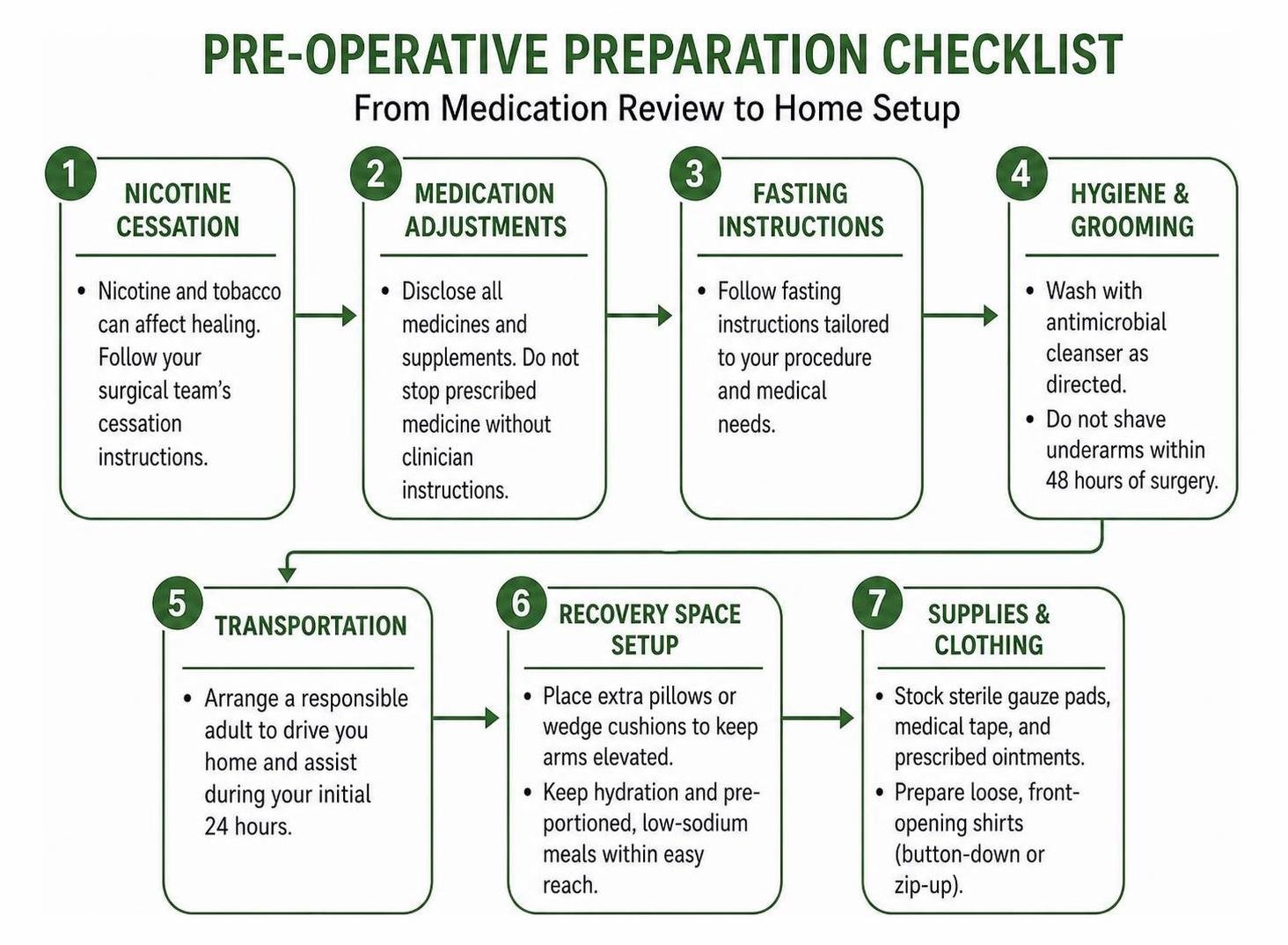
- Nicotine and Tobacco: Nicotine and tobacco use can increase wound-healing complications. Your surgical team will specify the required cessation period before and after your procedure.
- Medications and Supplements: Disclose every prescription medication, over-the-counter medicine, vitamin, herbal product, and supplement. Do not stop prescribed medications unless the prescribing clinician and surgical team direct you to do so.
- Fasting Instructions: Fasting requirements depend on the anesthesia plan, procedure, and your medical circumstances. Follow the specific instructions from your surgical team.
- Hygiene & Grooming: Wash with antimicrobial cleanser as directed. Ask your surgical team whether any grooming restrictions apply before your procedure.
- Transportation: Arrange a responsible adult to drive you home and assist during your initial recovery period if your surgical team advises it.
Home Setup and Post-Operative Supplies
Set up a comfortable recovery station before your procedure day. When planning upper body contouring, organized recovery spaces reduce strain on fresh incisions:
- Place extra pillows or wedge cushions to keep arms elevated above heart level.
- Stock loose, front-opening shirts (button-down or zip-up) to eliminate overhead arm reaching.
- Prepare sterile gauze pads, medical tape, and prescribed ointments.
- Keep hydration and pre-portioned, low-sodium meals within easy waist-height reach.
The Step-by-Step Brachioplasty Recovery Timeline
Days 1 to 14: Initial Healing and Compression Care
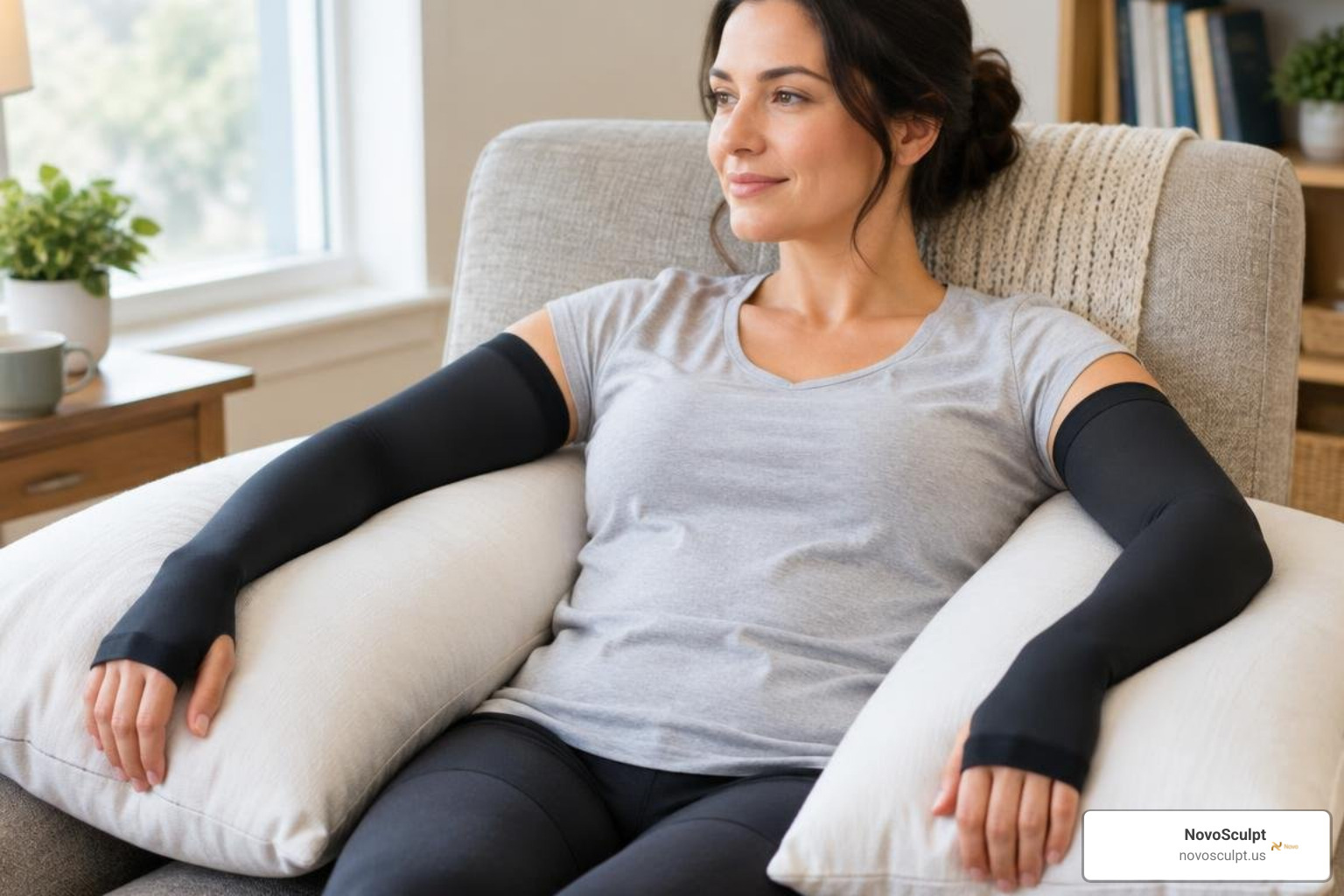
The first two weeks focus on tissue rest, swelling management, and incision integrity.
- Swelling & Bruising: The amount and duration of swelling or bruising vary by procedure and individual healing. Contact your surgical team if symptoms worsen unexpectedly or concern you.
- Compression Therapy: NovoSculpt’s written aftercare guidance generally calls for compression for at least two weeks unless otherwise directed. Compression may help manage postoperative swelling, but it does not guarantee prevention of seromas or other complications.
- Hygiene: NovoSculpt’s written guidance generally allows showering after approximately 48 hours when the surgical team confirms it is appropriate. Gently pat incisions dry without rubbing.
- Mobility: Follow surgeon-specific guidance about walking, arm movement, and activity restrictions. Recovery after conventional excisional brachioplasty may differ from recovery after a minimally invasive arm-contouring procedure.
Weeks 2 to 6: Returning to Routine Activity
By week two, early tissue bridges have formed across the incision margins:
- Work: Return-to-work timing depends on the procedure performed, the nature of your work, and your healing progress. Your surgical team can advise when it is appropriate.
- Range of Motion: Follow individualized instructions about lifting, reaching, and shoulder-level movement, particularly after excisional surgery.
- Swelling Dynamics: Swelling can fluctuate during recovery. Contact your surgical team about increasing swelling, asymmetry, or other unexpected changes.
Resuming Activities and Exercise After an Arm Lift
Full structural healing requires several weeks of steady tissue remodeling:
- Activity Progression: NovoSculpt’s written guidance generally places return to full routine activity around two weeks and strenuous activity around six weeks, according to surgeon guidance. These timelines may differ after conventional excisional brachioplasty or when healing is delayed.
- Gradual Loading: Resume upper-body exercise only when your surgical team clears it, progressing at the pace they recommend.
- Long-Term Maturation: Tissue remodeling can continue for months, and final contour and scar changes vary. Patients considering localized upper arm fat reduction need an individualized assessment to determine whether it addresses their concerns.
Managing Risks, Complications, and Scarring
Surgical Risks and When to Call Your Doctor
Every surgical procedure carries inherent risks. While serious complications are rare, proactive monitoring ensures safe healing:
- Wound Healing: Wound separation, delayed healing, infection, bleeding, seroma, and hematoma can occur and require prompt clinical evaluation.
- Scarring and Revision: Unfavorable scarring or contour concerns may occur, and some patients may need additional treatment or revision surgery.
- Sensory Changes: Numbness, tingling, or altered sensation can improve over time but may occasionally persist.
- Blood Clots: Blood clots are a serious potential surgical complication. Follow your surgical team’s instructions for movement, hydration, and any prevention measures.
- When to Seek Urgent Help: Seek urgent evaluation for chest pain, shortness of breath, fainting, severe or rapidly worsening pain or swelling, heavy bleeding, fever, spreading redness, unusual drainage, or other concerning symptoms. Contact your surgical team promptly for questions about your recovery.
Scar Progression and Long-Term Tissue Care
Understanding scar maturation helps maintain realistic expectations throughout healing:
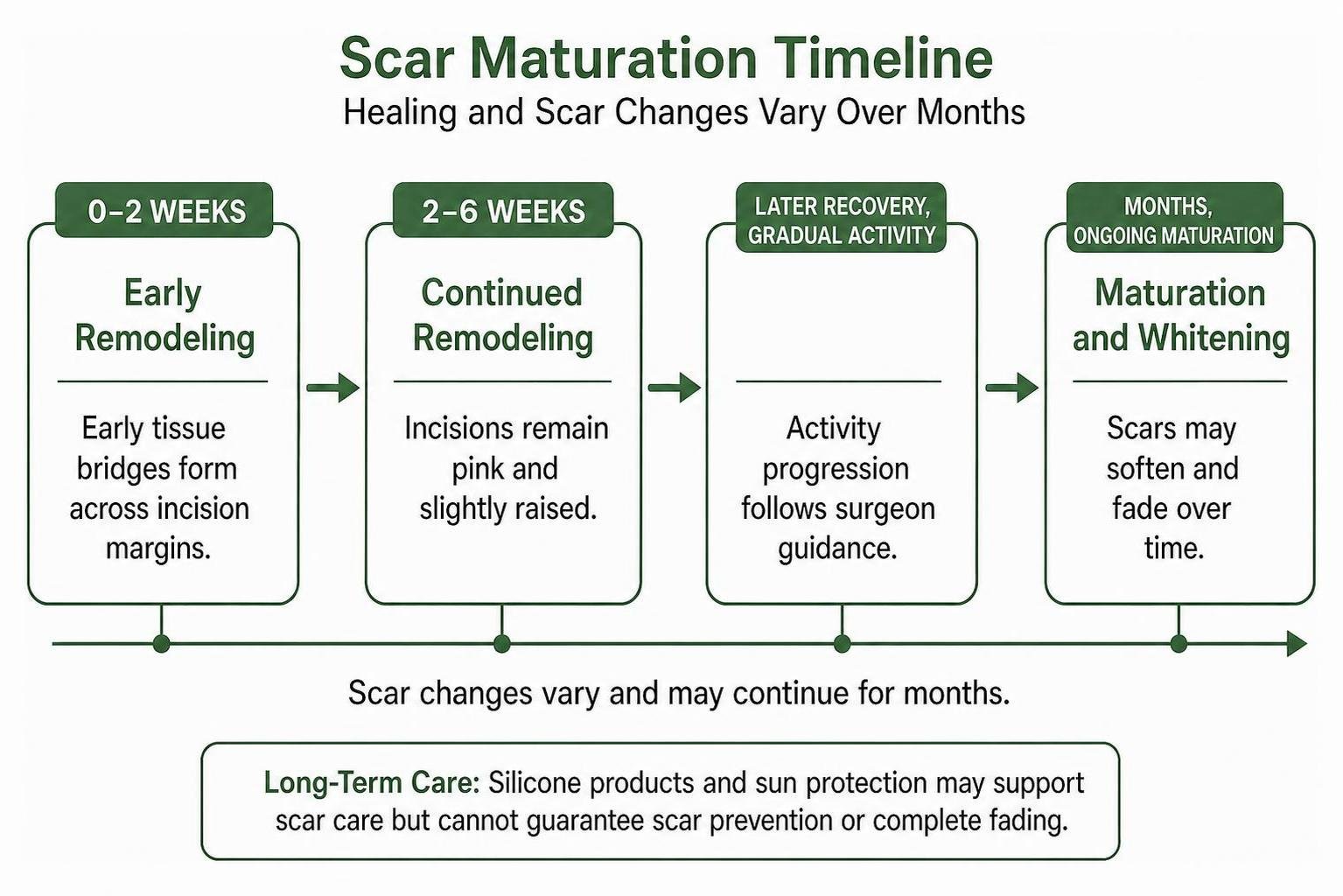
Incisions may remain pink, firm, or raised during early recovery, and scar maturation varies widely. Scars often continue changing for months, but no timeline can guarantee complete fading or flattening. Once incisions have fully closed, silicone sheeting or gels and sun protection may support scar management, but they cannot guarantee scar prevention or eliminate discoloration. Understanding the complete treatment plan and arm lift cost factors can help you budget for the procedure and recommended post-care supplies.
For broader medical insights on procedure variants, review the Cleveland Clinic brachioplasty guide.
Frequently Asked Questions About Upper Arm Surgery
Can exercise substitute for surgical arm skin removal?
Exercise builds underlying muscle tissue (such as the biceps and triceps), which can improve firmness. However, workouts cannot eliminate redundant skin folds caused by substantial weight reduction or aging. Surgical excision remains the only method to remove excess skin.
How long does post-operative arm numbness last?
Numbness or altered sensation near an incision can occur after surgery. Sensory changes may improve gradually, but the pace of recovery varies and some changes may persist. Contact your surgical team if symptoms are severe, worsening, or concerning.
Will arm lift surgery be covered by insurance?
Cosmetic brachioplasty is generally not covered by insurance. Coverage for medically necessary skin removal may vary by insurer, plan terms, clinical documentation, and prior-authorization requirements. Your insurer can explain the criteria that apply to your policy.
Conclusion
A successful recovery requires patience, appropriate compression when prescribed, and careful activity modification. Your procedure plan, expected recovery, and clinician qualifications should be reviewed directly with the surgical team. Facility accreditation and individual physician qualifications are distinct matters and should be verified independently when relevant.
Our sole physical location is based in Cos Cob/Greenwich, Connecticut, welcoming patients throughout Greenwich, Fairfield County, and nearby Westchester County, New York. To explore upper arm reshaping options tailored to your body, schedule a personalized awake arm contouring consultation with our surgical team today.
