
By Roberto Magana, BSc, MBA, CEO, NovoSculpt | Last Updated: October 5, 2026
Disclaimer: This guide is provided for educational purposes only and does not constitute individualized medical advice. Always consult your treating physician for specific postoperative instructions tailored to your health and surgical plan.
Quick Answer: Common early recovery symptoms include swelling, bruising, soreness, fluid drainage, and temporary numbness. These symptoms often improve gradually over the following weeks, while residual swelling, firmness, and contour changes may continue to evolve for several months; recovery varies by patient and the areas treated.
Liposuction recovery follows a structured physiological healing process: immediate fluid drainage and acute inflammation give way to tissue remodeling, cellular fluid reabsorption, and progressive skin retraction. While each patient heals at an individualized pace depending on the volume of tissue treated, individual vascularity, and overall health, understanding standard clinical milestones provides reassurance and structure. Tracking your day-by-day body sculpting recovery helps clarify which symptoms are normal responses to surgery and which require clinical evaluation.
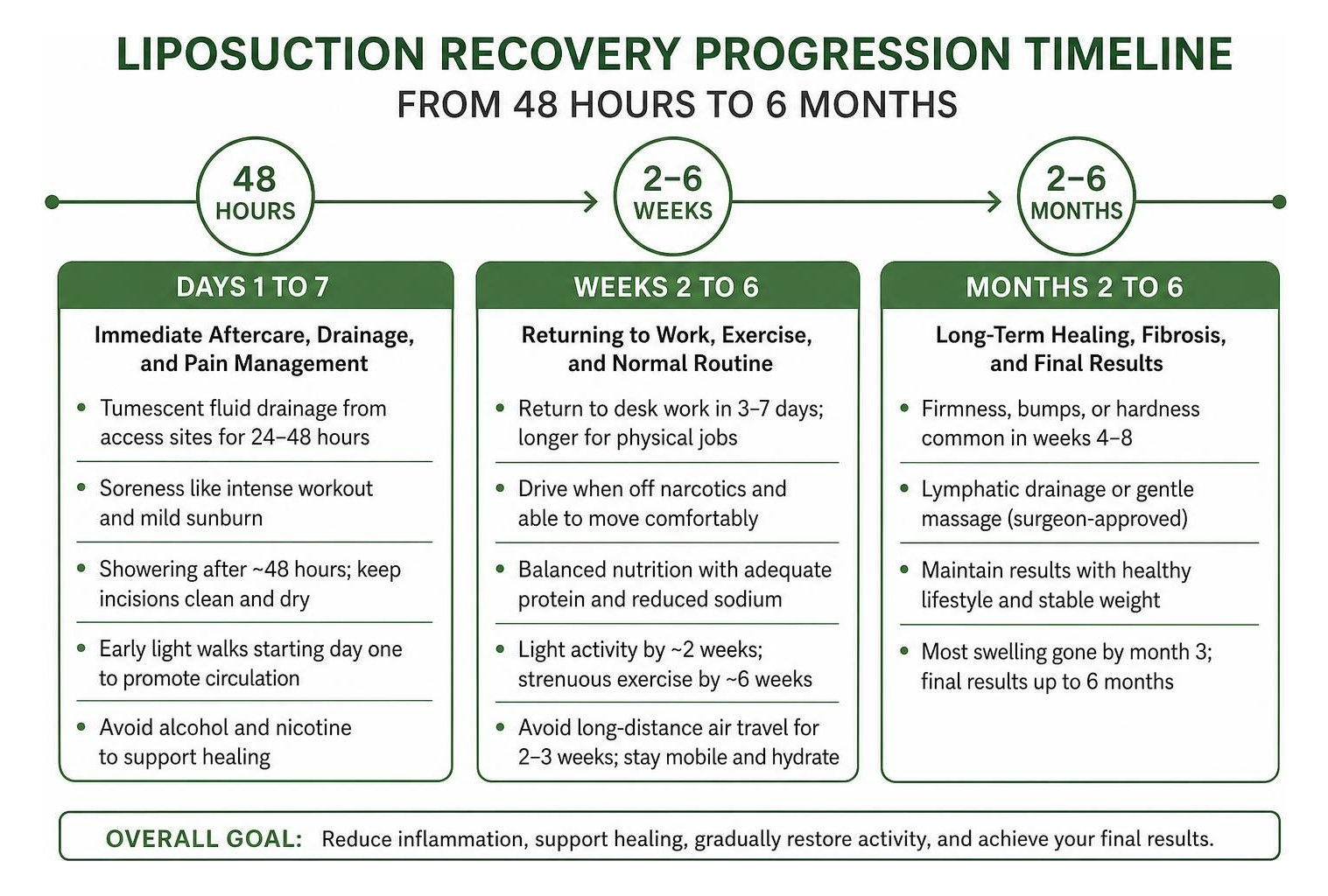
Days 1 to 7: Immediate Aftercare, Drainage, and Pain Management
The first week focuses on physical rest, managing fluid drainage, and controlling initial tissue inflammation:
- Tumescent Fluid Drainage: During the first 24 to 48 hours, pinkish or blood-tinged fluid commonly drains from tiny access sites. It often contains residual tumescent solution mixed with a small amount of blood. Sterile absorbent pads placed beneath a compression garment may help manage this expected drainage, but persistent heavy bleeding warrants prompt clinical attention.
- Soreness and Discomfort: Patients often describe soreness as similar to an intense muscular workout combined with mild sunburn. Reviewing standard abdominal liposuction recovery steps may help set realistic expectations for managing core stiffness. A physician may prescribe medication to manage discomfort during the first few days.
- Hygiene and Incision Care: General clinical protocols, as well as NovoSculpt’s written postoperative guidance, may permit gentle showering after approximately 48 hours once initial drainage has peaked. Avoid submerging treated areas in bathtubs, hot tubs, or pools until incisions have healed, and keep access sites clean, dry, and dressed according to your surgeon’s directions.
- Early Light Ambulation: While strenuous exercise is restricted, brief, gentle walks around the home are commonly encouraged beginning on day one when the treating clinician approves. Early movement may support circulation and can be part of an individualized strategy to reduce clot risk.
- Substance Considerations: Clinicians commonly advise avoiding nicotine and alcohol during the perioperative and healing periods. Nicotine may impair tissue oxygenation and wound healing, while alcohol may contribute to dehydration or interact with postoperative medications. Discuss specific timing and cessation support with your physician.
Weeks 2 to 6: Returning to Work, Exercise, and Normal Routine
By the second week, acute soreness typically subsides significantly, though variable swelling and internal tissue stiffness remain:
- Returning to Work and Daily Activities: Some patients with sedentary jobs may return within several days, while others need more time depending on the treatment extent, discomfort, and work demands. Work involving heavy lifting, prolonged standing, or repetitive movement may require additional recovery time.
- Driving Clearance: Resume driving only after you have stopped prescription narcotic pain medication and can brake, turn, and react comfortably in an emergency. Your surgeon can provide individualized guidance.
- Nutrition and Healing: Adequate calories, protein, and hydration may support recovery. Following balanced post-procedure nutrition guidance may also help patients maintain routines that support healing.
- Small-Area vs. Extensive Treatments: Recovery often varies with the total surface area treated. Patients recovering from isolated procedures, such as chin liposuction, may return to social routines sooner than those recovering from more extensive abdominal or lower-body contouring.
- Physical Activity Resumption: Under NovoSculpt’s written postoperative guidance, many patients may return to full everyday activity around two weeks. Strenuous activity, heavy weightlifting, and vigorous cardiovascular training are commonly delayed until around six weeks, subject to surgeon guidance.
- Travel Planning: Discuss non-essential long-distance travel or flights with your surgeon. Timing varies with individual healing, treated areas, and clot-risk factors, and may include guidance on hydration and periodic movement during travel.
Months 2 to 6: Long-Term Healing, Fibrosis, and Final Results
Long-term healing involves internal structural repair and progressive tissue softening:
- Temporary Firmness and Tissue Remodeling: Between weeks 4 and 8, some patients may feel firm, bumpy, or hard areas beneath the skin. This can reflect temporary swelling, inflammation, and ongoing tissue remodeling. Firmness often softens over the following months, but the pace varies by patient.
- Lymphatic Massage: Some surgeons may recommend lymphatic drainage massage or gentle home massage for selected patients when it is appropriate and specifically cleared. It is not a universal requirement, and the approach should follow the treating surgeon’s instructions.
- Maintaining Results: Liposuction removes fat cells from treated areas, but remaining fat cells may enlarge with weight gain. Long-term habits described in maintaining body-contouring results may support more stable contours.
- Final Contour Changes: Visible swelling often improves over the first few months, although lower-grade swelling and subtle skin retraction may continue to change for up to six months or longer in some patients. NovoSculpt’s written guidance recognizes that final benefits may take up to six months.
Managing Common Side Effects and Post-Operative Symptoms
Quick Answer: Common post-liposuction side effects include temporary fluid-retention weight gain, ecchymosis (bruising), asymmetrical swelling, and subcutaneous firmness, all of which are expected physiological responses that gradually resolve during recovery.
- Temporary Fluid-Retention Weight Gain: It is common to step on the scale several days post-surgery and find that you temporarily weigh more than you did before the procedure. This is caused by retained tumescent fluid and inflammatory edema. As your lymphatic system flushes this excess fluid, scale weight gradually returns toward baseline.
- Bruising Resolution: Ecchymosis (bruising) typically peaks within the first 72 hours and gradually shifts from dark purple/blue to greenish-yellow before clearing over 2 to 4 weeks in most patients.
- Asymmetrical Swelling: Swelling rarely resolves symmetrically. One side of the body may remain more swollen or feel firmer than the other due to sleeping positions, minor procedural variations, or individual lymphatic drainage patterns.
- Skin Retraction: Skin retraction relies on underlying dermal elasticity and healthy collagen remodeling, a process thoroughly detailed in peer-reviewed clinical literature on liposuction safety and aftercare published by the American Society of Plastic Surgeons.
Normal Healing Symptoms vs. Potential Complications
Understanding expected postoperative symptoms and warning signs may help patients know when to contact their surgical team.
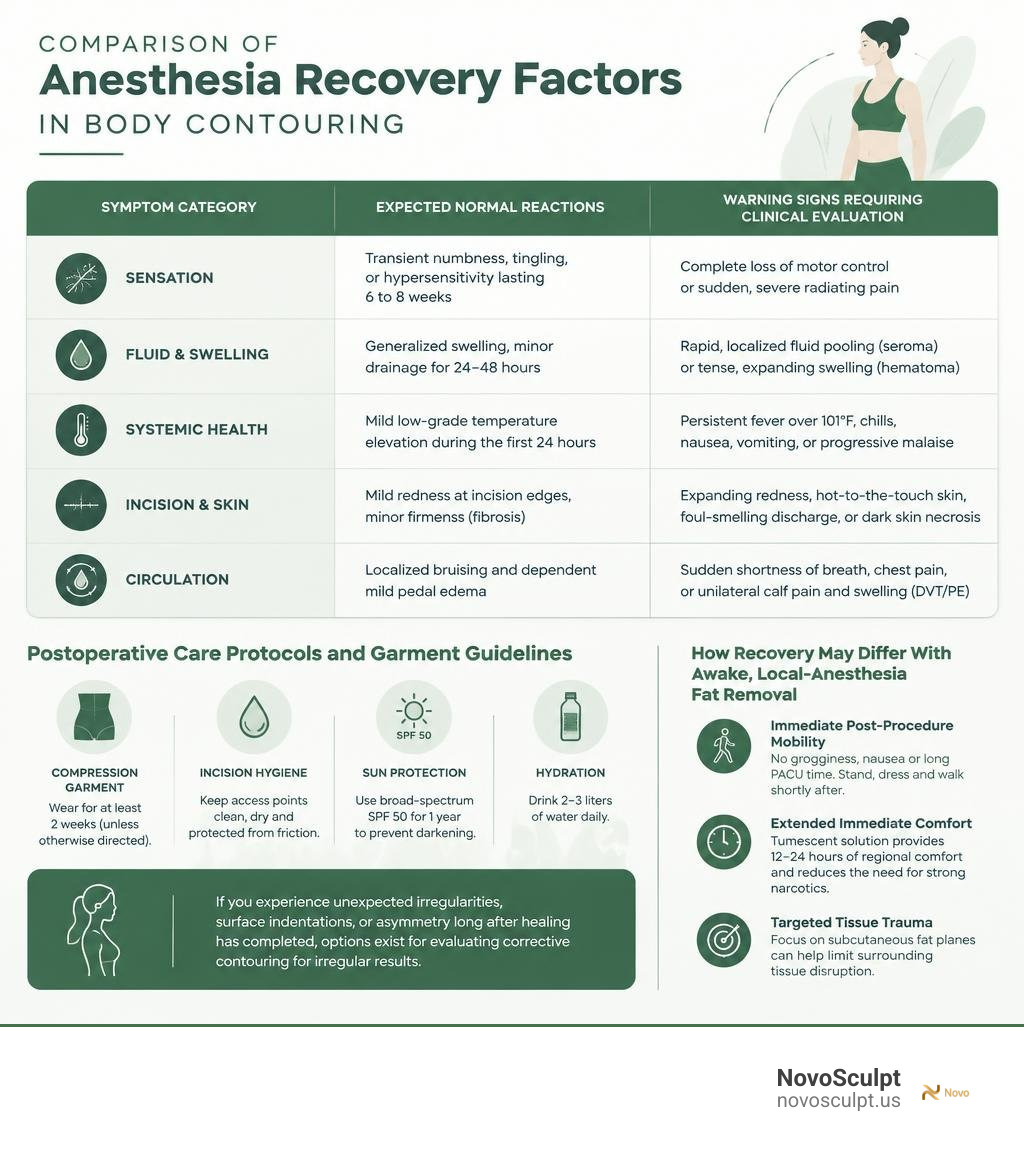
| Symptom Category | Expected Normal Reactions | Warning Signs Requiring Clinical Evaluation |
|---|---|---|
| Sensation | Transient numbness, tingling, or hypersensitivity typically improving over 6 to 8 weeks | Complete loss of motor control or sudden, severe radiating pain |
| Fluid & Swelling | Generalized swelling, minor drainage for 24–48 hours | Rapid, localized fluid pooling (seroma) or tense, expanding swelling (hematoma) |
| Systemic Health | Mild low-grade temperature elevation during the first 24 hours | Persistent fever over 101°F, chills, nausea, vomiting, or progressive malaise |
| Incision & Skin | Mild redness at incision edges, minor firmness (fibrosis) | Expanding redness, hot-to-the-touch skin, foul-smelling discharge, or dark skin necrosis |
| Circulation | Localized bruising and dependent mild pedal edema | Sudden shortness of breath, chest pain, or unilateral calf pain and swelling (DVT/PE) |
If you experience unexpected irregularities, surface indentations, or asymmetry long after healing has completed, options exist for corrective body contouring to help restore balanced contours.
Postoperative Care Protocols and Garment Guidelines
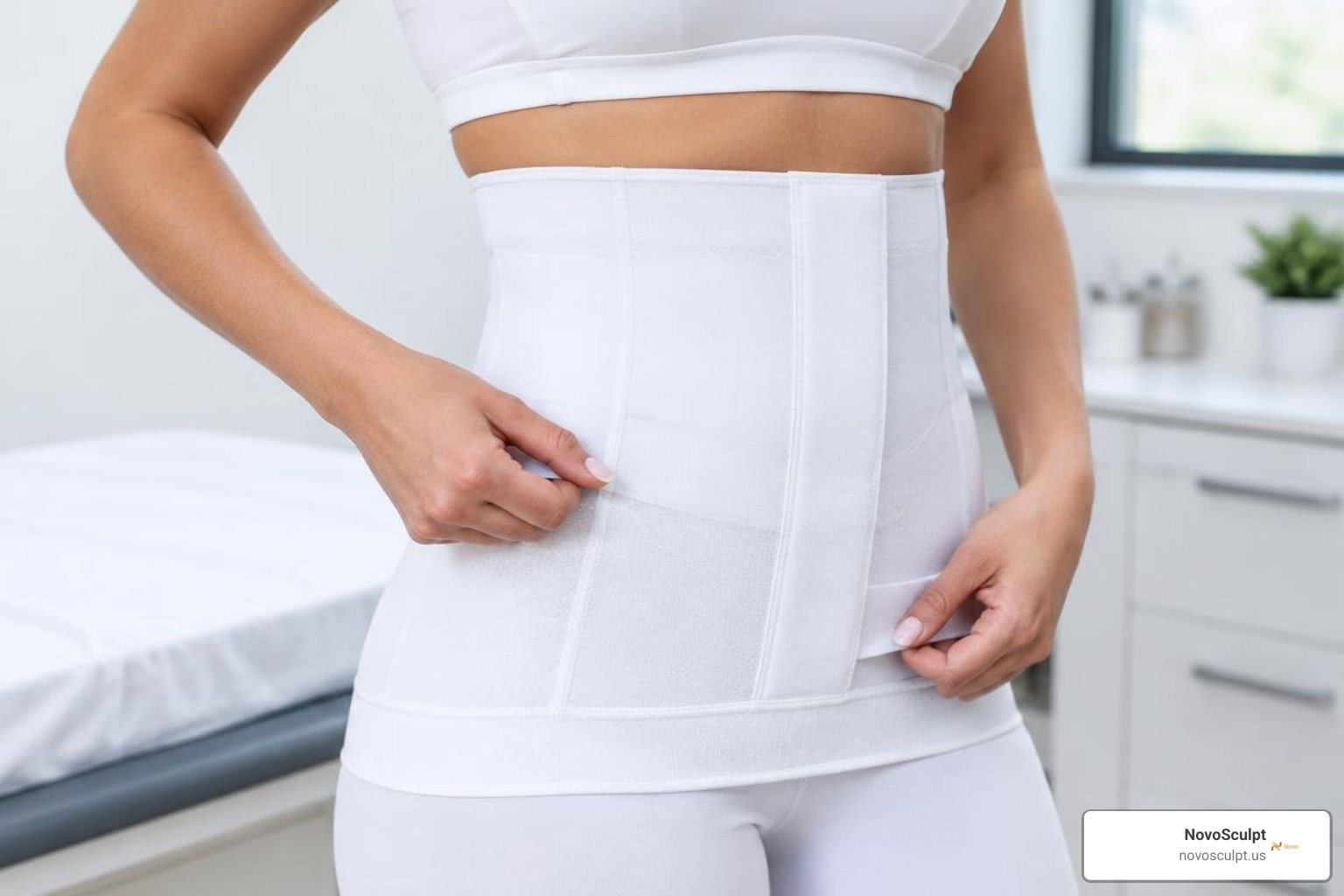
Wearing a medical-grade compression garment serves several essential purposes: it stabilizes healing tissues, reduces subcutaneous dead space, limits fluid collection, and supports skin retraction.
Under NovoSculpt’s standard written postoperative instructions, patients wear compression for at least two weeks unless otherwise directed by their surgeon. General surgical recommendations may vary slightly depending on the treatment area and total volume removed.
In addition to compression, proper incision hygiene is vital. Keep all access points clean, dry, and protected from friction. Protect maturing scars from ultraviolet sun exposure for up to a full year using broad-spectrum sunscreen or physical coverings to minimize hyperpigmentation risk. Stay well hydrated by drinking adequate fluids daily to assist your body during recovery.
How Recovery May Differ With Awake, Local-Anesthesia Fat Removal
Quick Answer: Awake, local-anesthesia fat removal utilizes tumescent local anesthesia directly in targeted fat deposits, which may allow certain patients to begin early ambulation without post-general anesthesia grogginess, though recovery experiences vary and general anesthesia remains a standard approach, particularly for larger-volume or multi-area surgeries.
Surgical fat removal techniques and recovery timelines are closely tied to the anesthesia method utilized during the procedure. The choice of anesthesia depends on the specific procedure, patient anatomical considerations, volume of tissue to be treated, and physician clinical judgment. Both general anesthesia and awake local tumescent anesthesia are well-established approaches in modern plastic surgery.
Published medical literature describes the tumescent technique as using diluted local anesthetic and epinephrine within targeted fat deposits. This approach may provide localized anesthesia and vasoconstriction, but the appropriate technique and medication plan depend on the procedure and the treating physician.
At NovoSculpt, our practice focuses specifically on physician-led, minimally invasive fat removal and body contouring performed entirely while the patient remains awake under local tumescent anesthesia.
Recovery Factors With Awake Local-Anesthesia Fat Removal
- Post-Procedure Mobility: In awake procedures using local tumescent anesthesia without general anesthesia, recovery monitoring requirements differ. Some patients may mobilize relatively early after clinical evaluation, but every patient needs individualized assessment before discharge and activity resumption.
- Local Anesthetic Duration: Tumescent local anesthetic solutions containing lidocaine may provide temporary localized numbness that gradually diminishes over several hours. Immediate comfort, pain medication needs, and recovery experiences vary by patient.
- Targeted Anatomical Approach: When performed by appropriately trained and qualified physicians, awake localized procedures focus on targeted subcutaneous fat planes. Careful technique and attention to anatomy remain important across all surgical approaches.
- Patient Selection and Scope: Awake local-anesthesia fat removal may be appropriate for selected single- or multi-area treatments. The anesthesia plan depends on treatment extent, anticipated volume, medical history, anatomy, patient tolerance, and physician judgment.
Frequently Asked Questions About Liposuction Recovery
How long does swelling and numbness last after liposuction?
The most noticeable swelling often improves during the first 4 to 6 weeks, though subtle residual edema may persist for several months. Localized numbness, tingling, or heightened surface sensitivity can occur after temporary irritation of small sensory nerves during cannula passes. Sensation commonly improves gradually, but timing varies by patient and should be discussed with the surgical team if symptoms are worsening or persistent.
When can I drive, travel, and resume intense exercise?
You may resume driving once you are completely off prescription narcotic pain medications and have full physical mobility to brake and turn without hesitation (often within 3 to 7 days for focused procedures).
For physical fitness, light walking begins immediately, while a return to full everyday activity occurs around two weeks. Strenuous activity, heavy resistance training, and high-impact sports should generally be postponed until around six weeks, following explicit clearance from your surgeon.
Travel plans, including air travel, should be discussed with your surgeon so individual recovery progress and circulation factors can be evaluated before departure.
Why do I weigh more immediately after surgery?
Experiencing a temporary increase on the scale during the initial postoperative days is common. During the procedure, tumescent fluid (a sterile saline solution containing local numbing agents and epinephrine) is infused into the targeted fat layers.
Although a substantial portion of this fluid is removed along with the aspirated fat during suctioning, residual fluid remains in the tissues. Combined with the body’s natural inflammatory healing cascade—which sends healing fluids and white blood cells to the treated zones—this retained volume results in temporary water weight gain. The scale will normalize over the subsequent weeks as your lymphatic system clears this fluid.
Conclusion
Understanding what to expect during your liposuction recovery allows you to navigate every milestone with confidence and clarity. While acute swelling, mild soreness, and the need for compression are standard across body contouring techniques, adhering to structured aftercare guidance helps support a safer, more predictable healing process.
NovoSculpt is a physician-led practice focused on minimally invasive, awake fat removal and body contouring under local anesthesia at its Cos Cob/Greenwich, Connecticut facility. The practice serves patients from Greenwich, Fairfield County, and nearby Westchester County, New York.
For additional details on our minimally invasive body-sculpting procedures and aftercare recommendations, explore our frequently asked questions about body contouring or reach out to our clinical team to arrange an individualized consultation.
Medical References
The following sources provide general background for the recovery information in this guide. They do not replace individualized postoperative instructions from a treating clinician.
- Chia CT, Neinstein RM, Theodorou SJ. Evidence-Based Medicine: Liposuction. Plastic and Reconstructive Surgery. 2017;139(1):267e-274e.
- Halk AB, Habbema L, Genders R, et al. Safety studies in the field of liposuction: a systematic review. Dermatologic Surgery. 2019.
- American Society of Plastic Surgeons. Liposuction safety.
- Cleveland Clinic. Liposuction: What It Is, Surgery, Recovery & Results.
