
Chin Liposuction Recovery: Timeline & What to Expect
Chin liposuction removes localized subcutaneous fat beneath the chin and, when appropriate, along selected portions of the jawline through small access sites. Chin liposuction recovery commonly includes swelling, tenderness, tightness, bruising, numbness, or temporary firmness. Compression may be recommended, and some people resume light routine activity relatively soon, but recovery varies by treatment extent, anatomy, individual healing, and the surgeon’s postoperative instructions.
Visible contour changes can appear before swelling has fully resolved. The chin, jawline, and neck may continue to change as swelling subsides and tissues settle over the following weeks and months. Your surgical team should tell you what is expected for your procedure and when to contact them about symptoms or concerns.
A double chin is not always related to body weight. Genetics, fat distribution, skin elasticity, chin projection, neck anatomy, and aging can all influence the profile seen in photographs, video calls, and daily life. This guide explains what chin liposuction recovery can involve, what the procedure addresses, and why an individualized evaluation matters.
What Is Chin Liposuction and What Does It Remove?
Chin liposuction, also called submental liposuction or chin fat removal, is a surgical method for physically removing selected areas of localized subcutaneous fat beneath the chin. It may be considered when fullness is primarily related to superficial fat and the person’s skin quality and underlying facial structure are appropriate for treatment. A consultation evaluates the chin, jawline, neck, skin, and overall facial proportions before a procedure is recommended.
For appropriately selected patients, small access sites allow a fine cannula to reach localized subcutaneous fat beneath the chin and along selected portions of the jawline. The surgeon removes targeted fat while contouring transitions according to the patient’s anatomy. Chin liposuction does not address every source of lower-face or neck fullness; broader double-chin surgery options can include treatments for fat, skin laxity, or deeper structures. Cleveland Clinic’s overview of double chin surgery explains why the appropriate approach depends on the condition being treated.
Superficial and Deeper Neck Anatomy
The platysma is a thin muscle layer in the neck that helps separate superficial subcutaneous tissue from deeper structures. Superficial, or pre-platysmal, fat is commonly relevant to submental liposuction. Deeper fullness may instead involve deeper fat compartments, platysmal anatomy, submandibular structures, skin laxity, chin projection, or other anatomical factors.
This distinction is important because deeper neck fullness has different anatomical considerations and may require a different treatment approach than superficial subcutaneous fat. A clinical evaluation determines whether visible fullness is amenable to superficial fat removal and whether complementary treatment should be discussed.
Is Chin Liposuction Performed Awake?
For appropriately selected patients, chin liposuction or direct submental fat removal may be performed under local tumescent anesthesia. Tumescent solution commonly contains a carrier solution, a local anesthetic such as lidocaine, and epinephrine when clinically appropriate; epinephrine can help constrict blood vessels.
Once adequate local anesthesia has been achieved, the patient may remain awake while the surgeon performs minimally invasive fat removal. Avoiding general anesthesia means avoiding exposure to the risks, physiologic effects, nausea, grogginess, and recovery associated with general anesthesia itself. It does not make the procedure risk-free or mean local anesthesia is the best option for every patient or procedure. The American Society of Plastic Surgeons describes key candidacy factors for double-chin liposuction, including fat distribution, skin quality, and facial anatomy.
Who Is a Good Candidate for Chin Liposuction?
A person may be a candidate for chin and neck contouring when they are in good general health, have localized submental fat, are near a stable weight, and have skin quality and facial anatomy that may respond appropriately to fat removal. Chin liposuction can support a smoother transition between the chin, jawline, and neck, but it does not automatically create the same jawline shape for every person.
Skin Elasticity and Structural Considerations
Results depend on the amount and location of fat, skin elasticity, degree of skin laxity, chin projection, jaw structure, platysmal anatomy, treatment extent, and individual healing. When the chin is recessed or the jawline lacks structural projection, fat removal alone may not fully address the profile. Likewise, substantial skin laxity or platysmal banding can affect how the neck appears after fat removal.
Why Facial Proportions Matter in Chin and Jawline Contouring
Individual planning should account for chin projection, mandibular width, jawline shape, submental fat distribution, skin elasticity, neck angle, facial width, and surrounding soft-tissue proportions. The goal is to preserve facial harmony rather than pursue one standardized jawline. A careful assessment can help distinguish a fat-related concern from a structural or skin-related concern.
What Can Chin Liposuction Not Correct?
Fat removal alone may not fully correct substantial loose skin, significant platysmal banding, a weak or recessed chin, deeper neck fullness, prominent submandibular structures, or every cause of limited jawline definition. Identifying the anatomical cause of a profile concern is an essential part of treatment planning.
What Is the Chin Liposuction Recovery Timeline?
Knowing what to expect during chin liposuction recovery can make it easier to plan for time away from strenuous activity and follow-up care. Your own postoperative instructions take priority over general online guidance.
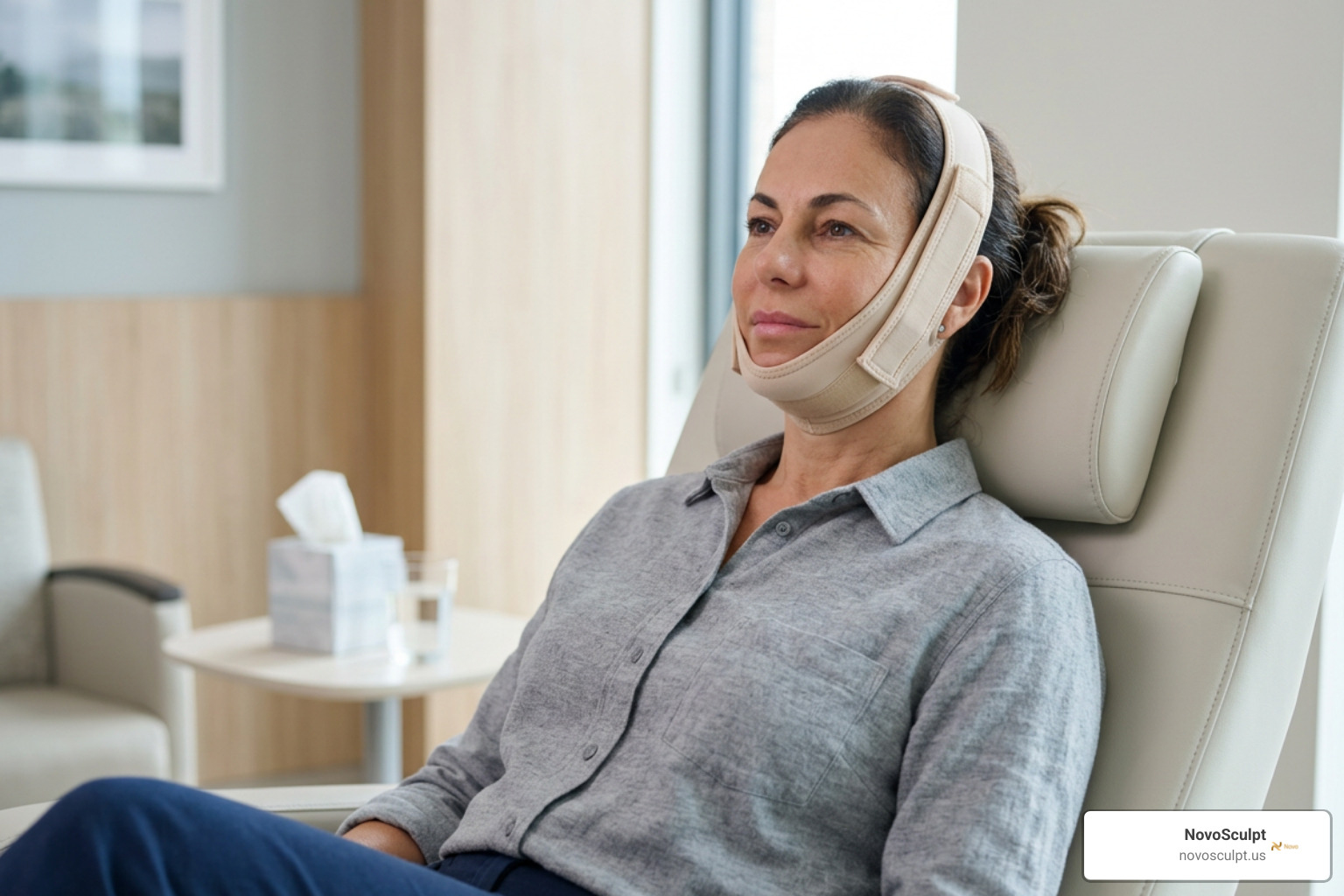
Typical Chin Liposuction Recovery Milestones
Recovery varies by treatment extent, anatomy, individual healing, and postoperative instructions. The following milestones are general examples rather than guarantees or individualized medical instructions.
| Timeframe | Possible experiences | Activity considerations | Compression and aftercare |
|---|---|---|---|
| First few days | Swelling, bruising, tightness, tenderness, numbness, or drainage from access sites may occur. | Rest and light movement may be appropriate, depending on comfort and your surgical team’s guidance. | Compression may be recommended; follow the specific wear and incision-care instructions provided to you. |
| First week | Swelling and bruising may remain visible, and sensation can continue to change. | Some people resume light routine activities when comfortable; others need more time. | Continue individualized aftercare and attend planned follow-up visits. |
| Weeks 2–4 | Swelling often continues to improve, though temporary firmness, altered sensation, or residual swelling may persist. | Return to exercise and work should be based on your procedure, comfort, and clinician clearance. | Your team will advise whether compression or other care remains appropriate. |
| Following weeks and months | The contour may continue refining as swelling resolves and tissues settle. | Activity progression remains individualized. | Contact your care team if symptoms worsen, feel unusual, or conflict with your recovery instructions. |
Compression Garments and Daily Aftercare
A chin compression garment may be recommended to provide support and help manage postoperative swelling, depending on the procedure and the surgeon’s protocol. It does not guarantee a specific contour, prevent every fluid collection, or replace follow-up care.
Use only the aftercare schedule and instructions supplied by your surgical team. General online recommendations about sleeping position, showering, incision care, exercise, massage, medications, and return to work are not a substitute for individualized postoperative guidance. Contact your care team promptly for concerning bleeding, increasing redness, fever, worsening pain, breathing difficulty, or other symptoms they have asked you to report.
When Are Chin Liposuction Results Visible?
Early contour changes may be visible while swelling is still present. The timing and degree of skin redraping vary with age, skin elasticity, existing laxity, fat distribution, anatomy, treatment extent, and healing. Chin liposuction itself should not be presented as a predictable skin-tightening treatment.
Comparing Chin Liposuction Approaches
Patients considering double chin removal may have more than one potential treatment setting or anesthesia plan. The right approach depends on whether the primary concern is superficial fat, skin laxity, deeper neck anatomy, structural proportions, or a combination of factors.
Awake Chin Contouring vs. Conventional Liposuction
| Feature | Awake Local-Anesthesia Chin Contouring | Conventional Cannula-Based Liposuction |
|---|---|---|
| Primary goal | Target localized superficial submental fat and contour transitions according to anatomy. | Remove localized fat in appropriate candidates. |
| Anesthesia commonly used | Local tumescent anesthesia for appropriately selected patients, who may remain awake. | Varies by clinician, procedure extent, and treatment setting. |
| How fat is addressed | Direct physical removal of targeted subcutaneous fat through small access sites. | Direct physical removal of fat through cannula-based techniques. |
| Skin treatment | Does not automatically correct substantial skin excess. | Skin response depends on anatomy and elasticity. |
| Appropriate anatomy | Localized superficial fat in an appropriately selected patient. | Localized fat in an appropriately selected patient. |
| Recovery considerations | Individualized; there is no recovery from general anesthesia itself when local anesthesia is used. | Individualized and influenced by anesthesia, treatment extent, and healing. |
| Access or incisions | Small access sites may be used. | Access sites vary by technique and clinician. |
| General limitations | Does not address every cause of poor jawline definition, deep fullness, or substantial skin laxity. | Does not guarantee skin tightening or address every structural concern. |
For suitable patients, this is awake, local-anesthesia chin liposuction and direct submental fat removal—not a treatment outside the liposuction category. It differs primarily from approaches performed with general anesthesia or deeper sedation when used.
What Are the Risks of Chin Liposuction?
Chin liposuction and other submental contouring procedures involve potential risks and limitations. These can include swelling, bruising, bleeding, hematoma, seroma or fluid collection, infection, temporary or persistent numbness or sensory changes, contour irregularity, asymmetry, under-correction, over-correction, unfavorable skin redraping, access-site or scar changes, nerve injury, prolonged firmness, local-anesthetic complications where relevant, and a possible need for additional treatment or revision.
The likelihood and significance of complications vary by anatomy, procedure extent, technique, clinician experience, patient health, healing, and postoperative care. A consultation is the right setting to discuss the risks that are most relevant to your planned treatment.
Chin Liposuction Cost, Safety, and Preparation
The cost of chin liposuction or double chin surgery depends on the treatment extent, number of areas addressed, anesthesia plan, facility, surgeon, geographic market, and whether another procedure is combined. Isolated submental liposuction and more extensive neck surgery are different services, so a single national price range can be misleading. Pricing should be discussed during an individual consultation rather than inferred from a generic online estimate.
Before treatment, your surgical team should review your medical history, medications, supplements, allergies, nicotine use, and recovery plan. Do not stop aspirin, anticoagulants, prescription medications, or medically necessary supplements without instructions from your prescribing clinician and surgical team. Medications and supplements that can affect bleeding may need individualized review. Nicotine can impair wound healing, so follow your surgeon’s specific instructions regarding smoking and nicotine use.
Frequently Asked Questions About Chin Liposuction
How painful is recovery after chin liposuction?
Patients may experience soreness, tightness, tenderness, swelling, or temporary numbness after chin liposuction. The intensity and duration vary by individual and treatment extent. Local anesthesia is used to support comfort during an awake procedure, and postoperative pain management should follow individualized instructions from the surgical team.
Can fat return after chin liposuction?
Fat cells that are physically removed from the treated area are removed, but submental fullness and overall neck contour can change over time. Remaining fat cells can enlarge with weight change, and aging, skin laxity, weight distribution, and other anatomical structures may affect the profile. Maintaining a relatively stable weight can help support long-term contour.
How long do you wear compression after chin liposuction?
Compression schedules vary by procedure and surgeon protocol. If a compression garment is recommended, follow the individualized instructions supplied by your surgical team rather than relying on a universal online timetable.
When can you return to work after chin liposuction?
Return-to-work timing varies with treatment extent, swelling or bruising, comfort, job demands, and your surgeon’s instructions. Some people feel ready for light routine activities relatively soon, while others need more recovery time.
Conclusion
Chin liposuction and direct submental fat removal can be appropriate for people whose lower-face fullness is substantially related to localized superficial fat. Results depend on the amount and location of fat, skin elasticity, chin and jaw structure, deeper neck anatomy, treatment extent, and individual healing.
At NovoSculpt in Cos Cob/Greenwich, Connecticut, specialty-trained, fully accredited plastic surgeons who graduated from U.S. universities evaluate the chin, jawline, neck, skin, and surrounding facial proportions before recommending treatment. For appropriately selected patients, awake minimally invasive fat removal under local tumescent anesthesia allows targeted submental fat to be physically removed without exposure to general anesthesia. Avoiding general anesthesia avoids the risks, physiologic effects, and recovery specifically attributable to general anesthesia itself, but it does not make the procedure risk-free or establish that awake treatment is appropriate for every patient.
People researching chin liposuction or double chin removal in Greenwich, CT, Fairfield County, or nearby Westchester County can use a consultation to determine whether localized submental fat, skin laxity, chin projection, deeper neck anatomy, or a combination is contributing to their profile. Explore our chin and neck contouring approach or request a complimentary consultation to discuss your options.
