
Which Treatment Works Best for Loose Arm Skin?
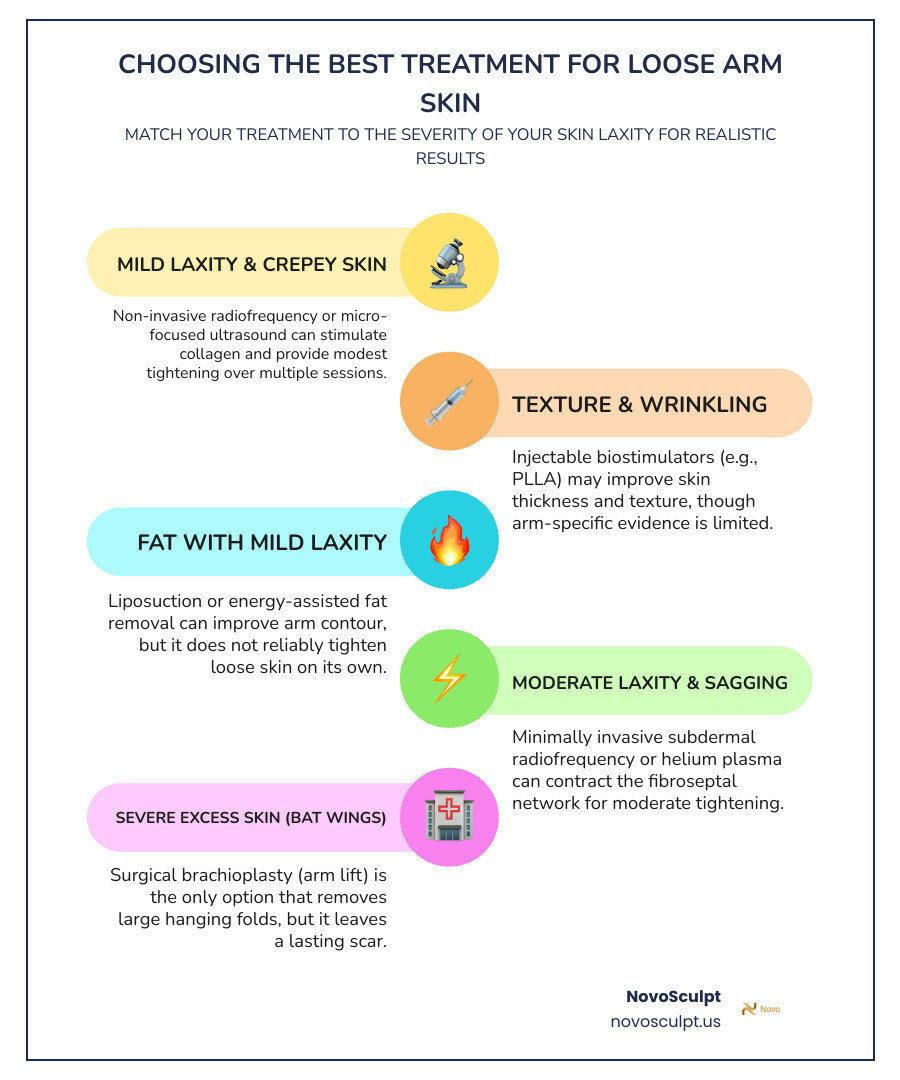
The best treatment depends on how much loose skin you have. For mild, crepey skin, radiofrequency or ultrasound may provide modest tightening. Collagen-stimulating injections may improve skin texture, but evidence specific to arms is limited. A large, hanging fold usually needs an arm lift to remove the excess skin.
If arm fullness is mostly fat, fat removal may improve the shape of the arm, but it cannot reliably tighten loose skin. An in-person assessment can help you weigh the likely improvement against downtime, risks, and, for surgery, a lasting scar.
What Causes Upper Arm Skin Laxity and “Bat Wings”?
Upper arm skin laxity occurs when the structural scaffolding of the dermis and underlying connective tissue weakens. The primary driver is intrinsic biological aging, which leads to a progressive decline in fibroblast activity. This reduces the synthesis of structural type I and type III collagen while accelerating the degradation of elastin fibers.
Photoaging from chronic ultraviolet (UV) radiation compounds this process. UV exposure activates matrix metalloproteinases (MMPs), enzymes that break down collagen fibrils and compromise the skin’s elastic recoil capacity. As a result, the dermis thins, creating a fragile, crepey surface texture.
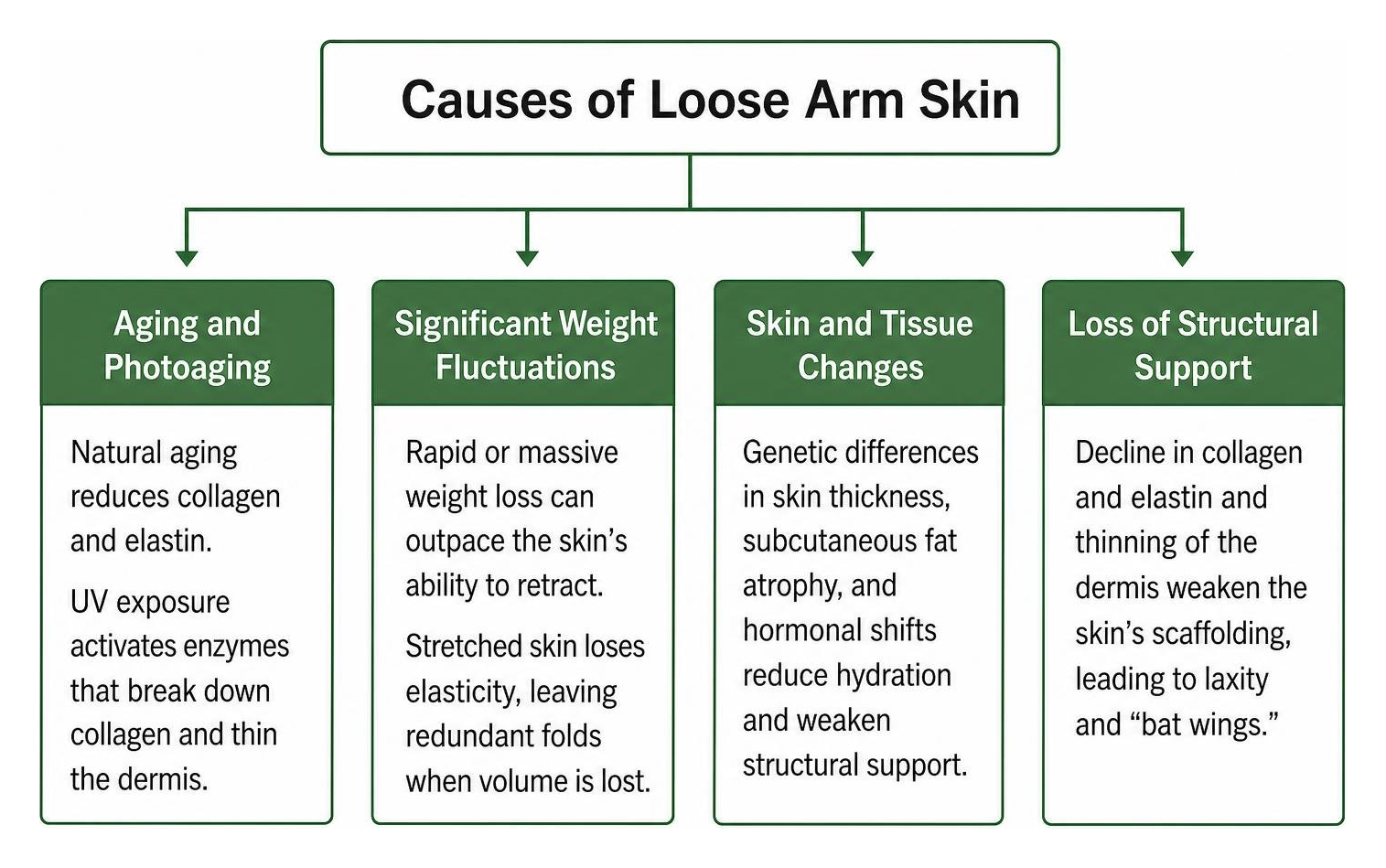
Significant weight fluctuations can also contribute to arm laxity. Rapid or substantial loss of subcutaneous fat—whether after bariatric procedures, lifestyle changes, or GLP-1 medical weight loss programs—may outpace the skin’s ability to retract. Persistent redundancy after weight loss can reflect the duration of prior stretching, age, genetics, skin quality, smoking history, and other individual factors; it does not mean elastin is permanently damaged in every patient.
Patients managing excess skin after massive weight loss frequently experience this structural disconnect. Subcutaneous fat atrophy, genetic variations in skin thickness, and perimenopausal hormonal shifts further reduce dermal hydration and structural integrity, as outlined in clinical overviews of evidence-based skin tightening options.
Why Exercise and Firming Creams Have Clinical Limitations
Patients often try to resolve upper arm sagging through targeted strength training or over-the-counter firming cosmetics before seeking clinical evaluation. While both approaches offer health and skincare benefits, they have physiological limitations when treating true structural laxity:
- Resistance Training and Muscle Hypertrophy: Targeted triceps exercises (such as dips, presses, and extensions) build underlying skeletal muscle volume. Increasing muscular bulk can help fill out the superior aspect of the arm and improve overall contour. However, muscle growth does not reliably remove substantial hanging skin folds when significant tissue redundancy is present.
- Topical Skincare and Retinoids: Over-the-counter firming products can support hydration and skin-barrier care. Retinoids can influence epidermal turnover and collagen remodeling, but topical skincare does not reliably remove significant hanging skin or replace an appropriate procedural assessment when structural laxity is the main concern.
Comparing the Best Treatment for Loose Arm Skin by Severity
Determining the best treatment for loose arm skin requires assessing tissue laxity, dermal thickness, underlying fat distribution, and skin recoil capacity. Clinical evaluations often utilize a standardized “pinch test” alongside visual inspection of the arm in neutral and abducted positions to grade tissue redundancy.
| Treatment Category | Primary Indications | Key Limitations & Potential Risks | Downtime Profile | Expected Longevity |
|---|---|---|---|---|
| Non-Invasive Energy (RF / Ultrasound) | Mild skin laxity, fine crepiness, early collagen loss | Improvement is often modest; multiple sessions may be recommended; mild redness or transient swelling can occur | Usually limited, but device protocols vary | Duration varies by device, treatment plan, skin quality, aging, and maintenance needs |
| Injectable Biostimulators (PLLA) | Dermal thinning, crepey texture, localized volume deficit | Does not lift severe folds; bruising, localized tenderness, or small nodules can occur | Often limited, but depends on technique and individual response | Collagen stimulation is gradual; persistence varies, and evidence for upper-arm treatment is limited |
| Minimally Invasive Subdermal Energy | Selected mild-to-moderate laxity, sometimes combined with targeted fat removal | Requires small entry points; temporary swelling, bruising, and contour irregularities are possible | Varies with the procedure’s extent and any combined fat removal | The duration of visible tightening varies with technique, healing, weight stability, aging, and available evidence |
| Surgical Excision (Brachioplasty) | Moderate-to-severe redundancy, hanging skin folds, post-weight-loss deflation | Leaves a permanent scar; surgical risks include seroma, wound-healing problems, infection, and altered sensation | More substantial recovery; the plan depends on incision extent and healing | Removes excess skin directly, although the remaining tissues continue to age and change with weight fluctuations |
Selecting the Best Treatment for Loose Arm Skin Based on Skin Quality and Volume
Clinical assessment distinguishes between isolated cutaneous laxity and combined adipose fullness with mild skin redundancy. When excess subcutaneous fat is the primary contributor to arm heaviness, targeted arm fat removal can reshape the arm’s circumference.
However, removing fat without evaluating skin elasticity risks worsening surface laxity. If the skin lacks sufficient recoil, debulking alone leaves an empty, deflated tissue envelope. Conversely, treating advanced skin redundancy solely with energy-based tightening devices leads to underwhelming results. Specialty-trained plastic surgeons evaluate tissue quality alongside patient health factors, smoking history, and scar tolerance to determine whether non-surgical, minimally invasive, or surgical techniques provide the most predictable outcome.
Non-Surgical and Energy-Based Skin Tightening Modalities
Non-invasive energy devices aim to stimulate neocollagenesis (new collagen formation) by delivering controlled thermal energy into the dermis and subdermal layers without breaking the skin’s surface. A thorough understanding of how clinical skin tightening works helps establish realistic expectations for these technologies.
- Micro-Focused Ultrasound (MFU): Depending on the device and protocol, focused ultrasound can deliver energy at selected tissue depths to create controlled thermal zones that may stimulate collagen remodeling. Treatment depth, treatment plan, and the timing of any visible change vary by device and patient; these treatments are generally considered for mild laxity.
- Transcutaneous Radiofrequency (RF): Non-invasive RF systems use controlled heating in the dermis. Target temperature, session number, spacing, and expected remodeling timeline vary by device, protocol, and clinician assessment. Some patients experience gradual tightening, while others see limited change.
- Fractional Laser Resurfacing: Non-ablative and fractional ablative lasers can support collagen remodeling and improve superficial crepiness or photodamage. Their role is generally greater for surface texture than for lifting deeper structural sagging.
Non-invasive modalities provide subtle, progressive improvements. They cannot replicate surgical tissue removal, and individual patient responses vary depending on baseline collagen reserves and metabolic health.
Subdermal Radiofrequency and Minimally Invasive Tightening
For patients with mild-to-moderate skin laxity who wish to avoid extensive surgical scars, minimally invasive subdermal tightening offers a middle ground between non-invasive devices and traditional surgery.
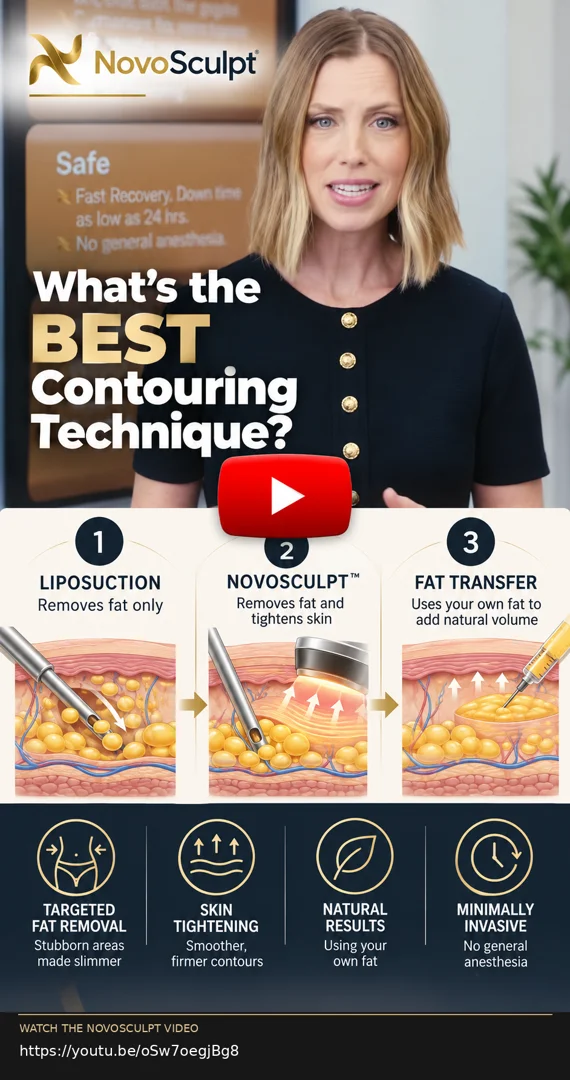
These procedures use a specialized cannula through small entry points beneath the skin, usually with local anesthesia when appropriate. Technologies may include helium-plasma and radiofrequency systems or bipolar subdermal RF; the energy settings, treatment area, and expected degree of tightening vary by device, protocol, and patient anatomy. They can support selected skin-laxity treatment but do not remove the same amount of tissue as a surgical arm lift.
At NovoSculpt, awake arm contouring may combine direct removal of localized subcutaneous fat with targeted subdermal tightening, including NovoTight, when clinically appropriate. Local anesthesia may avoid certain exposures associated with general anesthesia, but it still involves procedure-related and anesthesia-related risks and does not automatically make recovery safer, faster, or easier than conventional surgery. For applicable minimally invasive procedures, postoperative guidance may include showering after approximately 48 hours, compression for at least two weeks, return to routine activities around two weeks, and delaying strenuous upper-body exercise for about six weeks, subject to surgeon instructions and individual healing. These milestones do not apply automatically to injectable treatments, non-invasive devices, or conventional brachioplasty.
Injectable Biostimulators for Upper Arm Skin Firmness
Injectable biostimulators, such as poly-L-lactic acid (PLLA), offer an alternative non-surgical approach to treating dermal thinning and superficial crepiness on the inner arms. Unlike hyaluronic acid fillers that simply add volume, PLLA acts as a biostimulatory agent.
When appropriately diluted and injected, PLLA is intended to stimulate a gradual tissue response and collagen production over time. The proposed mechanism involves a controlled foreign-body response with macrophage and fibroblast activity, but clinical effects, injection technique, and safety considerations vary. The cited study evaluated a specific PLLA product and protocol and should not be assumed to represent every product, patient, or upper-arm treatment plan (da Cunha et al., 2023).
The cited prospective study enrolled 26 women with medial upper-arm laxity who received two PLLA applications 45 days apart. At day 90, which was 45 days after the second treatment, ultrasound measurements showed dermal-thickness increases ranging from 23% to 70%, with a reported average increase of 46% (da Cunha et al., 2023).
The same small, single-group study reported moderate-to-high participant satisfaction at day 90. Its findings are useful but limited: it had no control group, enrolled only 26 participants, evaluated a specific product and protocol, and cannot establish typical results, comparative effectiveness, or long-term durability for every patient. A consultation should weigh the quality of the skin, degree of laxity, and alternatives rather than treating these results as a guarantee (da Cunha et al., 2023).
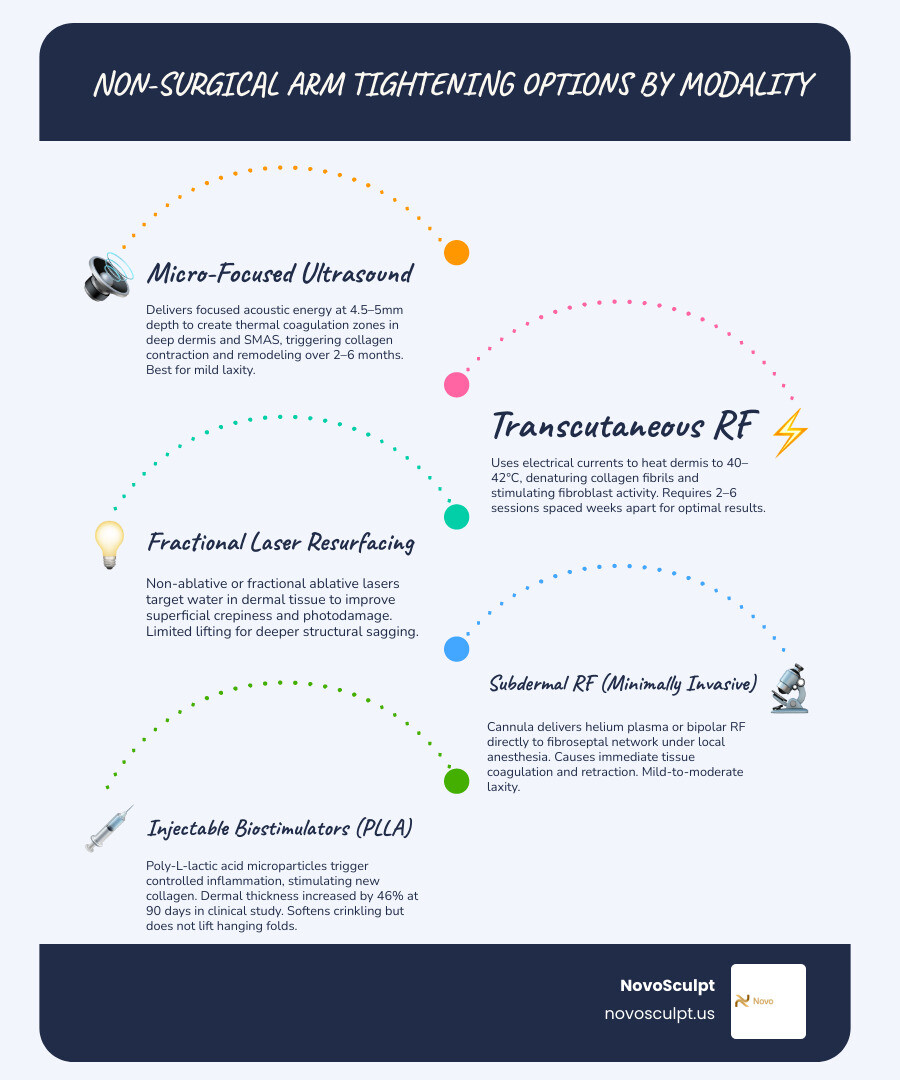
Despite these positive textural findings, biostimulators have clear clinical limitations. They increase dermal thickness and soften superficial crinkling, but they do not excise or lift hanging tissue folds.
Adverse events can include localized bruising, transient edema, tenderness, and small subcutaneous nodules. To promote even product distribution, patients may be advised to perform post-treatment massage only as directed by their clinician. Results develop gradually, and how long they remain noticeable varies with the product, treatment plan, baseline tissue quality, aging, weight changes, and the limited evidence specific to upper-arm laxity.
Surgical Arm Lift (Brachioplasty) for Advanced Redundancy
When substantial tissue redundancy or post-weight-loss deflation is present, conventional brachioplasty can provide the most predictable way to remove excess upper-arm skin. The operation removes redundant skin and may include fat reduction when appropriate. Incision placement and length are individualized to the amount and distribution of excess tissue, ranging from more limited scars to longer incisions extending toward the axilla or chest wall.
During surgery, the plastic surgeon removes excess skin and may reshape underlying fat or soft tissue as needed. The operative details vary: not every arm lift involves the same incision pattern, deep-fascial repair, drain use, or extent of correction. For patients with tissue extending across the axilla onto the lateral chest wall, an extended brachioplasty may continue beyond the upper arm, as described in the ASPS guide on arm lift options.
Brachioplasty can deliver substantial contour change, but it involves meaningful trade-offs. Scars are permanent and may remain visible when the arms are elevated. Recovery instructions, including compression, wound care, activity restrictions, and whether drains are used, depend on the extent of surgery and individual healing. Risks include wound-healing problems, infection, seroma formation, asymmetry, hypertrophic scarring, and temporary or permanent sensory changes along the arm.
Is Surgery Always the Best Treatment for Loose Arm Skin?
Surgery is not automatically the right choice for every patient with arm laxity. The decision comes down to a clear trade-off: trading hanging tissue folds for a visible surgical scar.
For patients with mild-to-moderate laxity or localized adipose deposits, a less extensive approach may be appropriate after individualized assessment. NovoSculpt directly removes localized subcutaneous fat; NovoTight is intended to address selected skin laxity through minimally invasive tightening; and NovoTuck involves limited surgical skin excision when clinically appropriate. These options do not reliably replace conventional brachioplasty when substantial redundant upper-arm skin requires direct excision.
Frequently Asked Questions About Upper Arm Tightening
How long do non-surgical arm tightening results typically last?
Longevity varies based on the specific modality, device or product, treatment plan, baseline tissue quality, aging, and weight changes:
- Transcutaneous Energy Devices (RF/Ultrasound): Improvements, when they occur, are typically gradual and may require maintenance. Their duration varies substantially by device, protocol, and patient.
- Injectable Biostimulators (PLLA): Collagen stimulation develops over time, but the persistence and degree of improvement vary. Evidence specific to upper-arm laxity remains limited.
- Minimally Invasive Subdermal Tightening: Results can evolve as swelling resolves and healing progresses. The degree and duration of tightening vary with technique, any combined fat removal, healing, weight stability, and ongoing aging.
What is the expected recovery timeline after arm contouring procedures?
Recovery timelines depend on the invasiveness and extent of treatment. For applicable minimally invasive arm-contouring procedures performed with local anesthesia, general postoperative guidance may include:
- First 48 Hours: Patients may rest, manage mild drainage from small entry points, and shower after approximately 48 hours once cleared by their surgeon.
- Weeks 1 to 2: Swelling and bruising may peak and begin to subside. Compression garments are often worn for at least two weeks unless otherwise directed.
- Weeks 2 to 6: Many patients may return to routine work and daily activities around two weeks, while strenuous exercise, heavy lifting, and intense upper-body workouts may be delayed until around six weeks according to surgeon guidance.
- Long-Term: Residual swelling can resolve gradually, and final contour changes may take up to six months to mature.
These are general NovoSculpt postoperative milestones for applicable minimally invasive procedures, not fixed timelines for non-invasive devices, injectable treatments, or conventional brachioplasty. Individual instructions depend on the procedure, treatment extent, and healing.
Can arm liposuction be performed without causing further skin sagging?
Liposuction alone removes targeted subcutaneous adipose cells but does not excise or independently shrink redundant skin. In younger patients with robust dermal elasticity, the skin often retracts naturally over the reduced volume. However, in patients with compromised elasticity or pre-existing dermal thinning, standard fat evacuation can increase surface sagging.
In these cases, plastic surgeons utilize a minimally invasive liposuction technique combined with internal subdermal energy to coagulate tissue and support skin retraction while removing excess fat.
Conclusion and Next Steps for Arm Rejuvenation
Selecting the right treatment for upper arm skin laxity requires balancing your aesthetic goals with anatomical realities, recovery expectations, and scar tolerance. While mild crepiness often improves with non-invasive energy devices or injectable biostimulators, significant skin hanging requires surgical excision. For individuals with mild-to-moderate laxity and localized fat, minimally invasive subdermal tightening offers meaningful contour improvement with minimal downtime.
An individualized clinical evaluation helps match treatment recommendations to tissue characteristics, health history, recovery expectations, and scar tolerance. NovoSculpt’s body-contouring facility is located in Cos Cob, Greenwich, Connecticut, where patients can discuss whether minimally invasive treatment, limited excision, or referral for a conventional arm lift is the more appropriate option.
To explore customized body contouring and learn more about minimally invasive NovoTight skin treatment options, schedule an in-person consultation to determine the most effective approach for your upper arms.
References
da Cunha MG, Ferregutti FM, Bernardo AC, Romani PI, Nascimento C, Ruiz R. “Analysis of satisfaction patient and increased dermis thickness by medical evaluation and USG by Rennova Elleva in the treatment of sagging skin on the inner part of the arms..” Skin health and disease, 2023. PMCID PMC9892430.
