
What Natural-Looking Body Contouring Really Means
Natural-looking body contouring aims for proportionate, individualized improvement rather than an exaggerated transformation. Results can look more natural when treatment planning considers body proportions, localized subcutaneous fat, skin quality, tissue characteristics, and realistic goals.
For a natural-looking outcome, focus on:
- A relatively stable body weight and a concern involving localized contour rather than overall weight reduction.
- Treatment-area selection that respects existing proportions and creates gradual transitions between treated and untreated areas.
- Skin elasticity, tissue quality, and whether fat removal, skin tightening, fat transfer, limited skin excision, or a combination is appropriate.
- A thorough consultation with a qualified provider who reviews expected benefits, limitations, recovery, and potential risks.
- Long-term habits and life changes, including aging, pregnancy, and weight fluctuation, that can affect appearance over time.
Non-invasive devices may use controlled cooling, heat, ultrasound, or electromagnetic stimulation to address selected concerns without incisions. Minimally invasive approaches can remove targeted fat directly or treat selected areas of skin laxity through small access points, often using local tumescent anesthesia. Neither approach is a treatment for obesity, and no single option is right for every patient.
NovoSculpt is a physician-led practice focused on minimally invasive, awake body contouring under local tumescent anesthesia for appropriately selected patients. Its fully accredited plastic surgeons are specialty-trained and graduated from U.S. universities. NovoSculpt has one physical location in Cos Cob/Greenwich, Connecticut, serving patients from Greenwich, Fairfield County, and nearby Westchester County, New York, and does not have offices or physical locations in surrounding towns.
Written by: Roberto Magana, BSc, MBA — CEO, NovoSculpt
Last Updated: October 14, 2026
Body-Contouring Options: Non-Invasive and Minimally Invasive
Natural-looking body contouring begins with matching the technique to the concern. Non-invasive body sculpting options can address selected areas without incisions, while minimally invasive procedures can directly remove fat or address selected skin-laxity concerns through small access points. Conventional liposuction may be performed with local anesthesia, sedation, or general anesthesia depending on the patient, treatment extent, and surgical plan.
These customizable body sculpting options vary substantially by device, indication, and treatment area. The U.S. Food and Drug Administration explains that FDA authorization applies to specific devices and indications, not to an entire category of body-contouring procedures.
- Cryolipolysis: Controlled cooling can injure selected subcutaneous fat cells, with contour changes developing gradually. Paradoxical adipose hyperplasia is an uncommon but recognized complication.
- Radiofrequency and laser-based treatments: Depending on the device, energy may be used for fat reduction, skin tightening, or both. Treatment plans and recovery considerations differ by platform.
- Ultrasound-based treatments: Some systems are intended for fat reduction, while others are designed primarily for tissue tightening. Their mechanisms and candidacy criteria are not interchangeable.
- Electromagnetic muscle stimulation: Selected devices stimulate muscle contractions and may support muscle tone or development. They do not physically extract fat.
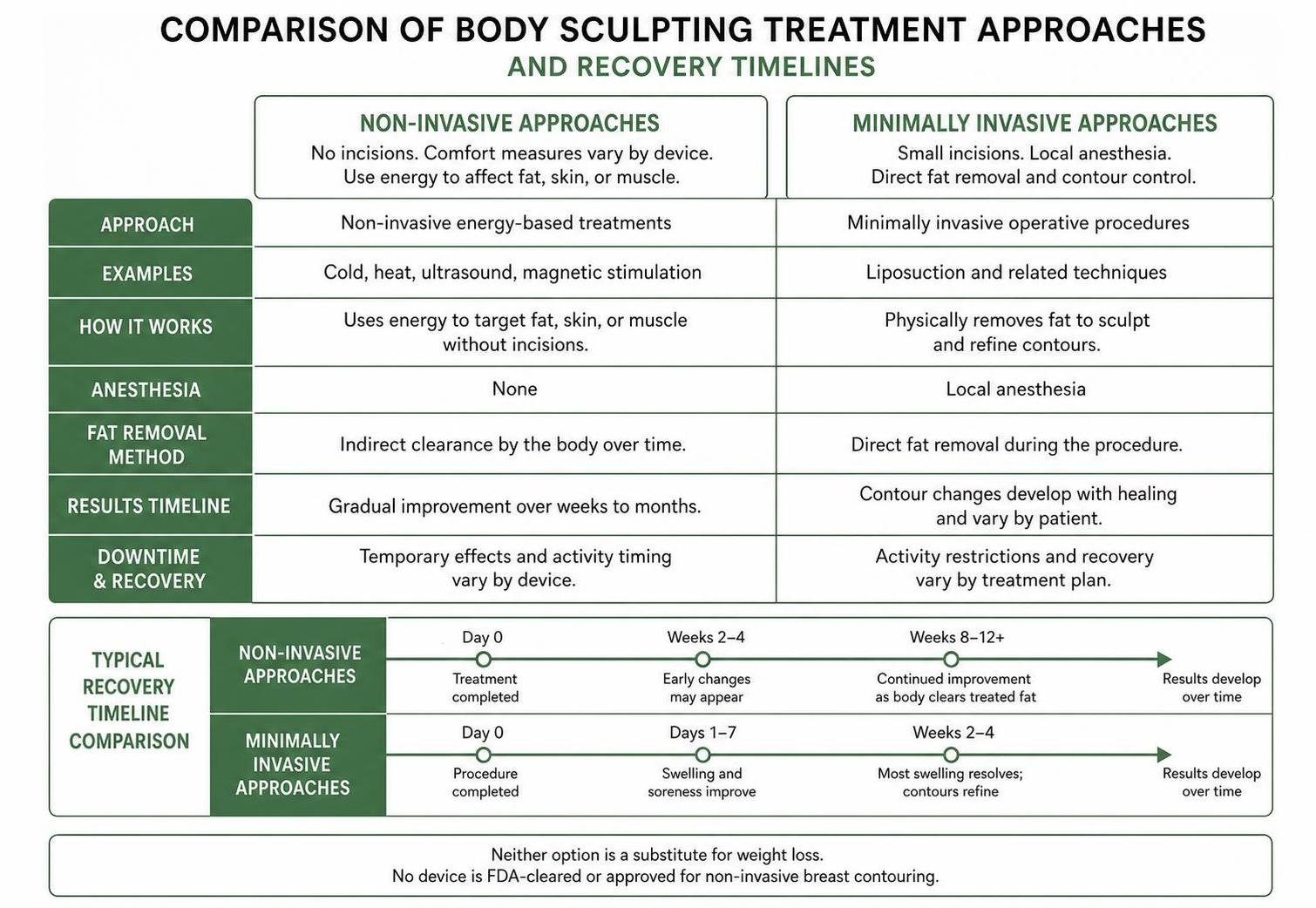
The following comparison is general. A clinician should tailor recommendations to anatomy, treatment extent, medical history, and goals.
| Treatment category | Primary objective | General mechanism | Anesthesia considerations | Typical recovery considerations | Important limitations |
|---|---|---|---|---|---|
| Cryolipolysis | Gradual reduction of selected fat bulges | Controlled cooling affects selected subcutaneous fat cells | No surgical anesthesia | Temporary tenderness, numbness, swelling, or bruising may occur | Results vary; changes are gradual; PAH is uncommon but recognized |
| Radiofrequency or laser-based treatments | Fat reduction, skin tightening, or both, depending on the device | Energy-based heating of targeted tissue | Often none or topical measures, depending on the platform | Temporary warmth, redness, tenderness, or swelling may occur | Indications and expected effects differ by device |
| Ultrasound-based treatments | Fat reduction or tissue tightening, depending on the device | Focused acoustic energy acts at selected tissue depths | Usually no surgical anesthesia | Recovery varies by technology and treatment extent | Not every ultrasound platform has the same intended use |
| Electromagnetic muscle stimulation | Muscle stimulation and tone support | Electromagnetic energy triggers muscle contractions | No surgical anesthesia | Temporary muscle soreness can occur | Does not directly remove fat |
| Minimally invasive awake direct fat removal | Direct reduction of selected subcutaneous fat | Cannula-based fat removal through small access points | Local tumescent anesthesia for appropriate candidates | Bruising, swelling, discomfort, and activity restrictions are expected parts of healing | Surgical and local-anesthetic risks remain; not a weight-loss treatment |
| Minimally invasive subdermal skin tightening | Improvement of selected localized skin laxity | Energy delivered beneath the skin through small access points | Local anesthesia may be used, depending on the treatment plan | Swelling, tenderness, and time for tissue remodeling may occur | Cannot reliably replace excisional surgery when excess skin is substantial |
| Fat transfer | Restore or enhance volume in selected areas | Appropriately harvested and processed fat is transferred to a planned area | Anesthesia depends on the donor and recipient areas | Recovery reflects both donor-area treatment and the transfer site | Volume retention varies, and not every patient is a candidate |
How NovoSculpt Personalizes Natural-Looking Body Contouring
NovoSculpt specializes in physician-led, minimally invasive direct fat removal under local tumescent anesthesia for appropriately selected patients. Its patent-pending planning and treatment processes are designed to support thoughtful treatment-area selection, proportionate contour changes, and smooth transitions rather than a one-size-fits-all result.
- Novo360™ is a comprehensive circumferential approach to selected areas of the abdomen, waist, flanks, and back, related to the commonly used term Lipo 360.
- NovoTight™ is a minimally invasive plasma-based subdermal skin-tightening option for selected areas of localized laxity.
- NovoGain™ uses appropriately harvested and processed fat to restore or enhance volume in selected anatomical areas.
- NovoBum™ is buttock enhancement through fat transfer, conceptually related to a Brazilian Butt Lift. Gluteal fat transfer carries serious procedure-specific risks, including fat embolism, and requires appropriate safety protocols.
- NovoTuck™ is a limited skin-excision option for selected patients with localized excess skin. It is distinct from more extensive excisional procedures such as traditional abdominoplasty.
These approaches may sometimes be combined in one session when clinically appropriate. Not every patient is a candidate for every treatment or combination.
Planning for Proportionate Contour Changes
Natural-looking results from minimally invasive fat removal depend on individual anatomy, body proportions, skin elasticity, tissue quality, realistic fat-removal or fat-transfer goals, and individual healing. During planning, the surgeon considers how selected treatment areas relate to the surrounding contours rather than treating each area in isolation.
Minimally Invasive Direct Fat Removal
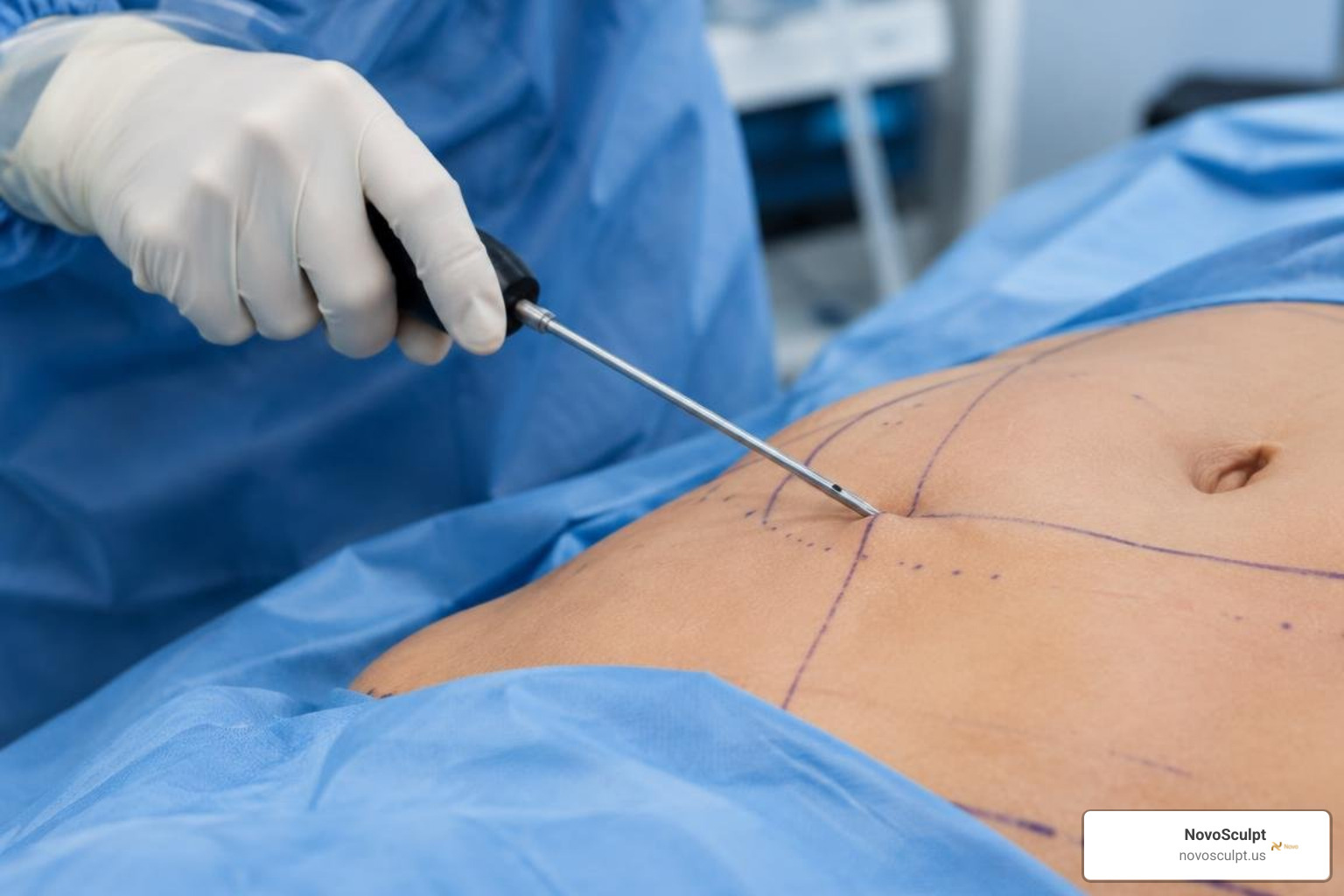
Minimally invasive direct fat removal uses small cannulas and local tumescent anesthesia as part of local anesthesia body contouring to address selected subcutaneous fat deposits. Appropriately selected patients may remain awake without general anesthesia. Avoiding general-anesthetic medications avoids exposure to those medications and certain associated effects, but it does not eliminate surgical or anesthesia-related risks. Recovery and suitability depend on the treatment extent, the patient’s health, and the individualized surgical plan.
Maintaining Natural-Looking Body-Contouring Results
Body contouring does not stop at the procedure. Healing, skin quality, natural aging, pregnancy, and meaningful weight changes can influence how a contour looks over time. Maintaining a relatively stable body weight generally helps preserve the result of targeted fat removal, while remaining fat cells can enlarge with weight gain and longer-term adipose tissue changes may occur.
Skin Quality and Localized Laxity
Addressing skin laxity after weight loss requires attention to skin elasticity and tissue quality, which affect how the body adapts after volume changes. Topical skincare may support hydration and general skin appearance, but it cannot reliably correct substantial skin laxity or replace appropriate procedural treatment. For some patients, skin tightening or limited skin excision may be discussed when localized laxity is a significant concern.
Compression and Surgeon-Directed Recovery
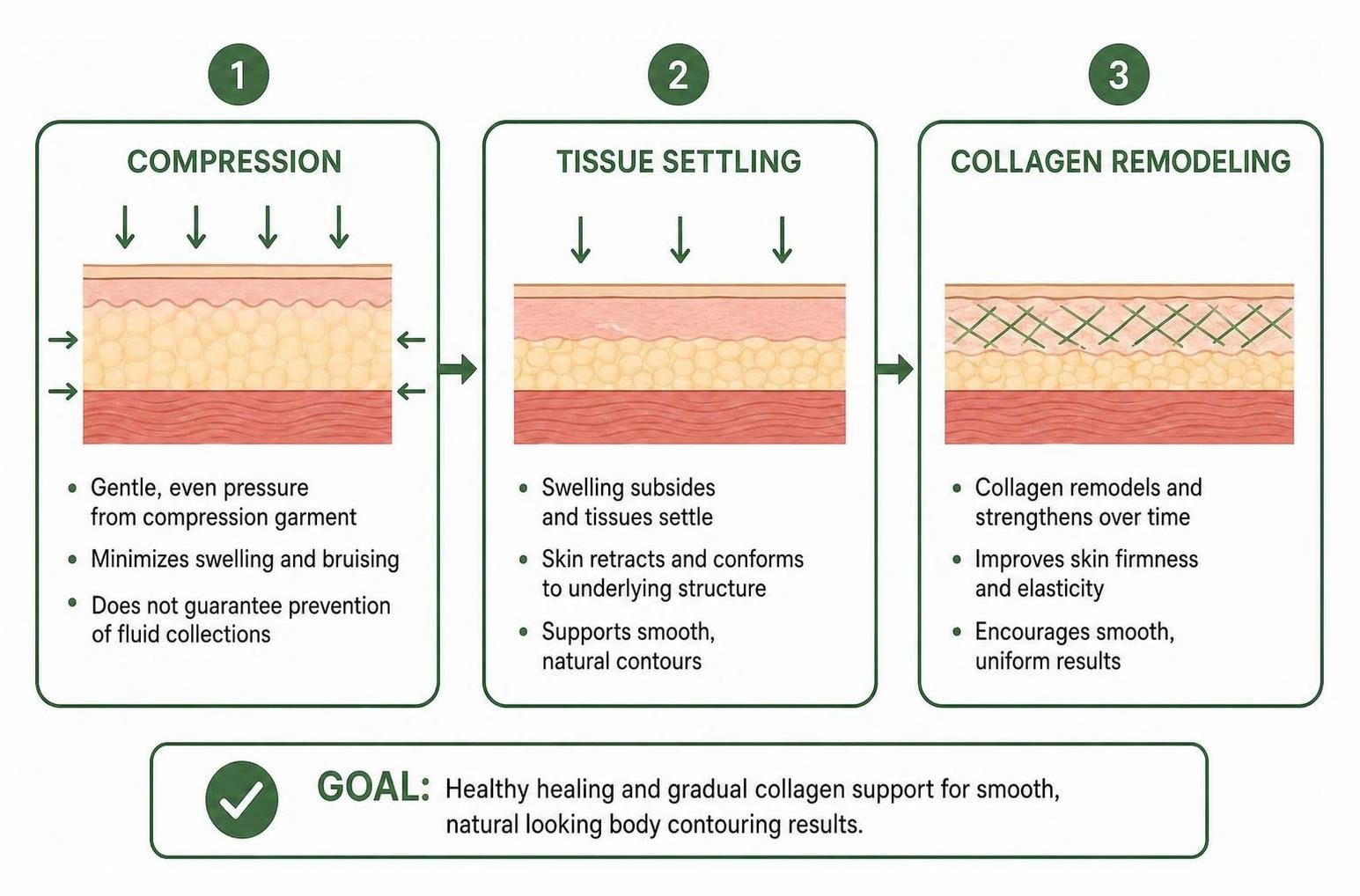
Compression garments are commonly prescribed after liposuction and other body-contouring procedures. They may support comfort, swelling management, and postoperative tissue support, but the strength of evidence for particular benefits varies. Compression cannot guarantee prevention of seroma, bruising, contour irregularities, or any specific aesthetic outcome.
Patients should follow their treating surgeon’s individualized instructions. NovoSculpt’s general written postoperative guidance commonly calls for compression for at least two weeks unless otherwise directed, showering after approximately 48 hours, return to full activity around two weeks, and strenuous activity around six weeks according to surgeon guidance. Final contour changes can continue to develop for up to six months.
Safety Protocols and Potential Complications
Patient safety is central to any body-contouring decision. Treatments that do not involve incisions and minimally invasive procedures have different risk profiles, and complications can occur even when fully accredited plastic surgeons use careful technique, appropriate facility standards, and thorough patient selection. Minimally invasive fat removal is an established surgical procedure, but neither surgical qualifications nor a local-anesthesia plan eliminates risk.
Risks of Minimally Invasive Fat Removal
Potential complications of minimally invasive direct fat removal can include temporary swelling, bruising, postoperative discomfort, infection, bleeding, seroma or hematoma formation, contour irregularities, asymmetry, temporary or persistent changes in sensation, and skin injury. Local tumescent anesthesia also requires careful dosing and monitoring because adverse reactions, including lidocaine toxicity, can occur. Uncommon but serious complications may include thromboembolic events such as deep vein thrombosis or pulmonary embolism. The likelihood and severity of complications depend on individual health, treatment extent, technique, anesthesia, and perioperative care. Certain energy-based devices can also cause thermal injury, depending on the technology and application.
Sterile technique, careful screening, and appropriate infection-prevention protocols can reduce infection risk but cannot guarantee prevention. Patients should discuss their medical history, medications, nicotine exposure, prior procedures, and recovery expectations with the treating surgeon. The American Society of Plastic Surgeons’ liposuction safety guidance is a helpful starting point for patient education, but it does not replace individualized medical advice.
Paradoxical Adipose Hyperplasia After Cryolipolysis
Paradoxical adipose hyperplasia, often called PAH, is an uncommon complication of cryolipolysis in which treated fatty tissue enlarges rather than decreases. It may become apparent months after treatment. Management varies with clinical evaluation, tissue characteristics, and the patient’s goals. Depending on the assessment, it may include observation, surgical fat removal, or excision; no single approach is appropriate for every case or guaranteed to correct it.
Device Eligibility and FDA Terminology
Eligibility and contraindications depend on the specific device, treatment area, patient history, and manufacturer instructions. Implanted electronic devices, including pacemakers, may be contraindications for particular electromagnetic or energy-based treatments. Metal-containing implants may affect eligibility for selected treatments but are not a universal contraindication to every radiofrequency or electromagnetic procedure. Any restriction related to tattoo pigments depends on the device, treatment site, and manufacturer guidance. Cold-sensitive medical conditions, including Raynaud’s phenomenon, may be contraindications for cryolipolysis depending on the patient’s condition and applicable device instructions. A treating clinician should evaluate device-specific contraindications.
The FDA may clear, authorize, or approve medical products through different regulatory pathways. FDA clearance and FDA approval are distinct regulatory concepts. For body-contouring devices, authorization applies to particular devices and labeled indications rather than an entire procedure category. Devices should be used according to their authorized indications and applicable professional and regulatory standards. A lack of authorization for a specific use does not, by itself, establish that every approach in that category is unsafe.

Candidacy, Realistic Goals, and Outcome Longevity
Body contouring is intended for proportionate refinement of selected areas, not treatment for obesity or a substitute for comprehensive weight management. A consultation should focus on whether the proposed treatment matches the patient’s anatomy, health, treatment extent, and goals. Setting realistic expectations helps patients understand the potential benefits, limitations, and long-term considerations of body-contouring treatment.
Who May Be a Candidate for Minimally Invasive Body Contouring?
Good candidacy is individualized. Important considerations include overall medical health, body mass index and anatomical suitability, relatively stable body weight, localized subcutaneous fat distribution, skin elasticity and tissue quality, smoking or nicotine exposure, medication use, suitability for the proposed anesthesia, treatment extent, and realistic expectations, along with understanding that body contouring is not a weight-loss substitute:
- Overall health, medical history, body mass index, and anatomical suitability.
- A relatively stable body weight and localized subcutaneous fat distribution.
- Skin quality and elasticity.
- Smoking or nicotine exposure, medication use, and conditions that may affect healing or anesthesia planning.
- Realistic expectations about possible improvement, recovery, and limits of treatment.
- Suitability for local anesthesia and the proposed treatment extent.
Liposuction and related fat-removal procedures target subcutaneous fat, the layer beneath the skin. They do not directly remove visceral fat within the abdominal cavity. Lifestyle changes and appropriate medical weight-management interventions may influence visceral adiposity when clinically appropriate. Body contouring is not a weight-loss substitute.
Natural-Looking Results Over Time
Fat cells physically removed during liposuction are not restored as the same cells. However, remaining fat cells can enlarge with weight gain, and longer-term adipose tissue changes may occur. Aging, pregnancy, changes in skin elasticity, and significant weight fluctuation can also influence long-term appearance.
Natural-looking results are not defined by a specific silhouette or degree of muscular definition. They reflect thoughtful treatment-area selection, proportionate goals, smooth transitions where feasible, appropriate treatment choice, individual healing, and a relatively stable body weight.
Questions to Ask During Your Medical Consultation
Preparing clear questions helps patients assess the proposed plan and clinical setting. Reviewing what to expect during your consultation can help patients prepare:
- What treatment options fit my anatomy, skin quality, and goals?
- Who will perform the procedure, and what are their relevant surgical credentials?
- Am I an appropriate candidate for a local-anesthesia procedure, or does my treatment plan call for another anesthesia approach?
- What risks, recovery considerations, and limitations apply to my planned treatment?
- Could fat removal, skin tightening, fat transfer, or limited skin excision be combined safely and appropriately?
- What instructions should I follow regarding nicotine, medications, compression, activity, and follow-up care?
Natural-Looking Body Contouring FAQs
What makes body-contouring results look natural?
Natural-looking results depend on individual anatomy, body proportions, thoughtful treatment-area planning, skin elasticity, tissue quality, and realistic expectations. The aim is proportionate improvement rather than an exaggerated transformation.
What is the difference between non-invasive body sculpting and minimally invasive fat removal?
Non-invasive treatments use external energy or cooling to address selected concerns without incisions, and changes often develop gradually. Minimally invasive fat removal uses small access points and cannulas to remove selected subcutaneous fat directly; it involves surgical and anesthesia-related risks.
Can body contouring be performed without general anesthesia?
Yes. Selected procedures, including NovoSculpt’s minimally invasive direct fat removal, may be performed under local tumescent anesthesia for appropriate candidates. Avoiding general-anesthetic medications avoids exposure to those medications and certain associated effects, but surgical and anesthesia-related risks remain.
How many treatment sessions are typically required?
Treatment-session requirements depend on the specific device, treatment area, and goals. Minimally invasive fat removal may address selected areas in a single session when clinically appropriate, while external device-based treatment plans vary by technology and patient.
Does body sculpting tighten loose skin?
Selected technologies may improve mild localized laxity, but results vary. Significant excess skin may require surgical excision, and minimally invasive skin tightening cannot reliably replace more extensive excisional surgery in every patient.
Can body contouring treat breast tissue or severe skin laxity?
Treatment depends on anatomy. Fatty chest enlargement, true glandular gynecomastia, mixed fatty and glandular enlargement, and substantial excess skin may require fat removal, glandular excision, skin excision, or a combination. NovoTuck™ is a limited skin-excision option for selected patients and is distinct from traditional abdominoplasty.
How are body-contouring complications identified and corrected?
Unexpected swelling, asymmetry, nodules, pain, or other concerning symptoms warrant clinical assessment. PAH is an uncommon cryolipolysis complication that may appear months after treatment. Management depends on the clinical findings and may include observation, surgical fat removal, or excision; no universal corrective technique is appropriate for every case.
How long do natural-looking body-contouring results last?
Fat cells physically removed during liposuction are not restored as the same cells. However, remaining fat cells can enlarge with weight gain, and longer-term adipose tissue changes may occur. Aging, pregnancy, changes in skin elasticity, and significant weight fluctuation can also affect appearance over time.
Can fat removal and skin tightening be combined?
Yes. NovoSculpt may combine direct fat removal with NovoTight™ minimally invasive plasma-based subdermal skin tightening when clinically appropriate. Not every patient is a candidate for a combined procedure.
What is the difference between NovoSculpt and conventional liposuction?
NovoSculpt focuses on physician-led, minimally invasive direct fat removal under local tumescent anesthesia for appropriately selected patients and may combine complementary treatments when clinically appropriate. Conventional liposuction is a broader category that may use local anesthesia, sedation, or general anesthesia depending on the surgical plan.
Who is a good candidate for minimally invasive body contouring?
A good candidate is evaluated individually based on overall health, medical history, body mass index, anatomy, localized subcutaneous fat, skin quality, stable weight, nicotine exposure, medications, realistic expectations, and suitability for the proposed anesthesia and treatment extent.
What are the risks of body sculpting?
Risks vary by treatment but may include bruising, swelling, discomfort, infection, bleeding, fluid collections, contour irregularities, sensation changes, skin or thermal injury, local-anesthetic reactions, and uncommon serious complications such as blood clots. A consultation with a qualified clinician is essential for understanding the risks of a specific plan.
Conclusion
Natural-looking body contouring depends on individualized treatment planning, appropriate patient selection, careful treatment-area choices, realistic goals, and an honest discussion of risks and recovery. External device-based technologies, direct fat removal, skin tightening, fat transfer, and limited skin excision each have different roles and limitations.
NovoSculpt provides physician-led, minimally invasive body contouring for appropriately selected patients. Direct fat removal may be performed while awake under local tumescent anesthesia. Avoiding general-anesthetic medications avoids exposure to those medications and certain associated effects, but surgical risks remain. Complementary options including Novo360™, NovoTight™, NovoGain™, NovoBum™, and NovoTuck™ may be considered when clinically appropriate. Outcomes and recovery depend on patient anatomy, health, treatment extent, and individual healing.
NovoSculpt has one physical location in Cos Cob/Greenwich, Connecticut, serving patients from Greenwich, Fairfield County, and nearby Westchester County, New York. To discuss whether a personalized plan is appropriate, schedule a complimentary consultation for custom body sculpting with the NovoSculpt team.
