
What Is Body Sculpting?
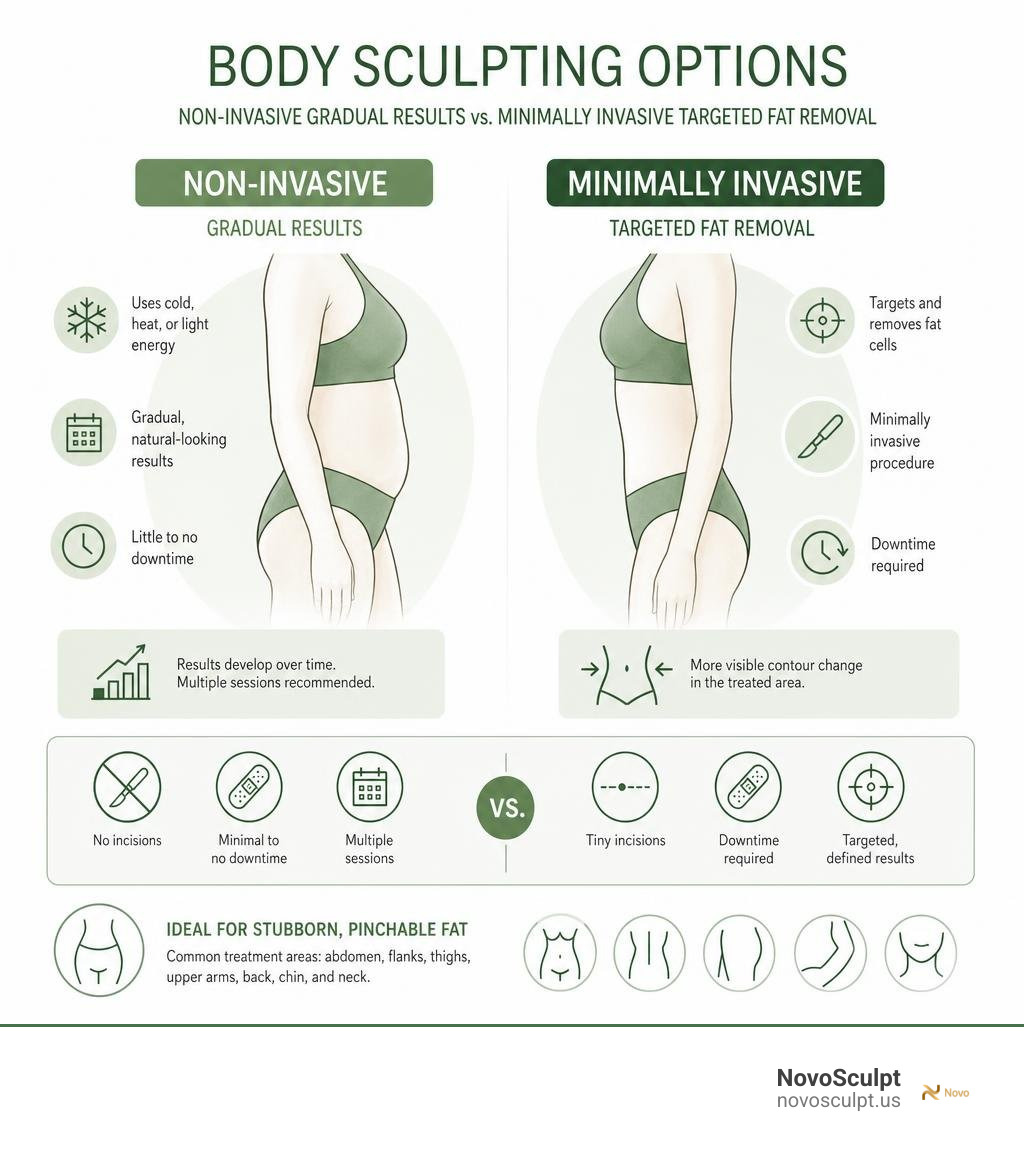
Body sculpting, also called body contouring, is a broad term for treatments intended to reshape specific areas by addressing localized fat and, in some cases, skin laxity. It is not a weight-loss treatment and does not replace nutrition, exercise, or medical care for metabolic health.
For adults at or near a stable weight who are concerned about stubborn, pinchable fat, options range from external, non-invasive body contouring devices to minimally invasive fat removal and surgical procedures. The best approach depends on anatomy, fat distribution, skin quality, health history, treatment goals, and tolerance for recovery.
Non-surgical body sculpting can appeal to patients who want to avoid incisions and are comfortable with gradual, device-specific changes. Minimally invasive body contouring uses small access sites to physically remove selected subcutaneous fat. Surgical body contouring may be considered when excess skin or more extensive anatomical correction is the central concern.
If you are searching for “body sculpting near me” or “body contouring near me,” it helps to understand the difference between external technologies and physician-led direct fat-removal procedures before comparing providers or treatments.
At NovoSculpt, specialty-trained, fully accredited plastic surgeons who graduated from U.S. universities provide physician-led treatment planning for awake body contouring and targeted fat removal under local tumescent anesthesia when appropriate.
Is Body Sculpting the Same as Weight Loss?
No. Weight loss and body sculpting affect the body differently. Weight loss through a caloric deficit generally reduces the size of fat cells throughout the body in patterns influenced by genetics and metabolism. It can improve overall health, but it does not selectively treat one localized area or correct every concern related to loose skin.
In contrast, body sculpting and body contouring focus on proportions in specific areas. These treatments generally address subcutaneous fat—the pinchable layer located between the skin and muscle. They do not treat visceral fat around internal organs, which is better addressed through medical weight management, nutrition, activity, and other appropriate care.
When patients seek stubborn fat removal, the goal is usually to improve the contour of a localized area rather than change overall body weight.
| Feature | Weight Loss and Healthy Habits | Non-Invasive Body Sculpting | Direct / Minimally Invasive Fat Removal |
|---|---|---|---|
| Primary purpose | Supports overall weight and metabolic health | Seeks gradual, localized contour change without surgical extraction | Seeks physical removal of selected subcutaneous fat through small access sites |
| How it works | Fat cells may shrink throughout the body | Uses device-specific cooling, heat, light, or other energy-based mechanisms | A surgeon removes selected fat cells from the treated area |
| Treatment area | Generalized, not fully selective | Localized fat bulges or tissue concerns, depending on the device | Localized subcutaneous fat in anatomically appropriate areas |
| Effect on fat cells | Does not remove fat cells from a chosen area | Results and biological mechanisms vary by technology and patient | Physically removed fat cells do not regenerate in the same manner, though remaining fat cells can enlarge |
| Skin concerns | Significant weight changes may reveal loose skin | Some technologies may be used for mild skin-tightening goals, depending on the device | May be combined with skin tightening, fat transfer, or targeted skin reduction when anatomically appropriate |
Does Body Sculpting Permanently Remove Fat?
Not every body-sculpting treatment removes fat in the same way. Non-invasive devices use different technologies intended to affect localized subcutaneous fat without surgical extraction, and their mechanisms and results vary. Direct fat removal physically removes selected fat cells from the treatment area.
That does not guarantee a permanent overall body shape. Remaining fat cells can enlarge with future weight gain, and contours can change with aging, pregnancy, weight fluctuation, skin changes, and other biological factors.
How Does Non-Invasive Body Contouring Work?
Non-invasive body contouring is not one procedure or one biological mechanism. It is a category of external treatments that act through the skin and are designed for localized contouring goals without surgical fat extraction. The FDA notes that these technologies are not treatments for obesity and are not intended to produce weight loss. Learn more about FDA-regulated non-invasive body-contouring technologies.
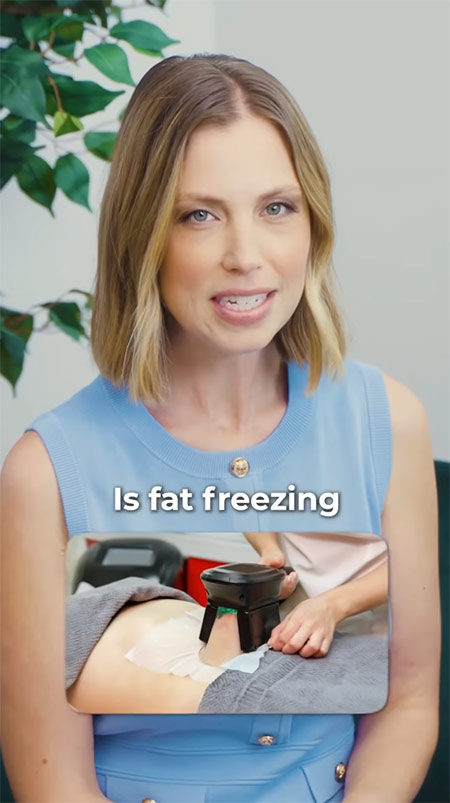
A consultation should identify the specific technology being considered, the area being treated, the expected degree of change, potential side effects, and whether a non-invasive option matches the patient’s anatomy and goals.
What Mechanisms Do Non-Surgical Body Sculpting Devices Use?
Different non-surgical body sculpting technologies use different mechanisms:
- Cryolipolysis uses controlled cooling applied to a localized area of fat.
- Certain laser systems use controlled heating intended to affect subcutaneous tissue.
- Radiofrequency treatments use electromagnetic energy to heat tissue and may be used for contouring or skin-tightening goals, depending on the device and indication.
- Low-level light technologies use different proposed light-based mechanisms and should not be treated as equivalent to fat extraction.
- Electromagnetic muscle-stimulation technologies primarily create muscle contractions; they are not direct fat-removal procedures.
Because technologies, treatment protocols, and patient responses differ, it is not medically accurate to assume that every device causes the same amount of fat reduction, skin tightening, cellular change, or recovery pattern.
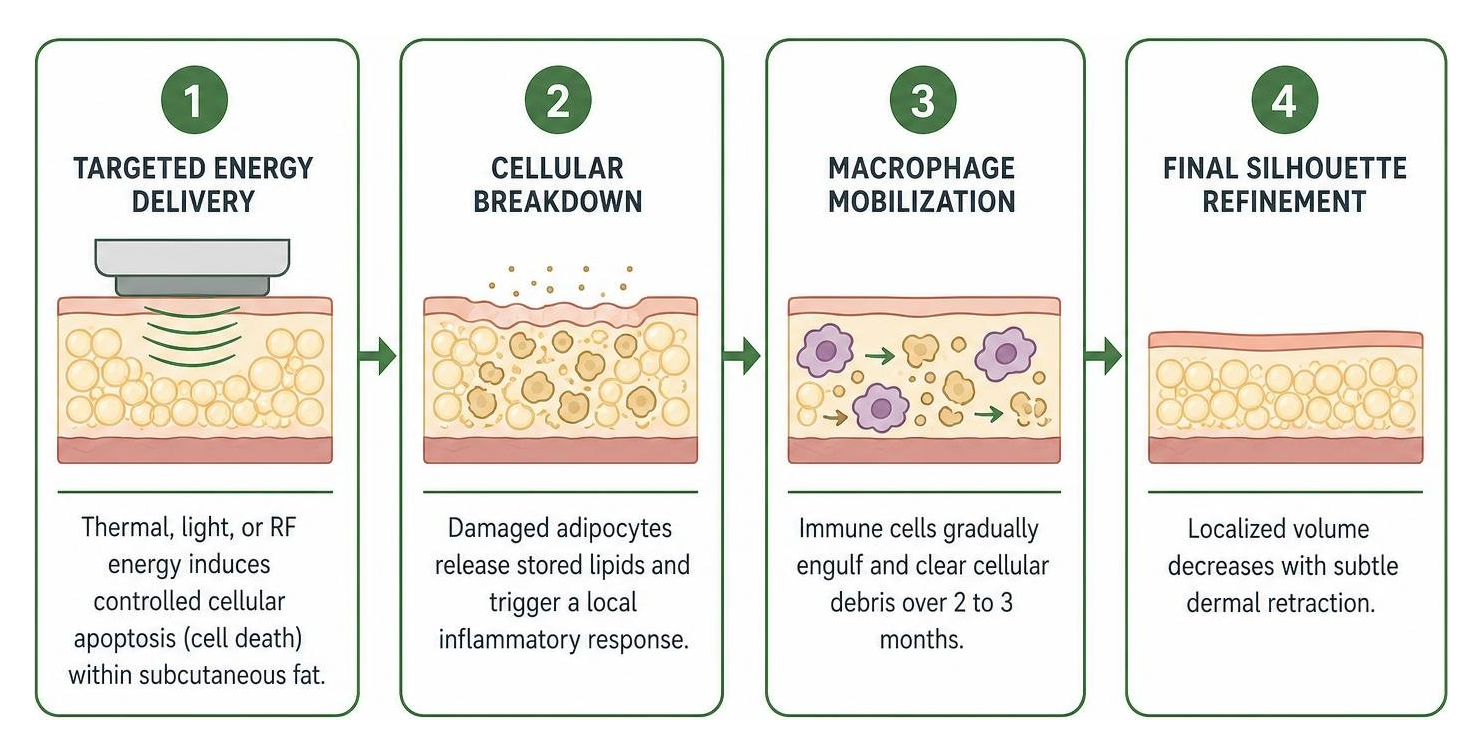
The key distinction is that non-invasive technologies act indirectly. Depending on the device, they use cooling, heating, light, electromagnetic energy, or another mechanism to produce a biological response in treated tissue, with changes that may develop gradually. Direct fat removal works differently: selected subcutaneous fat is physically removed from the treatment area during the procedure. At NovoSculpt, the surgeon directly removes selected fat through small access sites while shaping the treated area, rather than relying on an external device to gradually affect a portion of the targeted fat.
What Are the Limitations of Non-Invasive Body Contouring?
External devices may be appropriate for patients seeking modest, localized contour changes without an invasive procedure. They do not physically extract fat during treatment, and changes may be gradual. Depending on the technology and treatment plan, more than one treatment may be needed.
Non-invasive body contouring does not treat visceral fat and may not be appropriate when a patient seeks removal of a more substantial localized fat deposit. It also cannot correct significant excess skin or muscle separation. Results vary by device, anatomy, treatment protocol, and patient response.
For an appropriately selected patient seeking a more substantial reduction of localized subcutaneous fat, direct physical fat removal may offer an important advantage because selected fat is removed during the procedure rather than relying on an external device to produce a gradual biological response.
For patients comparing liposuction alternatives, the key question is not which modality is universally best. It is which approach is appropriate for the area, the desired degree of contour change, and the patient’s health and recovery preferences.
What Is the Difference Between Non-Surgical Body Sculpting and Liposuction?
Aesthetic body shaping spans external non-invasive devices, physician-led minimally invasive contouring, and more extensive surgical procedures. These approaches differ fundamentally in how they address localized fat and skin concerns.
Non-invasive body contouring acts indirectly through the skin using device-specific cooling, heat, light, or electromagnetic technologies. Minimally invasive liposuction and awake liposuction use small access sites and a cannula to physically remove selected subcutaneous fat. More extensive surgery may be appropriate when a patient’s primary concern is significant excess skin or another anatomical issue that cannot be addressed with fat removal alone.
At NovoSculpt, physician-led minimally invasive liposuction is designed to be performed awake with local tumescent anesthesia when appropriate. For patients comparing local anesthesia liposuction with other approaches, physical removal of localized fat allows the surgical team to assess contours during treatment and plan for natural anatomical transitions. Depending on anatomy and goals, planning may also consider complementary skin tightening, natural fat transfer, or targeted skin reduction.
Can Body Contouring Be Performed Without General Anesthesia?
Yes, some body-contouring procedures can be performed without general anesthesia. NovoSculpt procedures are designed to be performed awake under local tumescent anesthesia. For appropriately selected patients, this avoids general anesthesia and therefore avoids the risks, physiologic effects, and recovery specifically associated with general anesthesia itself.
That distinction does not make a procedure risk-free. Overall procedural risk depends on the patient, treatment extent, technique, medications, facility, individual health factors, and post-procedure care. A consultation is necessary to determine whether awake body contouring is appropriate.
Who Is a Candidate for Body Sculpting?
Candidates are generally adults at or near a stable weight who have localized subcutaneous fat and realistic expectations. Candidacy depends on health history, anatomy, fat distribution, skin quality, treatment extent, medications, nicotine use where relevant, healing considerations, and individual goals.
Significant skin excess, muscle separation, visceral fat, or other anatomical concerns may make another treatment more appropriate. Areas commonly evaluated for body sculpting include the abdomen, flanks, thighs, upper arms, back, chest, chin, and neck.
Patients seeking body contouring Greenwich CT, body sculpting Greenwich CT, Fairfield County body contouring, or Westchester County body contouring should look for an individualized evaluation rather than assuming the same treatment is suitable for every area or patient.
How Long Does Body Sculpting Recovery Take?
Recovery varies substantially by treatment type. Non-invasive technologies often involve little interruption to routine activities, though swelling, redness, tenderness, numbness, or other temporary effects can occur. Recovery from minimally invasive or surgical care depends on the number of areas treated, treatment extent, individual healing, swelling, soreness, and the specific procedure performed.
Because awake minimally invasive contouring does not require recovery from general anesthesia itself, some appropriately selected patients may resume light routine activities relatively quickly. Instructions for activity, compression, wound care, and follow-up should be individualized by the treating team.
What If You Are Dissatisfied With Prior Body Contouring?
Patients who are dissatisfied with contour irregularities or other changes following previous body-contouring treatment may be evaluated to determine whether corrective fat removal, another contouring approach, or no additional procedure is appropriate. The appropriate next step depends on the presentation, timing, severity, anatomy, and individual health factors.
Frequently Asked Questions About Body Contouring
How many sessions are typically required to see visible results?
The answer depends on the technology and the treatment plan. Some non-invasive body contouring treatments may involve a series of sessions, while others are delivered as a single treatment cycle for a specific area. Visible changes from external technologies can develop gradually, and the amount of change varies by device, anatomy, and patient response. Direct fat-removal procedures are planned differently because they physically remove selected subcutaneous fat during the procedure.
Can body sculpting treat visceral fat?
No. Body sculpting targets external body contours and localized subcutaneous fat; it does not treat visceral fat surrounding internal organs. Visceral fat and overall weight-management concerns should be addressed through appropriate medical, nutritional, and lifestyle care.
What happens to fat after it is removed, and can fat return after body contouring?
With direct fat removal, selected fat cells are physically removed from the treated area. Remaining fat cells can still enlarge if weight is gained, and the body’s contours may change over time because of aging, pregnancy, weight fluctuation, and changes in skin quality. Maintaining a stable weight can help support a long-term contouring result, but no procedure guarantees a permanent overall body shape.
What is paradoxical adipose hyperplasia (PAH)?
Paradoxical adipose hyperplasia, or PAH, is a recognized adverse event associated with cryolipolysis in which adipose tissue in the treated area enlarges rather than becoming less prominent. It requires medical evaluation. Decisions about observation, timing, and possible treatment depend on the presentation, severity, anatomy, and the individual patient. Surgical or minimally invasive fat-removal approaches may be considered in appropriate cases, but they are not automatically appropriate for every patient.
How do non-surgical results compare to awake minimally invasive options?
Non-invasive technologies act indirectly through the skin using device-specific cooling or energy-based mechanisms. Minimally invasive direct fat-removal procedures use small access sites to physically remove selected subcutaneous fat. The categories therefore differ in both mechanism and treatment approach.
For appropriately selected patients, physical fat removal may create a more substantial contour change than an external device, depending on anatomy and treatment goals. A consultation can help clarify whether non-invasive body sculpting, awake body contouring, or another approach is the better fit.
Conclusion
Non-invasive body-sculpting treatments and direct fat-removal procedures serve different purposes. External technologies may appeal to patients seeking modest changes without an invasive procedure, while physician-led direct fat removal may be considered when a patient wants physical removal of localized subcutaneous fat and a more substantial change in contour. The appropriate choice depends on anatomy, skin quality, treatment goals, health, and tolerance for recovery.
At NovoSculpt in Cos Cob/Greenwich, Connecticut, specialty-trained, fully accredited plastic surgeons who graduated from U.S. universities focus on awake, minimally invasive body contouring under local anesthesia. Treatment planning may combine targeted fat removal with skin tightening, natural fat transfer, or targeted skin reduction when appropriate for the patient’s anatomy and goals.
If you are considering body sculpting or minimally invasive body contouring, schedule a complimentary consultation to discuss your concerns, treatment options, and an individualized plan.
