
What to Expect From a Tummy Tuck
A tummy tuck, or abdominoplasty, is surgery that removes loose abdominal skin and some fat. It may also tighten the tissue over separated abdominal muscles. People often consider it after pregnancy or major weight loss, when excess skin remains despite diet and exercise. It is not a weight-loss treatment or a quick-recovery alternative to surgery.
Recovery takes planning. Conventional excisional abdominoplasty and NovoSculpt’s minimally invasive abdominal contouring procedures have different treatment plans and recovery expectations. NovoSculpt’s documented general aftercare guidance for applicable minimally invasive procedures includes showering after about 48 hours, compression for at least two weeks, return to full everyday activity around two weeks, and waiting until around six weeks for strenuous activity, unless the treating clinician directs otherwise. These milestones are not a universal protocol for a traditional tummy tuck; follow the surgeon’s individualized instructions.
NovoSculpt has one physical location in Cos Cob/Greenwich, Connecticut. It serves patients from Greenwich, Fairfield County, and nearby Westchester County, New York; it does not have offices in those surrounding towns.
This guide explains the choices, risks, and recovery questions to discuss during an individualized surgical consultation. It does not represent a personal physician authorship statement or medical review.
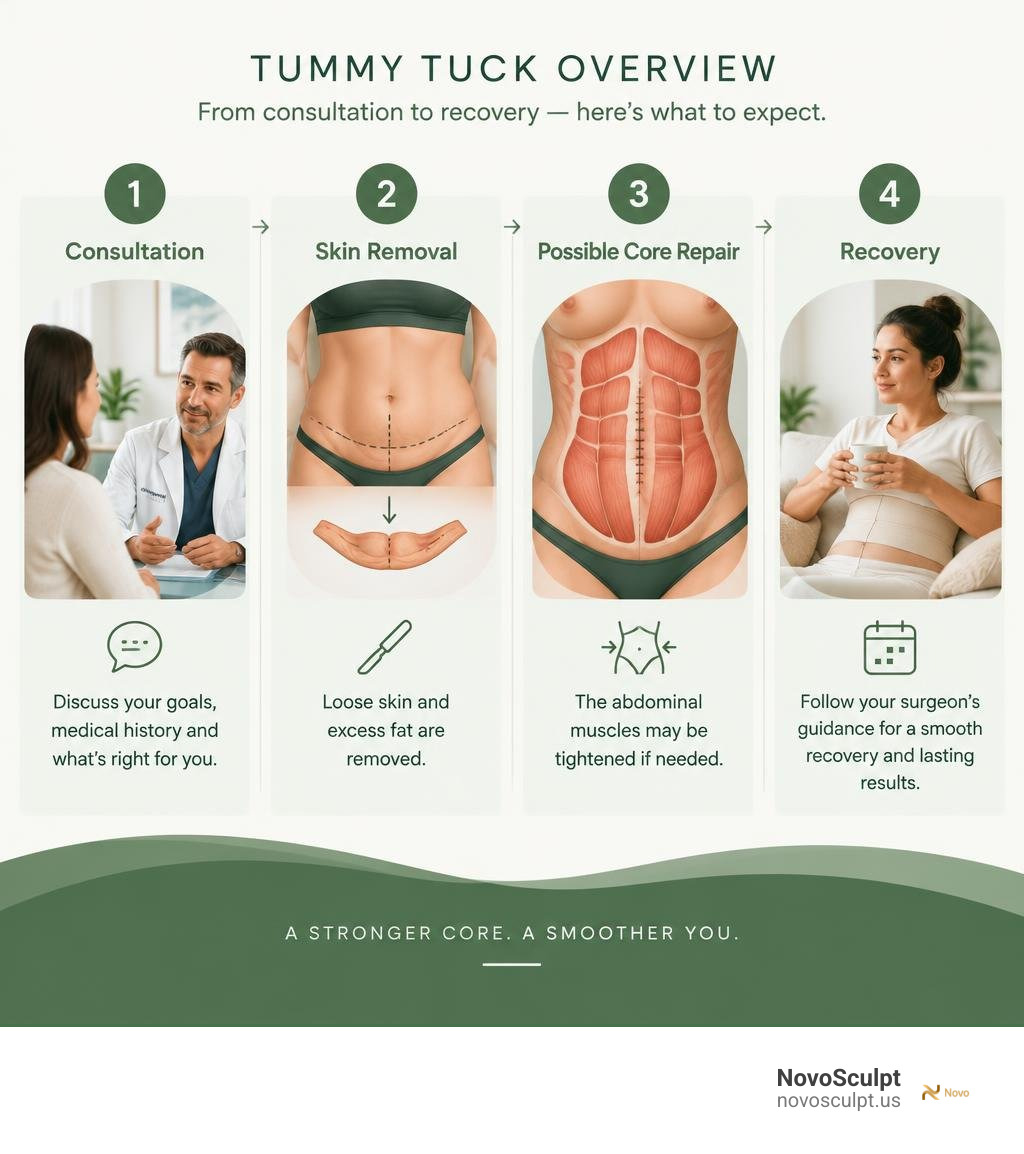
Understanding Tummy Tuck Surgery: Indications, Anatomy, and Candidate Criteria
Abdominoplasty remains a commonly performed cosmetic surgical procedure in the United States, according to the American Society of Plastic Surgeons’ 2023 procedural statistics report. Patients need clear, clinical guidance about what abdominal wall surgery can and cannot accomplish.
The core objective of an abdominoplasty is to correct structural changes within the anterior trunk that cannot be remedied through diet or targeted core exercise alone. These anatomical issues generally fall into three categories:
- Dermal Laxity and Redundancy: Stretched, inelastic skin often resulting from rapid volume changes, childbearing, or natural aging.
- Subcutaneous Adiposity: Persistent localized fat deposits sitting directly between the skin and the underlying musculature, frequently presenting as a persistent C-section shelf.
- Rectus Diastasis: The lateral separation of the paired rectus abdominis muscles along the linea alba, which compromises core stability and creates a rounded, protruding profile.
Evaluating these components requires an interprofessional approach. Plastic surgeons collaborate closely with anesthesiologists, primary care physicians, and nutritional specialists to confirm that a patient is anatomically and systemically ready for surgery.
Who Is an Ideal Candidate for a Tummy Tuck?
Not every patient with abdominal concerns requires a full surgical excision. An ideal candidate presents with clear indications while exhibiting minimal risk factors:
- Weight Stability: A period of relative weight stability can help with planning, but the appropriate timing is individualized.
- Structural Concerns: Skin redundancy, abdominal-wall laxity, and rectus diastasis may be considered when they match the patient’s goals and surgical plan, including a mommy makeover plan when appropriate.
- Nicotine Use: Nicotine can impair wound healing. The surgeon and anesthesia team should provide individualized cessation guidance before and after surgery.
- Overall Health: Cardiovascular, respiratory, metabolic, and medication-related factors help determine whether surgery can be performed safely.
- Future Plans and Expectations: Future pregnancy, likely weight changes, scar acceptance, recovery support, and realistic goals should be discussed before surgery.
Uncontrolled medical conditions, active nicotine use, severe cardiopulmonary disease, prior abdominal surgery, pregnancy plans, and unrealistic expectations may increase risk or lead a surgeon to defer or recommend against surgery. Their significance depends on the individual patient, the planned procedure, and a surgeon’s assessment.
Surgical Anatomy: Vascular Zones, Nerves, and Abdominal Wall Layers
Safe surgical planning requires a detailed understanding of abdominal anatomy. Relevant layers include skin, subcutaneous tissue, Scarpa’s fascia, the anterior rectus sheath, the rectus abdominis muscles, and deeper fascial layers. Individual anatomy and prior surgery can change the operative plan.
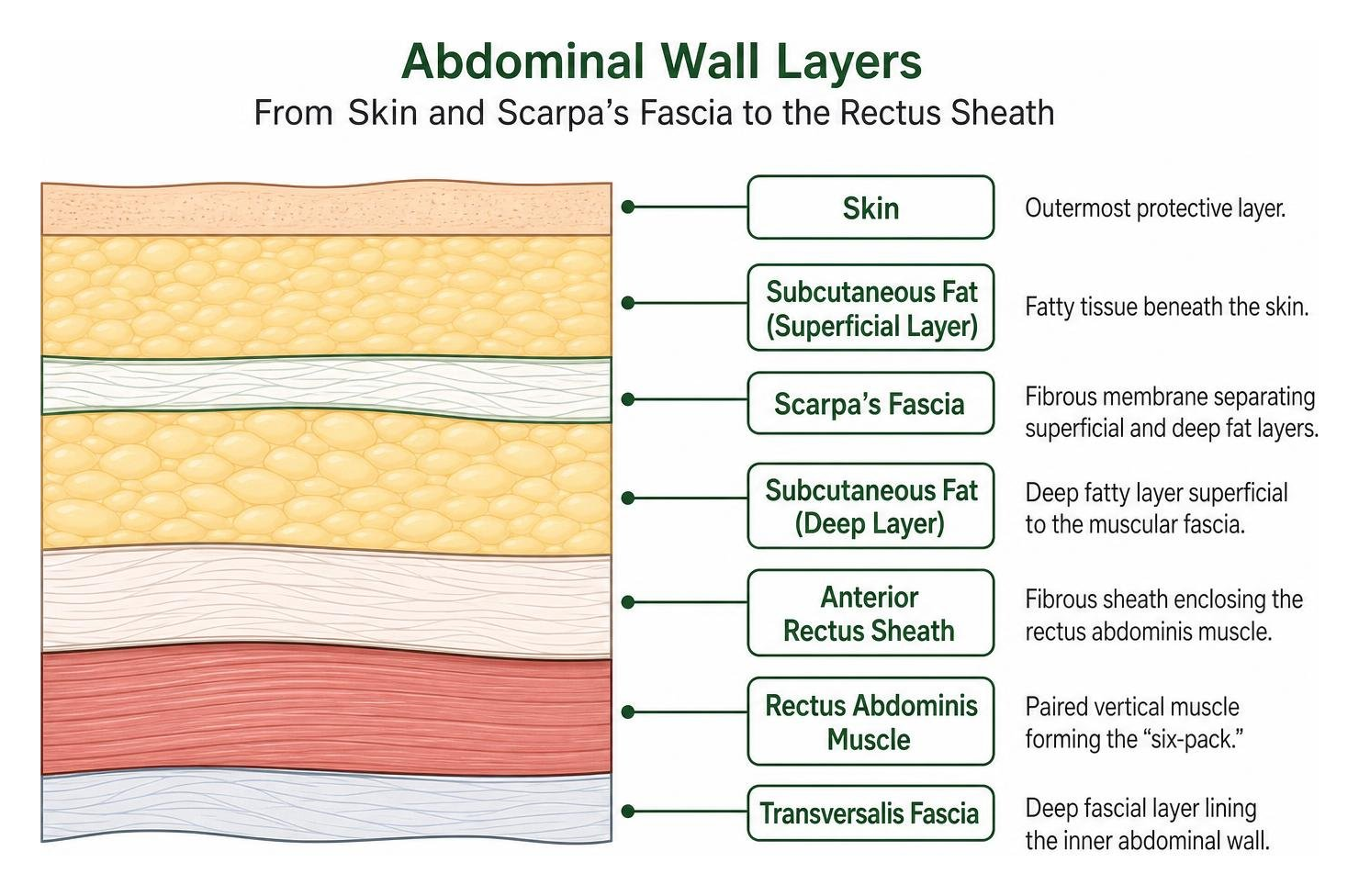
Huger’s vascular-zone concept describes overlapping blood-supply territories of the abdominal wall that surgeons consider during flap design and elevation. Prior scars, body habitus, the extent of dissection, and the chosen technique can affect perfusion. Surgeons plan dissection and closure to protect tissue blood supply, but no technique eliminates the risk of ischemia or wound-healing complications.
Nerves in the lower abdominal and groin region, including branches of the iliohypogastric and ilioinguinal nerves, may be relevant to operative planning. Careful technique aims to reduce the risk of sensory changes or nerve irritation, but temporary or persistent numbness, altered sensation, and discomfort can still occur.
Surgical Variations and Technique Breakdown
Abdominal contouring is not a one-size-fits-all procedure. The operating surgeon tailors the approach to skin laxity, abdominal-wall findings, prior surgical scars, health considerations, and the patient’s goals.
| Procedure Type | Typical Indication | Typical Incision Pattern | Umbilical Management | Abdominal-Wall Repair |
|---|---|---|---|---|
| Full Abdominoplasty | More extensive skin laxity, with or without diastasis | Usually a low transverse incision | May be repositioned | Performed only when indicated and included in the plan |
| Mini-Abdominoplasty | Localized lower-abdominal skin excess | Usually a shorter suprapubic incision | Often left in place | May be limited or not needed |
| Fleur-de-Lis | Marked vertical and horizontal skin laxity after major weight loss | Low transverse and vertical incisions | May be repositioned | Performed only when indicated |
| Reverse Abdominoplasty | Selected upper-abdominal laxity | Incisions may be placed near the inframammary crease | Often left in place | Selective, if indicated |
| Panniculectomy | Functional overhanging pannus without a planned cosmetic contouring procedure | Usually a low transverse incision | Depends on the extent of excision | Not typically part of panniculectomy alone |
Incision placement, umbilical management, and abdominal-wall repair are technique-dependent. Muscle plication is not routine for every patient and is performed only when clinically indicated and included in the surgical plan.
Comparing Full, Mini, Fleur-de-Lis, and Reverse Procedures
A Full Abdominoplasty can address more extensive abdominal skin laxity. Depending on the plan, it may involve flap elevation, removal of excess tissue, umbilical repositioning, and abdominal-wall repair when indicated.
A Mini-Abdominoplasty may be considered for selected patients with lower-abdominal skin excess. The amount of dissection, the need for abdominal-wall repair, scar length, and recovery timing vary by anatomy and operative plan.
For individuals presenting with excess skin after massive weight loss, standard transverse tension alone may leave residual mid-abdominal folds. The Fleur-de-Lis Abdominoplasty incorporates both a low horizontal incision and a vertical midline excision. This dual-vector approach tightens the waistline horizontally while eliminating vertical skin laxity, creating a contoured silhouette at the expense of an inverted-T scar.
A Reverse Abdominoplasty may address selected cases of upper-abdominal laxity using incisions near the inframammary creases. It is not appropriate for every pattern of abdominal laxity.
Step-by-Step Surgical Execution: Flap Dissection to Rectus Plication
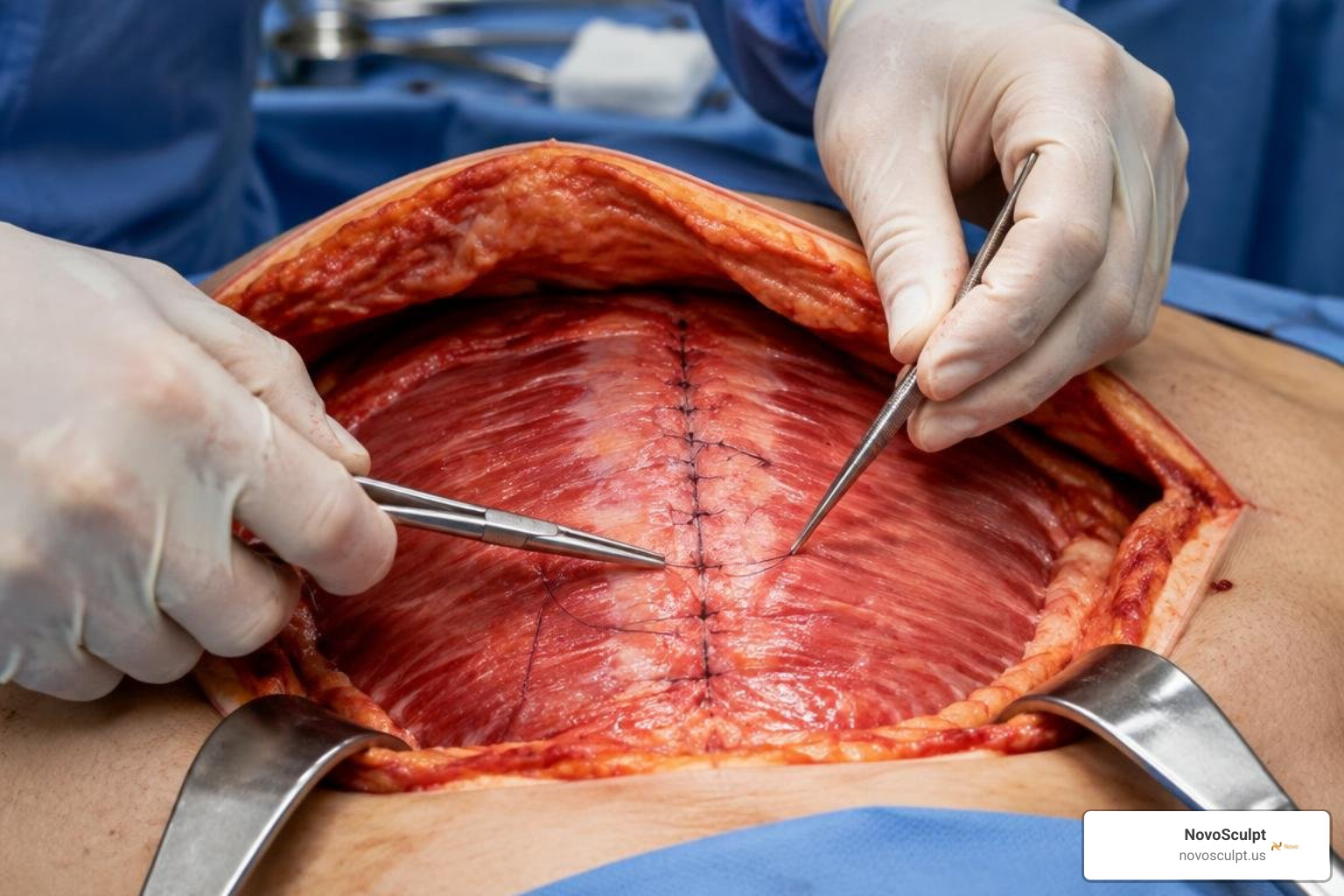
Executing an abdominoplasty requires systematic surgical stages:
Typical abdominoplasty steps vary by technique and patient anatomy:
- Preoperative Marking and Incision: The surgeon plans incisions based on anatomy, scar placement goals, and the selected procedure.
- Tissue Dissection: The extent and plane of dissection are individualized to the surgical plan, with attention to tissue perfusion and prior scars.
- Umbilical Management: In procedures that require it, the umbilicus may be preserved on its stalk and repositioned through a new opening.
- Abdominal-Wall Repair: Rectus plication or another repair may be performed only when indicated and included in the operative plan.
- Tissue Redraping and Excision: Excess tissue may be removed and the remaining tissue positioned to reduce closure tension.
- Layered Closure: The surgeon closes the incision in layers and uses drains, progressive tension sutures, or other measures when appropriate.
Surgical Safety, Complications, and Risk Reduction Strategies
Abdominoplasty is a major surgical procedure with risks that vary by the extent of surgery, patient health, smoking or nicotine exposure, prior operations, body composition, and postoperative care. Potential complications include fluid collections, bleeding, infection, wound-healing problems, changes in sensation, scarring, and blood clots. A personalized risk assessment is essential before surgery.
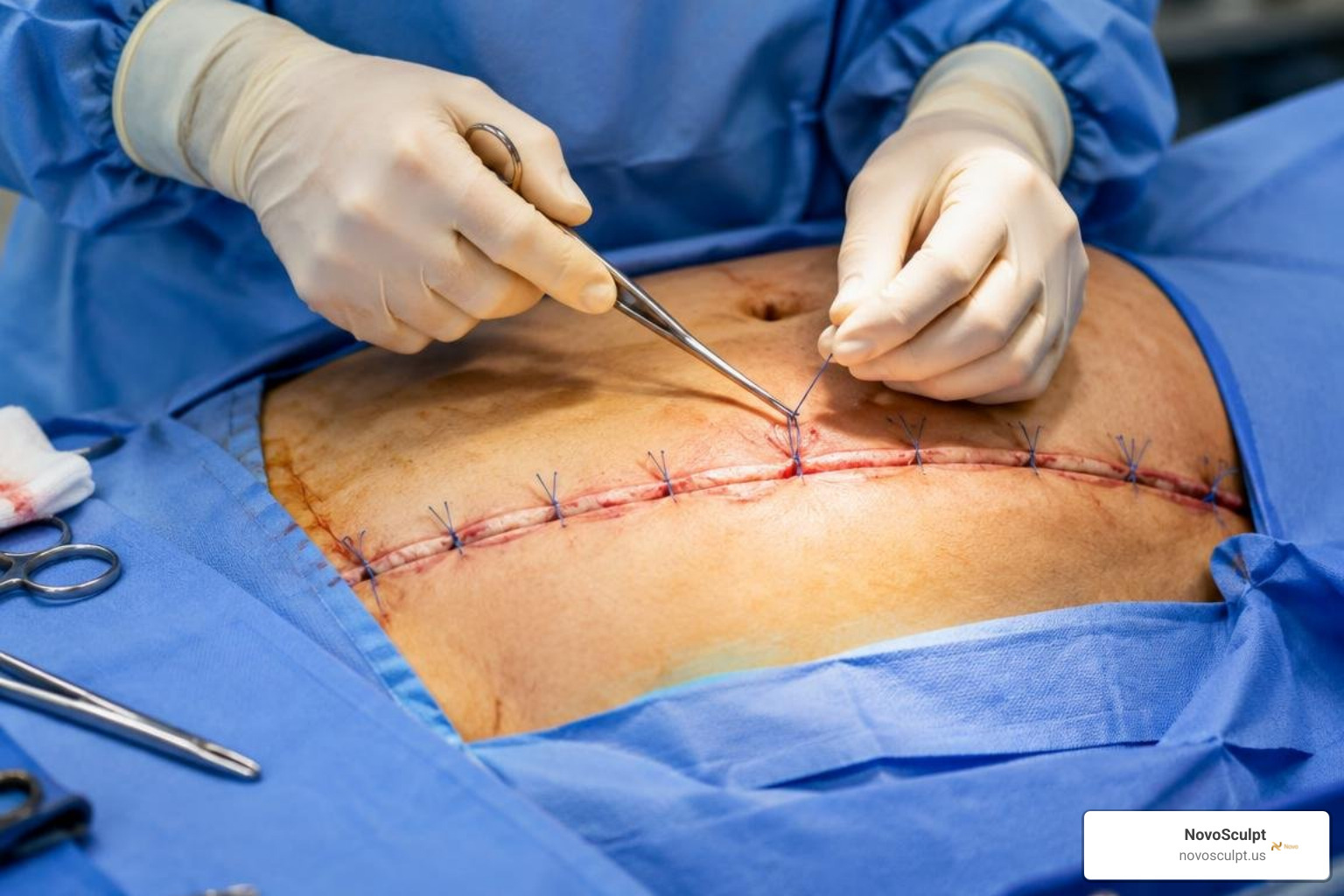
Potential complications discussed during consent may include:
- Seroma: Fluid collection beneath the skin flap.
- Hematoma: Bleeding that may require monitoring or additional treatment.
- Infection: A wound or deeper-tissue infection requiring clinical evaluation and treatment.
- Skin or Wound-Healing Problems: Delayed healing, tissue compromise, or unfavorable scarring.
- Venous Thromboembolism: Blood clots, including deep vein thrombosis or pulmonary embolism.
Managing Postoperative Risks: Seroma, Hematoma, and Tissue Perfusion
A seroma is a fluid collection that can develop in the space beneath an elevated flap. Progressive tension sutures (PTS) and other techniques may reduce fluid collections or the need for drains in selected cases, but they do not guarantee prevention of seroma, hematoma, ischemia, infection, or wound complications. The surgeon selects closure and drain strategies based on the procedure and patient-specific risks.
Meticulous hemostasis, careful tissue handling, thoughtful flap design, tension management, and nicotine cessation guidance are intended to reduce risk. They cannot eliminate the possibility of bleeding, impaired perfusion, tissue loss, or wound-healing problems.
Blood-clot prevention is individualized. Depending on a patient’s risk factors and the planned procedure, the care team may use early ambulation, compression devices, and medication when appropriate.
Impact of GLP-1 Agonists and Massive Weight Loss on Outcomes
GLP-1 receptor agonists, including semaglutide and tirzepatide, require individualized perioperative planning. Management depends on the patient’s symptoms, treatment phase, anesthesia plan, procedure, and other clinical circumstances. Patients should not independently stop prescribed medication; they should follow instructions from their prescribing clinician and surgical or anesthesia team. NovoSculpt’s body contouring guidance for GLP-1 patients should be considered alongside individualized clinical advice.
- Aspiration-Risk Assessment: The surgical and anesthesia teams assess gastrointestinal symptoms, medication timing, and the planned anesthetic approach when determining perioperative instructions.
- Nutritional Evaluation: Protein and micronutrient testing may be appropriate for selected patients, particularly after substantial weight loss or bariatric surgery. Testing can identify issues that warrant attention, but it does not guarantee healing outcomes.
- Weight Stability: The timing of body-contouring surgery after weight loss is individualized and considers health, nutritional status, anatomy, goals, and the likelihood of further weight change.
The Recovery Roadmap and Postoperative Milestones
Recovery after conventional excisional abdominoplasty is individualized and may differ substantially from recovery after NovoSculpt’s minimally invasive abdominal contouring procedures. The postoperative recovery timeline describes NovoSculpt guidance for applicable treatments, not a universal timeline for a traditional tummy tuck.
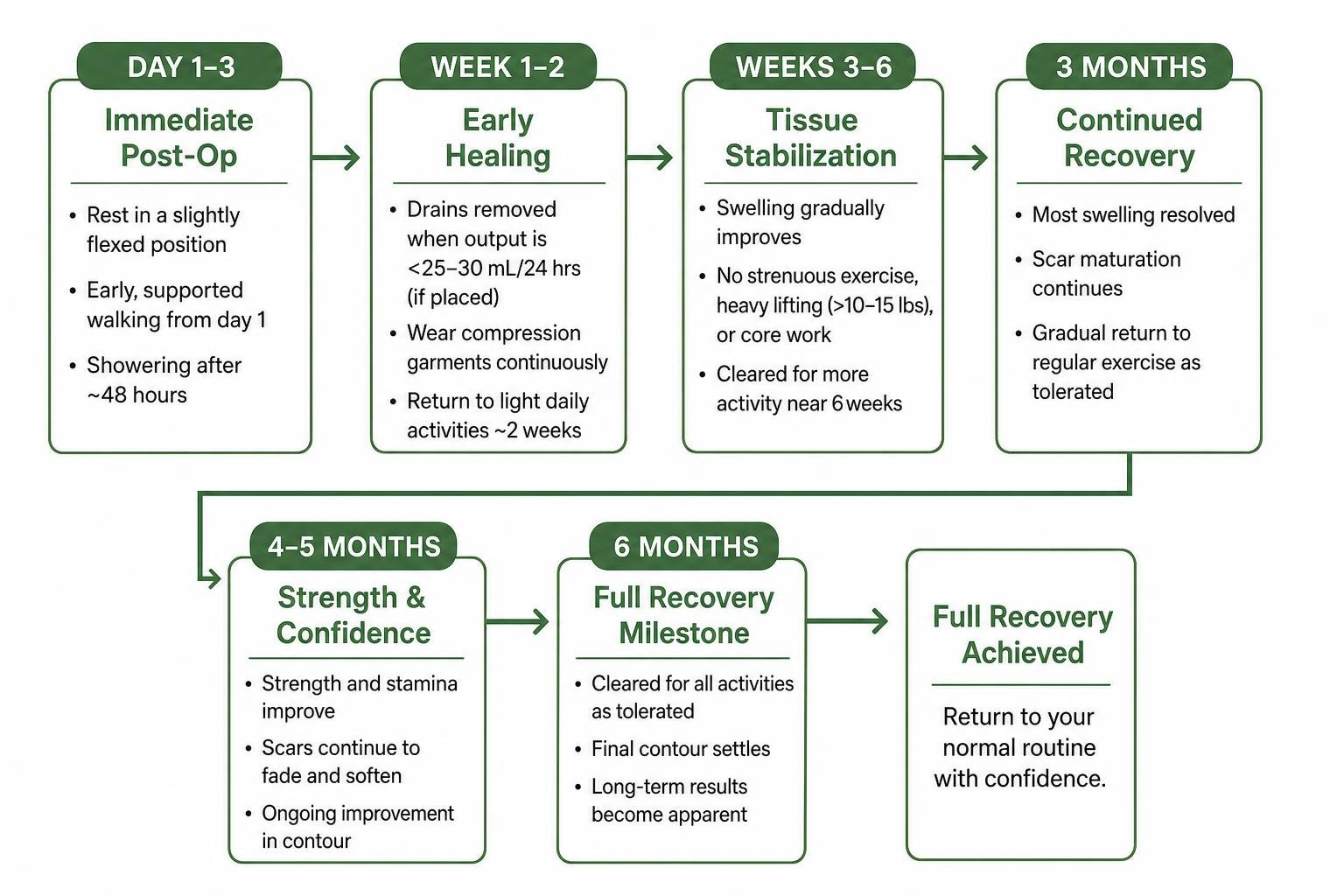
Timeline for Healing: Drains, Compression, and Activity Resumption
- Immediate Recovery: Patients commonly receive instructions about walking, positioning, pain control, wound care, and when showering is appropriate. The timing depends on the operation, dressings, drains, and the surgeon’s instructions.
- Early Healing: If drains are used, removal is based on the surgeon’s clinical assessment and drainage pattern. Compression, work restrictions, and driving guidance also vary by procedure and recovery.
- Return to Activity: Lifting, exercise, and core activity are advanced gradually when the treating surgeon determines that healing supports it.
- Longer-Term Changes: Swelling, contour, sensation, and scar appearance can continue to change for months. The pace and extent of recovery vary among patients.
Optimizing Long-Term Tummy Tuck Results and Scar Maturation
Incision lines change through normal wound-healing phases. Scars can become firmer, raised, pink, or itchy before gradually remodeling, but the timing and final appearance vary with the procedure, skin type, healing, and individual biology.
Scar-care recommendations may include silicone products, sun protection, and avoiding premature tension on the incision, as directed by the treating clinician. Long-term contour and functional outcomes vary; maintaining a stable lifestyle and returning to exercise only when cleared may support recovery but cannot guarantee a particular result.
Frequently Asked Questions About Abdominoplasty
How long does recovery typically take?
Recovery time varies with the extent of surgery, whether drains or abdominal-wall repair are used, the patient’s health, and the surgeon’s instructions. Traditional abdominoplasty often requires a longer and more restrictive recovery than minimally invasive abdominal contouring. NovoSculpt’s documented general aftercare milestones apply only to appropriate NovoSculpt procedures and do not replace a conventional tummy-tuck surgeon’s instructions.
Can rectus diastasis be permanently repaired?
Rectus plication can improve abdominal-wall contour and may improve symptoms for selected patients, but outcomes vary. Pregnancy, substantial weight change, tissue quality, and other factors can affect durability, and recurrence can occur.
What is the difference between a drainless procedure and standard drainage?
Traditional abdominoplasty may use external suction drains to manage fluid beneath the flap. Drainless approaches may use progressive tension sutures or related techniques to reduce dead space and may reduce the need for drains in selected cases. Neither approach guarantees that fluid collections or other complications will not occur.
Conclusion
Abdominoplasty remains the definitive surgical solution for correcting redundant abdominal skin, stubborn subcutaneous fat pockets, and pregnancy- or weight-related rectus diastasis. Achieving safe, balanced, and enduring outcomes requires precise anatomical planning, personalized surgical selection, and strict adherence to postoperative recovery milestones.
Whether you are considering post-weight-loss reconstruction, a conventional tummy tuck, or physician-led minimally invasive options such as awake abdominal sculpting under local anesthesia, an individualized evaluation is essential. NovoSculpt offers consultations from its single location in Cos Cob, Greenwich, Connecticut, for patients from Greenwich, Fairfield County, and nearby Westchester County, New York. A consultation can help determine whether a conventional surgical procedure, a minimally invasive option, or no procedure is appropriate for your anatomy, health, and goals.
References
- Dawson-Amoah K, Kelecy M, Szymanski KD. Abdominoplasty. In: StatPearls [Internet]. Treasure Island, FL: StatPearls Publishing; 2026 Jan–. Updated March 3, 2026. Accessed November 4, 2026.
- American Society of Plastic Surgeons. Plastic Surgery Sees Steady Growth Amidst Economic Uncertainty, American Society of Plastic Surgeons 2023 Procedural Statistics Report Finds. Published 2024.
- American Society of Anesthesiologists. Drugs for Diabetes or Weight Loss: What To Know Before Surgery. Medically reviewed October 22, 2025. Accessed November 4, 2026.
- Rao G, Daneshi K, Ceccaroni A, et al. A Systematic Review and Meta-Analysis Evaluating the Surgical Outcomes of Progressive Tension Suturing Compared to Drains in Abdominoplasty Surgery. Aesthetic Surgery Journal. 2025;45(1):71–83. doi:10.1093/asj/sjae171.
