
What Are Cankles and What Causes Lower-Leg Fullness?
Quick Answer: Cankle surgery is a form of lower-leg contouring used to reduce localized subcutaneous fat around the ankles and lower calves. For appropriately selected patients, targeted fat removal may improve the transition between the calf and ankle and make natural landmarks such as the Achilles tendon and ankle bones more visible. However, not all ankle fullness is caused by fat. Swelling, venous or lymphatic conditions, lipedema, muscle anatomy, and bone structure can also affect lower-leg appearance, making proper evaluation important before cosmetic treatment.
Cankle surgery generally refers to targeted lower-leg liposuction or fat removal designed to reduce localized subcutaneous fat around the ankle and lower calf. By selectively reducing fat surrounding the natural anatomical landmarks of the lower leg, treatment may improve the visible transition between the calf, Achilles tendon, and ankle. The goal is not to alter or “carve” those structures; it is to assess whether surrounding soft tissue can be reduced in a way that respects the patient’s natural anatomy.
“Cankles” is a nonmedical term for an ankle area with little visible taper from the calf. That appearance can result from one factor or several working together:
- Fat distribution and weight change: Some people store more subcutaneous fat around the lower calf and ankle. Weight loss can reduce overall body fat, but it cannot direct fat loss to one chosen area.
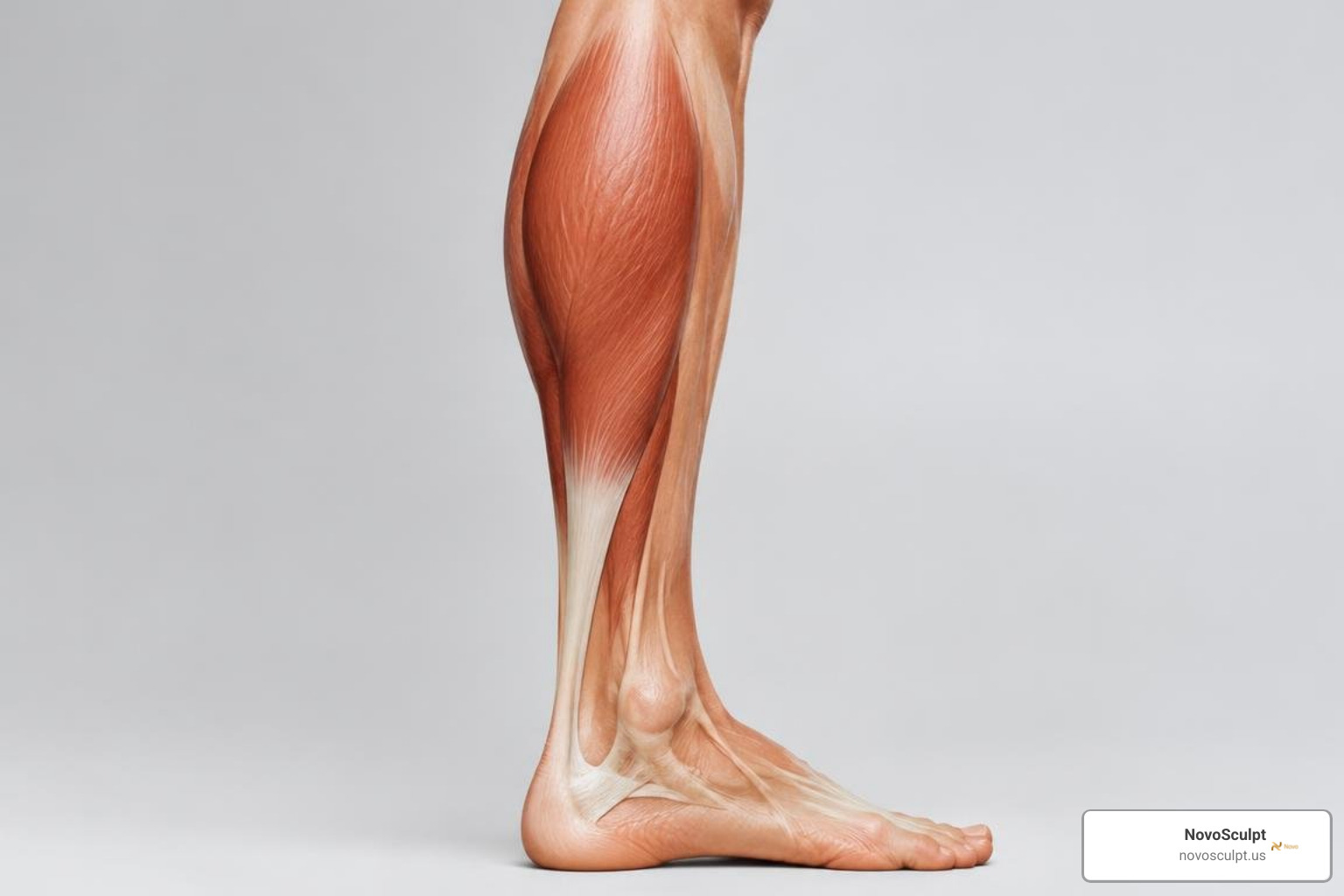
- Calf-muscle and skeletal anatomy: A low calf-muscle insertion, fuller calf musculature, wider ankles, or bone structure can all affect the calf-to-ankle transition. These features are not changed by fat removal.
- Fluid retention (edema): Prolonged standing or sitting, high sodium intake, pregnancy, medications, or other factors can contribute to temporary ankle swelling.
- Venous or lymphatic conditions: Problems with circulation or lymphatic drainage can cause persistent swelling and need medical assessment rather than an assumption of cosmetic fat.
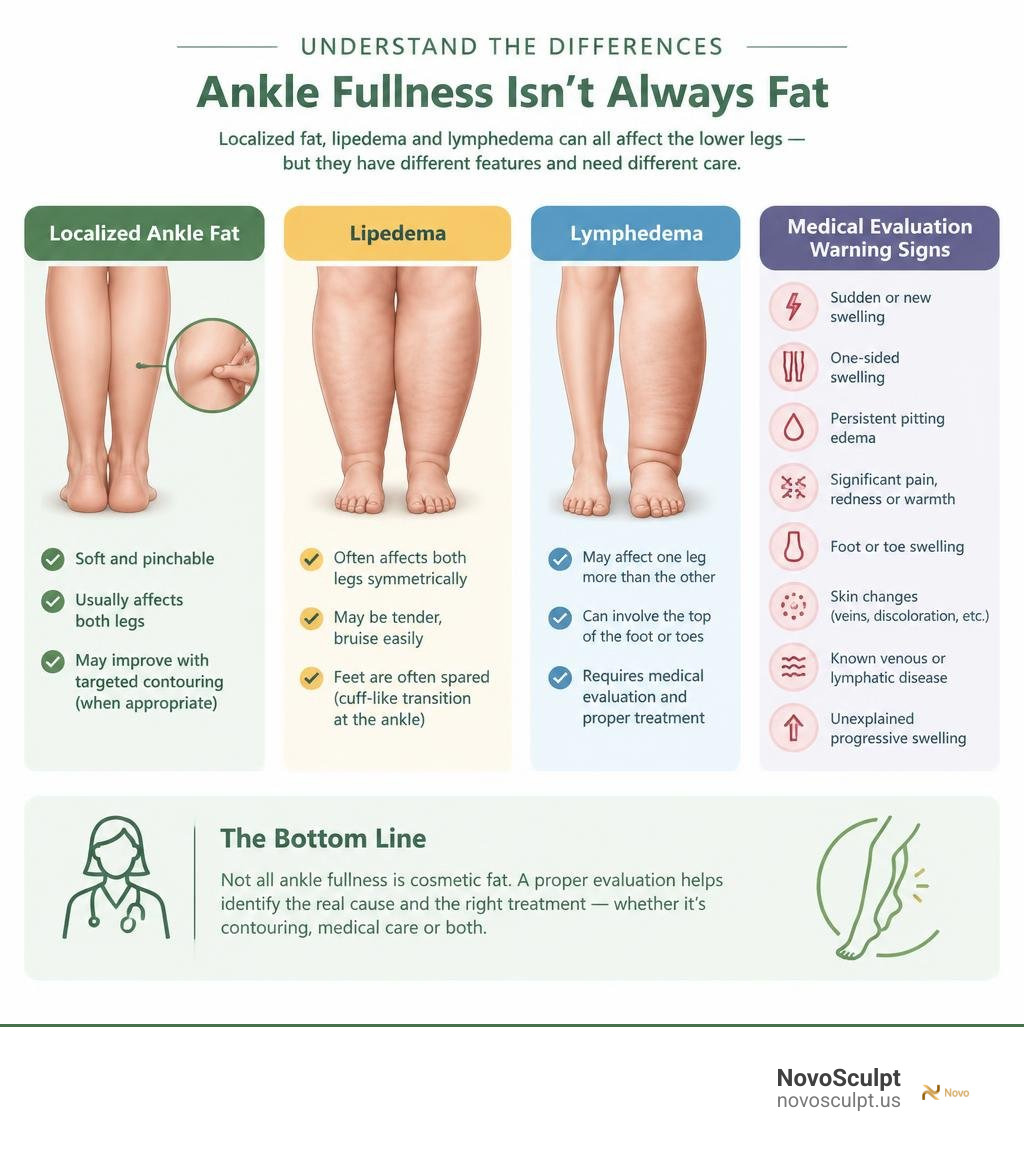
When Ankle Fullness May Not Be Cosmetic Fat
Localized subcutaneous fat is usually soft and pinchable and may obscure ankle definition. After an individualized evaluation, it may be appropriate to discuss cosmetic contouring.
Lipedema is a chronic disorder involving loose connective/adipose tissue. It commonly affects both legs symmetrically and may include tenderness, pain with pressure, easy bruising, and disproportionate lower-body enlargement. The feet may be relatively spared, creating a cuff-like transition at the ankle. Lipedema requires appropriate medical evaluation; it should not be reduced to a cosmetic concern. Clinical guidance on lipedema discusses these distinguishing features.
Lymphedema involves abnormal accumulation of lymphatic fluid. It may affect one leg more than the other and can involve the top of the foot or toes. It requires medical evaluation and should not simply be treated as cosmetic ankle fat. A clinical review of lipedema and lymphedema explains why these conditions require different assessment and management.
Venous or other edema can also cause lower-leg fullness. Persistent, unexplained, or progressive swelling may have circulatory or systemic causes that should be evaluated first.
When lower-leg swelling should be medically evaluated
Cosmetic treatment should not be the first assumption for sudden new swelling, substantial one-sided swelling, persistent pitting edema, significant pain, redness or warmth, unexplained foot or toe swelling, skin changes that may suggest vascular disease, known venous or lymphatic disease, or unexplained progressive swelling. This guide cannot diagnose the cause of swelling; seek timely medical evaluation when these symptoms are present.
How Does Cankle Surgery Work?
Lower-leg contouring requires careful planning because the skin, superficial nerves, vessels, and natural contours around the ankle are delicate. Cankle surgery is not appropriate for every lower-leg shape or every type of swelling.
Step-by-Step Cankle Surgery Procedure
- Assessment and standing markings: The clinician evaluates lower-leg proportions, pinchable fat, skin quality, calf anatomy, and ankle landmarks while planning a conservative, natural transition.
- Local tumescent anesthesia when appropriate: A tumescent solution is placed in the treatment area to numb tissue and help limit bleeding through local vasoconstriction. Tumescent liposuction is a recognized technique, but every procedure still carries risks and requires appropriate patient selection. This peer-reviewed review describes its core principles.
- Small access points: Tiny incisions may be placed in discreet locations around the lower leg or ankle.
- Selective fat disruption and removal: Fine cannulas are used to disrupt and remove selected subcutaneous fat. Treatment is intended to preserve and reveal natural anatomical transitions, not manufacture artificial anatomy or change bone and muscle structure.
- Contour reassessment: When treatment is performed awake, repositioning or gentle movement may provide additional opportunities to assess the lower-leg contour from different positions. It does not guarantee symmetry.
- Compression and follow-up: Dressings, compression, activity guidance, and follow-up are tailored to the treatment plan and individual healing.
Who May Be a Candidate for Cankle Surgery?
Appropriate candidates generally have localized subcutaneous fat that contributes meaningfully to ankle or lower-calf fullness, a reasonably stable weight, skin quality that may support contouring, and realistic expectations. They also understand that fat removal cannot change bone width, calf-muscle insertion, skeletal anatomy, or untreated medical swelling.
A consultation should consider medical history, circulation, prior swelling, medications, skin quality, the amount and distribution of fat, and whether the desired change is anatomically realistic. People with untreated or unexplained lower-leg swelling, active infection, significant vascular concerns, or a condition that requires medical management rather than cosmetic contouring should be evaluated appropriately before considering treatment.
Can Cankle Surgery Be Performed Awake?
NovoSculpt procedures are designed to be performed awake under local tumescent anesthesia when appropriate. For appropriately selected patients, this avoids general anesthesia and therefore avoids the risks, physiologic effects, and recovery specifically associated with general anesthesia itself. This does not make the procedure risk-free or establish that every local-anesthesia procedure is safer overall.
Tumescent local anesthesia can help control discomfort and limit bleeding during liposuction. The approach, monitoring, treatment extent, and suitability for an awake procedure are individualized. NovoSculpt’s specialty-trained, fully accredited plastic surgeons who graduated from U.S. universities emphasize patient selection, transparent risks, and follow-up care.
Cankle Surgery Recovery, Risks, and Long-Term Results

What Is Recovery Like After Cankle Surgery?
Recovery varies with the extent of treatment, individual anatomy, amount of fat removed, tissue response, circulation, activity, compression use, and individual healing. The ankles are gravity-dependent, so swelling may persist or fluctuate longer than it does in some other treatment areas.
- Early recovery: Walking is commonly encouraged according to postoperative instructions. Drainage, swelling, tenderness, and bruising can occur.
- The first weeks: Compression and activity guidance are individualized. Bruising and swelling often improve progressively, although ankle swelling may fluctuate after activity, prolonged standing, or travel.
- Following months: Residual dependent swelling can continue to improve gradually. Some appropriately selected patients may return to light or desk-based activities relatively quickly, but recovery timing is not the same for everyone.
- Evaluating the result: The contour becomes easier to assess as swelling resolves and tissues settle. Final timing varies, so it should not be judged too early.
What Are the Risks of Cankle Surgery?
Potential side effects and complications can include swelling or prolonged dependent edema, bruising, tenderness, temporary numbness or altered sensation, contour irregularity, asymmetry, skin laxity, pigmentation changes, access-site scarring, infection, bleeding or hematoma, seroma or fluid collection, delayed healing, and the possible need for additional treatment or revision. Vascular and thromboembolic complications are uncommon but medically important considerations in surgical planning.
Risk is influenced by anatomy, treatment extent, technique, skin quality, medical history, postoperative care, and clinician experience. A large clinical series of tumescent liposuction reported uncommon events requiring follow-up, including seroma, hematoma, infection, deep-vein thrombosis, skin injury, and edema; it reinforces why informed consent and individualized postoperative instructions matter. Read the study.
Are Cankle Surgery Results Permanent?
Fat cells physically removed during liposuction do not return to the treated area. However, this does not mean the appearance of the ankle and lower leg is guaranteed to remain unchanged permanently. Remaining fat cells can enlarge with future weight gain, while aging, skin changes, swelling, pregnancy, and other anatomical or medical factors may affect contour over time.
The useful distinction is simple: physical removal of selected fat cells can be lasting; the appearance of the lower leg can still change.
Cankle Surgery Cost, Insurance, and Alternatives
How Much Does Cankle Surgery Cost?
Reliable published ankle-specific averages for Connecticut or the Northeast are limited. The closest credible benchmark is broader U.S. liposuction pricing: the American Society of Plastic Surgeons currently lists an average surgeon/professional fee of $4,711 for liposuction. That figure is not an ankle-specific quote and does not include anesthesia, operating-room or facility fees, or other related expenses. See the current ASPS cost guidance.
Total cost for lower-leg contouring can vary substantially based on the number of areas treated, treatment complexity, the amount of work required, facility and staffing, anesthesia approach, medications, garments, preoperative testing, follow-up care, and geographic region. Awake/local-anesthesia treatment may not require a separate general-anesthesia or anesthesia-professional fee depending on the setting and treatment plan, but local anesthesia is not automatically “free.”
Important pricing disclaimer: These figures are general market estimates and are not NovoSculpt pricing. NovoSculpt treatment costs are determined individually based on the areas treated, anatomy, procedural complexity, and treatment plan.
Does Insurance Cover Cankle Surgery?
Cosmetic ankle fat removal is generally elective and is not typically covered by health insurance. When lower-leg enlargement is related to a diagnosed medical condition, coverage decisions depend on the diagnosis, functional impact, insurer requirements, documentation, and authorization rules. A cosmetic consultation cannot substitute for evaluation of suspected lipedema, lymphedema, venous disease, or other medical causes of swelling.
What Can Fat Removal Change—and What Can’t It Change?
| Fat removal may address | Fat removal does not directly change |
|---|---|
| Localized subcutaneous ankle fat | Bone width or skeletal anatomy |
| Lower-calf fat contributing to reduced taper | Calf-muscle insertion or muscle shape |
| Fat that obscures natural ankle landmarks | Lymphedema or venous disease |
| Disproportion caused partly by localized adipose tissue | Every form of lipedema |
| — | Significant skin laxity by fat removal alone |
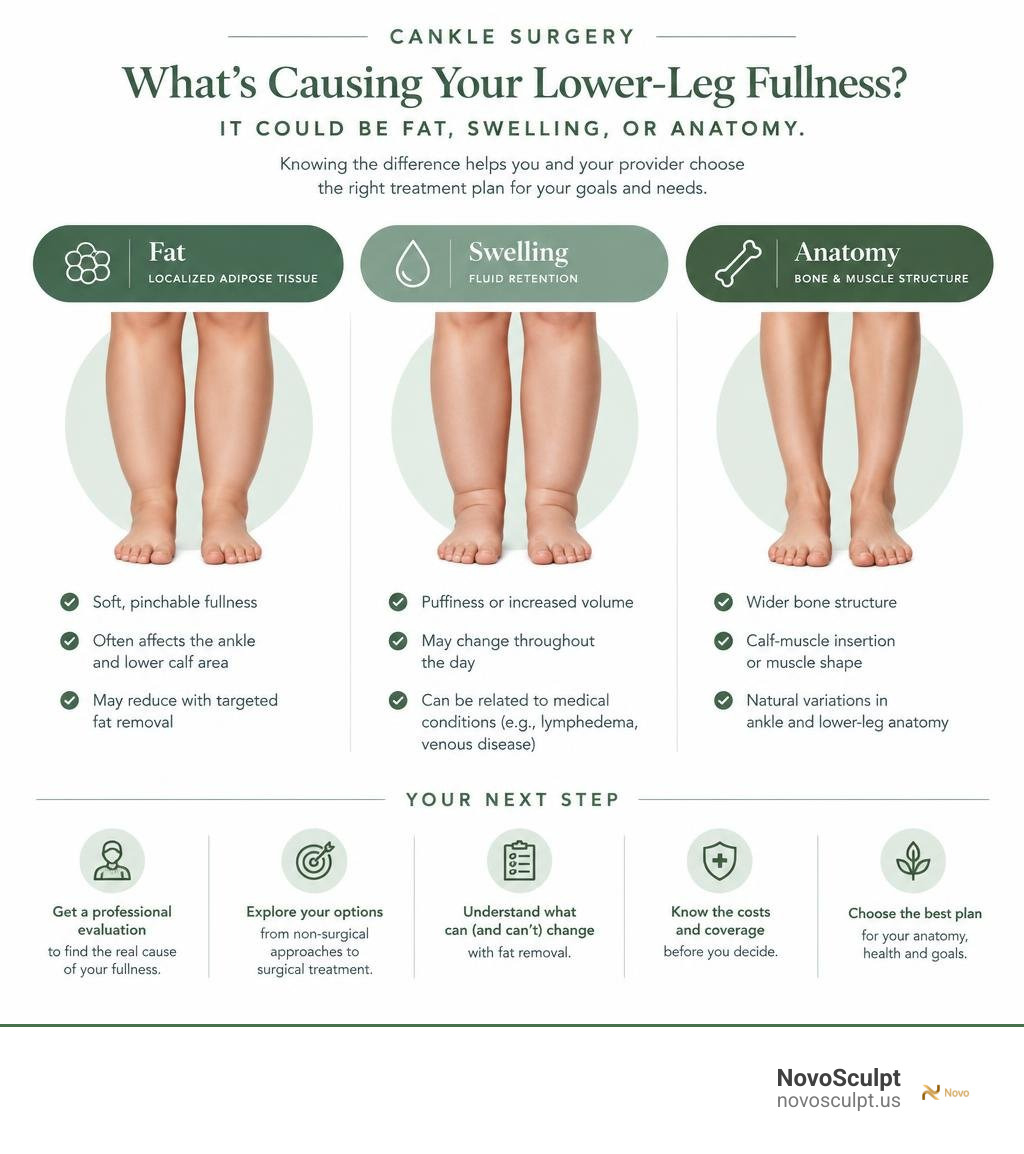
The best option depends on the actual anatomical or medical cause of the fullness.
What Are the Non-Surgical Alternatives?
Dietary changes may reduce fluid retention for some people, and exercise can improve overall fitness and calf-muscle conditioning. Neither can control exactly where body fat is lost. Compression may help certain forms of swelling but does not remove subcutaneous fat.
External, non-surgical fat-reduction technologies use device-specific mechanisms to affect tissue without physically extracting selected fat during treatment. Their applicability to the ankle depends on device design, anatomy, treatment area, and patient characteristics. Direct fat removal works differently: selected subcutaneous fat is physically removed during the procedure, allowing the clinician to contour the transition between the lower calf and ankle while respecting the patient’s natural anatomy.
Cankle Surgery FAQs
What is cankle surgery?
Cankle surgery is a consumer term for targeted lower-leg liposuction or fat removal intended to reduce localized subcutaneous fat around the ankles and lower calves. It is only relevant when an evaluation indicates that fat—not swelling, medical disease, muscle, or bone anatomy—is a meaningful contributor.
Can cankles actually be removed?
Localized ankle fat may be reduced in an appropriately selected patient. However, no procedure removes every cause of lower-leg fullness or changes calf muscles, bone structure, venous disease, lymphatic swelling, or every form of lipedema.
Is cankle surgery the same as ankle liposuction?
Often, yes. “Cankle surgery,” “ankle liposuction,” “ankle fat removal,” and “lower-leg contouring” are commonly used to describe related cosmetic fat-removal concepts. The exact technique and candidacy assessment vary by patient.
How do I know if my cankles are fat or swelling?
A soft, pinchable layer may suggest subcutaneous fat, but appearance alone cannot diagnose the cause. New, painful, one-sided, pitting, red, warm, foot-involving, or progressive swelling should be medically evaluated before cosmetic treatment.
Can diet and exercise get rid of cankles?
Diet and exercise can reduce overall body fat and improve muscle conditioning, but they cannot control exactly where fat is lost. If ankle fullness persists because of an individual’s fat-distribution pattern, weight loss may not create the desired calf-to-ankle definition. Fat removal also cannot change a broad skeletal structure, calf-muscle anatomy, or swelling caused by a medical condition.
Can ankle liposuction change the shape of my calf muscles?
No. It may reduce selected fat around the lower calf and ankle, but it does not alter muscle insertion, muscle size, or bone structure.
How long does swelling last after cankle surgery?
Swelling can improve gradually over weeks to months and may fluctuate because the ankles are gravity-dependent. Individual healing, treatment extent, circulation, activity, and compression use all affect the timeline.
Why can ankle liposuction swell longer than abdominal liposuction?
Fluid in the lower legs is affected by gravity and may be slower to clear, particularly after standing, walking, or travel. Your clinician’s compression, elevation, movement, and follow-up instructions should guide recovery.
Can cankle surgery be performed awake?
For appropriately selected patients, NovoSculpt is designed to perform treatment awake under local tumescent anesthesia. This avoids general anesthesia and its specific recovery effects, but it does not make the procedure risk-free or suitable for everyone.
How much does cankle surgery cost?
Ankle-specific regional averages are limited. Broader U.S. liposuction surgeon-fee benchmarks can provide context, but total costs depend on the treatment plan and are not interchangeable with a NovoSculpt quote.
Can lipedema cause cankle-like ankles?
Yes. Lipedema can involve bilateral lower-extremity tissue enlargement and may create an ankle cuff while sparing the feet. It is a medical condition that needs appropriate evaluation rather than a cosmetic assumption.
Can lymphedema be treated with cosmetic ankle liposuction?
Cosmetic ankle liposuction should not be presented as treatment for lymphedema. Lymphedema requires medical evaluation and condition-specific management.
What is NovoSculpt NoMo Cankles?
At NovoSculpt, NoMo Cankles is the branded treatment approach for appropriately selected patients whose lower-leg fullness is caused in meaningful part by localized subcutaneous fat. Treatment focuses on physically removing selected fat while respecting the natural transition between the calf, Achilles region, and ankle. Planning is individualized; when clinically appropriate for lower-body proportion, adjacent areas such as the calves, knees, or thighs may also be evaluated, but not every patient needs multiple areas treated.
Conclusion: Choosing the Right Approach to Lower-Leg Fullness
Lower-leg fullness can come from localized fat, muscle and bone anatomy, swelling, or medical conditions, so successful treatment begins by identifying the cause. When localized subcutaneous fat is an important contributor, targeted physical fat removal may improve the transition between the calf and ankle by reducing fat that obscures the area’s natural anatomical landmarks.
At NovoSculpt in Cos Cob, Greenwich, Connecticut, NoMo Cankles is designed for appropriately selected patients seeking targeted ankle and lower-leg contouring. NovoSculpt uses an awake, local-anesthesia approach when appropriate and physically removes selected subcutaneous fat while focusing on natural anatomical transitions. NovoSculpt serves patients from Greenwich, Fairfield County, and nearby Westchester County, New York, at its Cos Cob location.
Because not every case of lower-leg fullness is caused by cosmetic fat, candidacy is determined through individualized evaluation. To discuss whether cankle surgery or ankle contouring may fit your anatomy and goals, request a complimentary consultation.
