
What Causes Loose Skin After Weight Loss and Who Is Most at Risk?
Loose skin after weight loss can occur when skin and supporting connective tissue that stretched during weight gain do not fully recoil after body volume decreases. The degree of laxity varies with factors such as age, genetics, the amount and duration of prior stretching, weight-change history, sun exposure, smoking, and tissue characteristics. Lifestyle measures may support overall health and body composition, while selected patients may consider minimally invasive treatment or excisional surgery after an individualized assessment. Understanding the distinction between fat loss and tissue retraction is essential. Managing skin laxity after weight loss body contouring depends on the extent and location of laxity, overall health, and treatment goals.
Redundant skin is commonly reported after bariatric surgery and other substantial weight loss, but published prevalence estimates vary by study population, assessment method, and the amount of weight lost. Findings from post-bariatric cohorts should not be assumed to apply to every person who loses weight. Excess folds may contribute to irritation, chafing, hygiene concerns, mobility limitations, or emotional distress for some people, while others have primarily cosmetic concerns.
Biology of Dermal Remodeling and Loose Skin After Weight Loss
Skin consists of three primary layers: the epidermis (protective outer barrier), the dermis (structural support), and the subcutaneous tissue (fat and structural connective bands). Firmness and recoil rely primarily on two dermal proteins produced by fibroblasts:
- Collagen: Provides tensile strength, rigidity, and structural foundation.
- Elastin: Imparts elasticity, allowing skin to stretch and recoil like a rubber band.
When body volume increases during weight gain, the skin stretches to accommodate the underlying mass. If expanded past its physiological threshold for an extended period, mechanical stress ruptures the delicate elastin fiber network and fragments the collagen matrix.
After weight loss, the skin and its connective tissue may continue to remodel, but the amount of visible change is variable. Prolonged stretching can alter collagen and elastin architecture, yet no single biologic rule predicts how much elasticity an individual will recover. Age, genetics, prior weight changes, sun exposure, smoking, nutrition, and the characteristics of the affected tissue can all influence the result.
Key Risk Factors Influencing Severity and Retraction Timelines
The degree of skin laxity after shedding weight varies considerably based on several non-modifiable and modifiable factors:
- Age: Skin structure and healing capacity can change over time, which may influence elasticity and recovery.
- Magnitude and Duration of Expansion: More substantial or prolonged stretching is generally associated with a greater chance of persistent laxity after weight loss.
- Weight-Loss Pattern: The pace and total amount of weight loss may affect how the body changes, but neither predicts a specific degree of skin retraction.
- Sun Exposure and Smoking: Ultraviolet exposure and tobacco use can affect skin quality and wound healing.
- Genetics and Tissue Characteristics: Baseline skin thickness, connective-tissue characteristics, and personal health history contribute to individual variation.
Evidence-Based Non-Surgical Protocols and Lifestyle Remodeling

For mild-to-moderate tissue redundancy, non-surgical lifestyle interventions provide foundational structural support. While lifestyle changes cannot remove large sheets of overstretched skin, they improve overall tone, posture, and dermal health.
Patients exploring body contouring for GLP-1 users may benefit from individualized nutrition, activity, and muscle-preservation guidance while their weight and health status are being monitored.
How GLP-1 Medications Impact Loose Skin After Weight Loss
Medications such as semaglutide and tirzepatide support weight management primarily by influencing appetite, satiety, food intake, and metabolic regulation. They do not directly cause loose skin. Loose skin after medication-associated weight loss is more closely related to the extent of weight and volume loss, prior tissue stretching, and individual skin characteristics.
When adipose volume drops rapidly, the skin envelope has less time to adapt through physiological remodeling. Furthermore, without adequate nutritional planning, GLP-1 therapies can lead to lean muscle mass depletion. This simultaneous reduction of deep fat and structural muscle creates an empty, deflated appearance beneath the skin.
Progressive Resistance Training and Targeted Protein Intake
Progressive resistance training can help preserve or build muscle mass during weight loss and may improve strength, posture, and overall body contour. It cannot reliably remove substantial excess skin, but it may help some people feel and function better as their weight stabilizes.
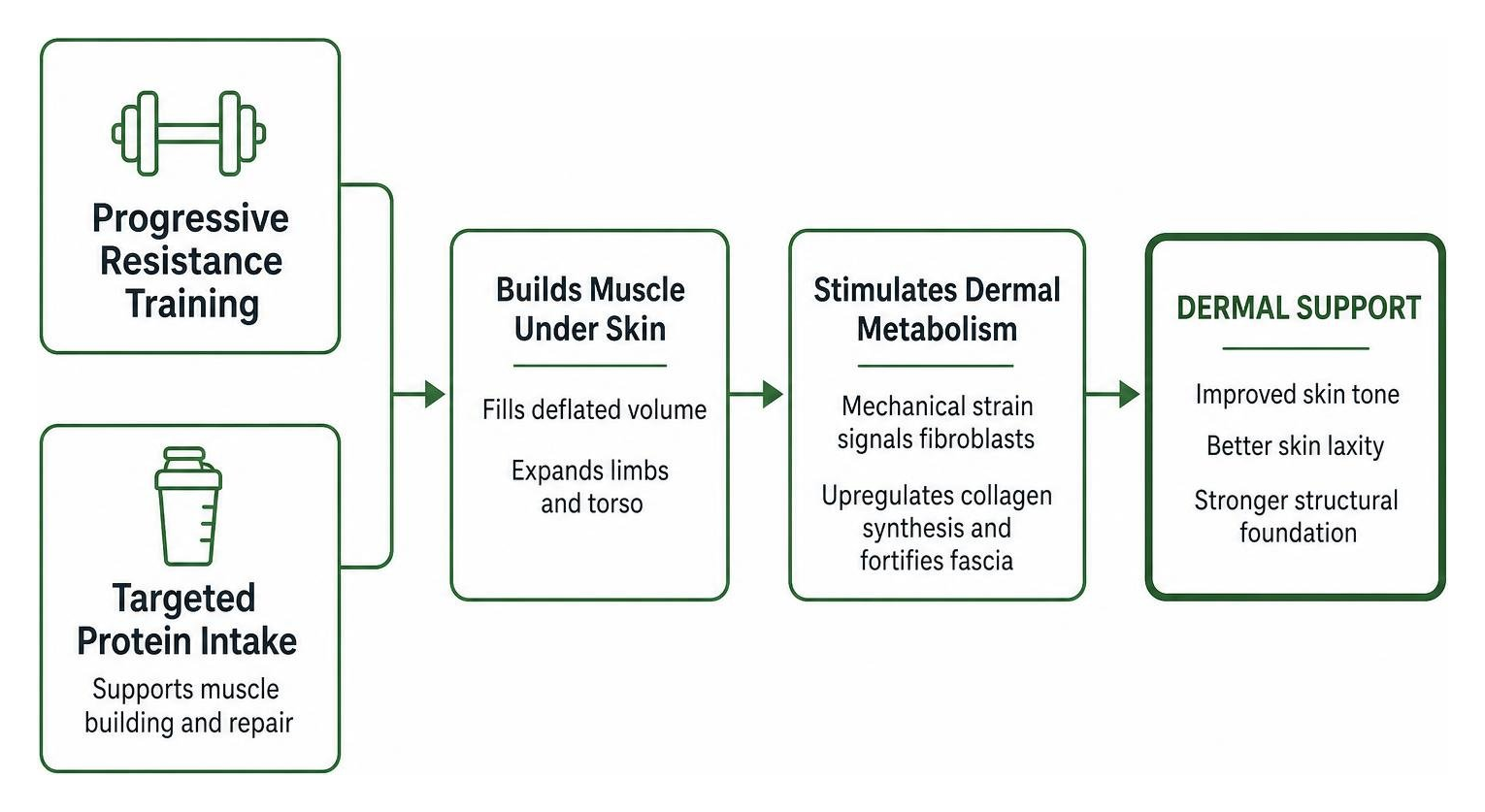
Building muscle mass underneath loose skin works by:
- Filling Deflated Volume: Hypertrophy of skeletal muscle expands the circumference of the limbs and torso, naturally taking up slack in the cutaneous envelope.
- Stimulating Dermal Metabolism: Mechanical strain signals fibroblasts to upregulate collagen synthesis and fortify the deep fascial matrix.
To support this process, adhere to the following targeted lifestyle standards:
- Protein Intake: Protein needs vary with body size, health conditions, activity level, medications, and weight-management goals. A physician or registered dietitian can provide an individualized target.
- Resistance Training: A progressive program can support muscle preservation and strength when it is appropriate for the patient’s medical status and experience.
- Hydration and Nutrition: Adequate fluids and a balanced diet support general health, but they do not reliably reverse significant skin laxity.
Advanced In-Office and Minimally Invasive Skin Tightening Options
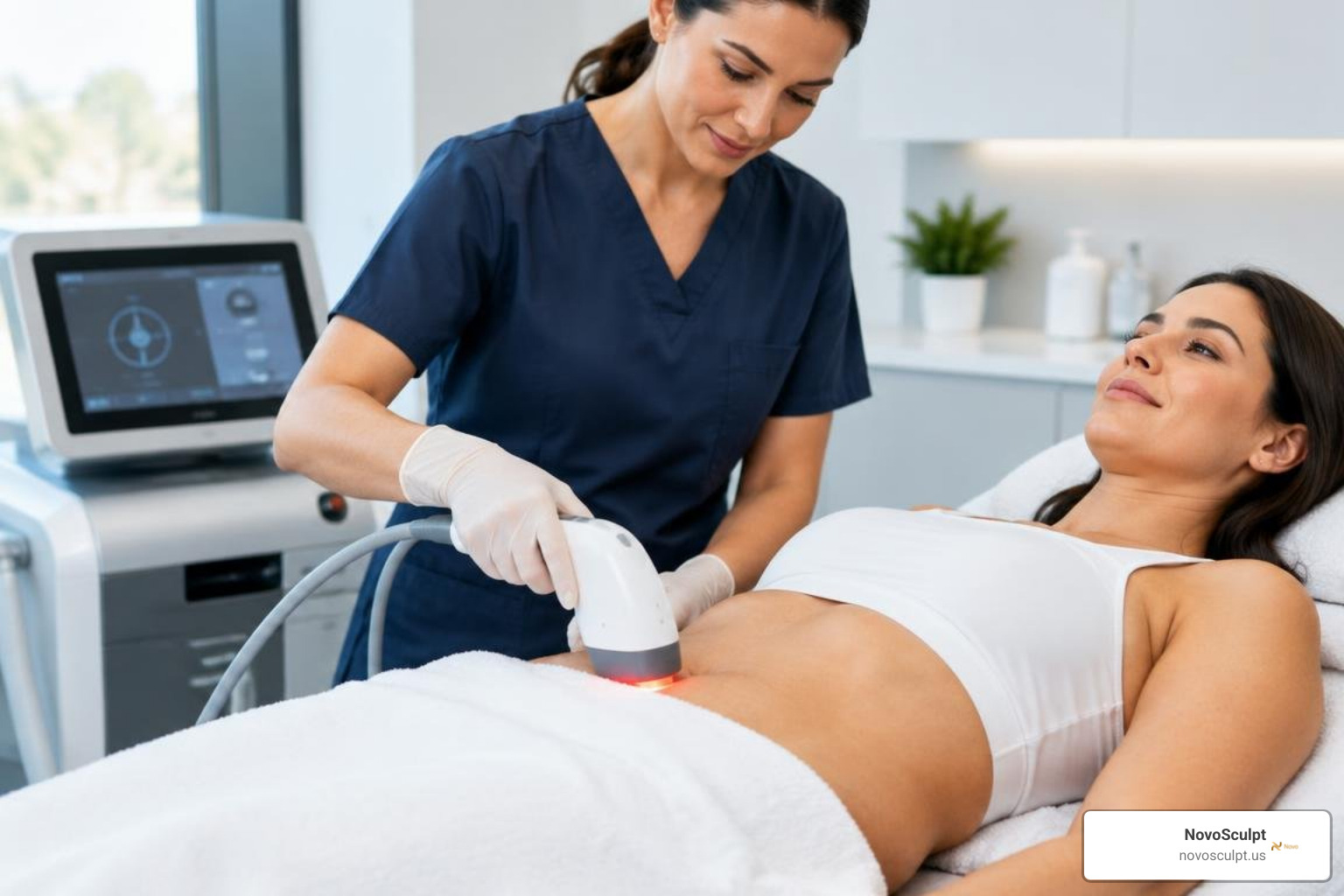
When lifestyle measures plateau, advanced minimally invasive treatments bridge the gap between conservative care and major excisional surgery.
These modalities are intended to address selected areas of laxity and contour concern, but their effects vary by device, technique, treatment area, skin characteristics, and the extent of tissue laxity. NovoSculpt may combine minimally invasive liposuction and tightening for appropriately selected patients after an in-person evaluation.
Radiofrequency and Deep Tissue Remodeling
Targeted radiofrequency energy is designed to create controlled heating in the dermal and subdermal tissues. Depending on the device and treatment plan, this may support tissue remodeling and a degree of skin tightening over time. Results are not guaranteed, and the degree of improvement depends on the treatment extent, tissue quality, healing response, and whether excess skin is better addressed with excisional surgery.
Minimally Invasive Subdermal Tightening Alternatives
For selected patients with moderate laxity and localized fat deposits, minimally invasive subdermal tightening may be considered. Small probes can deliver radiofrequency or helium plasma beneath the skin as part of a clinician-directed treatment plan. Whether a procedure is performed awake with local anesthesia, with sedation, or under another anesthesia plan depends on the procedure, patient health, and the treating clinician’s judgment.
Unlike non-invasive skin-tightening treatments that deliver energy through intact skin, subdermal thermal procedures involve instruments placed beneath the skin. They may offer contouring or tightening benefits for selected patients, but they also carry risks, including burns, infection, scarring, contour irregularities, altered sensation, fluid collections, delayed healing, and the possibility of additional treatment or surgery. NovoTight™ is NovoSculpt’s minimally invasive skin-tightening approach for selected patients; expected improvement, recovery, and candidacy require an individualized consultation.
Surgical Options: When Excision and Body Contouring Become Necessary
While minimally invasive modalities deliver excellent results for mild-to-moderate laxity, they cannot eliminate extensive, redundant skin folds. When skin hangs in a large apron (pannus) or creates deep intertriginous folds, excisional surgery is the definitive standard of care.
Understanding when to transition to formal body contouring after weight loss is critical. Choosing between comprehensive excision and targeted awake remodeling requires weighing procedural downtime, scar placement, and whether the procedure is performed under local anesthesia vs general anesthesia body contouring.
Surgical Procedures: Panniculectomy, Tummy Tucks, and Lifts
Excisional surgeries physically cut away redundant cutaneous tissue, tighten the underlying muscular wall (when indicated), and redrape remaining skin for a smooth silhouette:
- Panniculectomy: Removes a hanging lower-abdominal apron of skin and fat when appropriate. It does not include abdominal muscle repair.
- Abdominoplasty (Tummy Tuck): Removes excess abdominal skin and may reshape the abdominal contour. Muscle repair is performed only when clinically indicated and included in the surgical plan.
- Brachioplasty (Arm Lift): Removes excess skin from the upper arms and leaves scars that should be discussed before surgery.
- Thigh Lift: Removes excess skin from selected areas of the thighs; the approach depends on the location and extent of laxity.
- Lower Body Lift (Belt Lipectomy): Addresses redundant tissue around the lower torso and may include the abdomen, outer thighs, and buttocks. The extent of surgery, scars, recovery, and risks vary by patient.
Surgical body contouring can directly remove redundant skin and improve contour when skin laxity is substantial, but it involves scars, recovery, and the possibility of complications or revision. Recovery and outcomes vary by procedure, treatment area, health status, smoking history, healing response, and the extent of surgery.
Comparing Non-Surgical vs Surgical Tightening Paths
The following table outlines the distinct clinical pathways available depending on the severity of skin laxity, health status, and aesthetic goals:
| Modality | Best Candidate | Anesthesia Type | Downtime | Expected Improvement | Typical Cost Considerations |
|---|---|---|---|---|---|
| Lifestyle & Resistance Training | Mild laxity or patients focused on strength and body composition while weight stabilizes | None | No procedural downtime | May support muscle preservation, strength, and overall appearance; does not reliably remove substantial excess skin | Varies by program and professional guidance |
| Minimally Invasive Subdermal Tightening | Selected patients with localized laxity and appropriate tissue quality | Often local anesthesia with or without sedation; the plan varies by procedure and patient | Recovery varies by treatment extent and individual healing | May improve selected areas of laxity or contour; results are variable and may not replace excisional surgery | Varies by treatment area, device, anesthesia plan, and facility |
| Excisional Surgery (Panniculectomy / Lifts) | Patients with substantial redundant folds, functional symptoms, or goals best addressed by skin excision | The anesthesia plan depends on the procedure, patient health, and surgical setting | Recovery varies by procedure and extent of surgery | Directly removes excess skin; scars, risks, and residual laxity should be discussed in advance | Varies by procedure, surgical setting, and insurance eligibility when medically necessary |
Frequently Asked Questions About Post-Weight Loss Skin
Navigating recovery and aesthetic choices can feel overwhelming. Knowing what to expect at a body contouring consultation helps clarify your personalized path forward.
How long does it take for skin to tighten on its own?
Some skin and connective-tissue remodeling may continue after weight has stabilized, but there is no guaranteed timeline or degree of improvement. The amount of retraction varies with age, genetics, prior stretching, the amount of weight lost, skin quality, and overall health. A consultation can help determine whether continued observation, non-surgical care, or an excisional option is more appropriate for the area of concern.
Do collagen supplements or firming creams really work?
Topical firming creams containing retinoids, such as tretinoin or retinol, may improve surface texture or support superficial skin changes for some people. They do not remove substantial redundant skin or reliably restructure deeper connective tissue.
Similarly, oral collagen peptide supplements break down into generic amino acids in the gastrointestinal tract. While they support systemic hydration and joint health, clinical evidence does not support oral collagen as an effective standalone treatment for moderate-to-severe loose skin.
How much does professional skin tightening or surgery cost?
The cost of minimally invasive skin-tightening treatment varies with the areas treated, the device and technique used, the anesthesia plan, facility fees, and the complexity of care. A personalized consultation is the appropriate way to receive a treatment-specific estimate.
The cost of excisional procedures, such as abdominoplasty, arm lifts, thigh lifts, or lower-body lifts, varies substantially with the procedure, surgical setting, anesthesia plan, geographic region, and whether treatment is staged. NovoSculpt should confirm any current treatment-specific pricing and inclusions directly with prospective patients.
Health insurance may cover a functional panniculectomy when documented symptoms and medical necessity meet a specific plan’s criteria. Coverage rules differ by insurer and may require records of persistent skin conditions, prior treatment, weight stability, or functional impairment. Cosmetic contouring and muscle repair are commonly treated as out-of-pocket services, but patients should confirm benefits and exclusions with their insurer.
Conclusion
Overcoming significant weight challenges is a life-changing milestone, and managing residual tissue changes is the final step in matching your outward reflection to your internal vitality. Whether your goals call for structured resistance training, awake minimally invasive tightening, or excisional surgery, treatment should always be tailored to your skin’s unique structural anatomy.
NovoSculpt is a physician-led body-contouring practice with one physical location in Cos Cob, Greenwich, Connecticut. The practice serves patients from Greenwich, Fairfield County, Connecticut, and nearby Westchester County, New York.
If you are ready to explore your options, learn more about NovoTight skin tightening treatment and schedule a consultation to discuss candidacy, expected benefits, limitations, risks, and alternatives based on your individual anatomy and goals.
