
Comparing Stubborn Fat Removal Near Me Options in Greenwich, CT
If you’re exploring stubborn fat removal options near Greenwich, Connecticut, the first step is understanding which treatments may be appropriate for your anatomy, goals, and recovery preferences. These procedures are intended to refine particular areas rather than produce weight loss or take the place of health-focused habits.
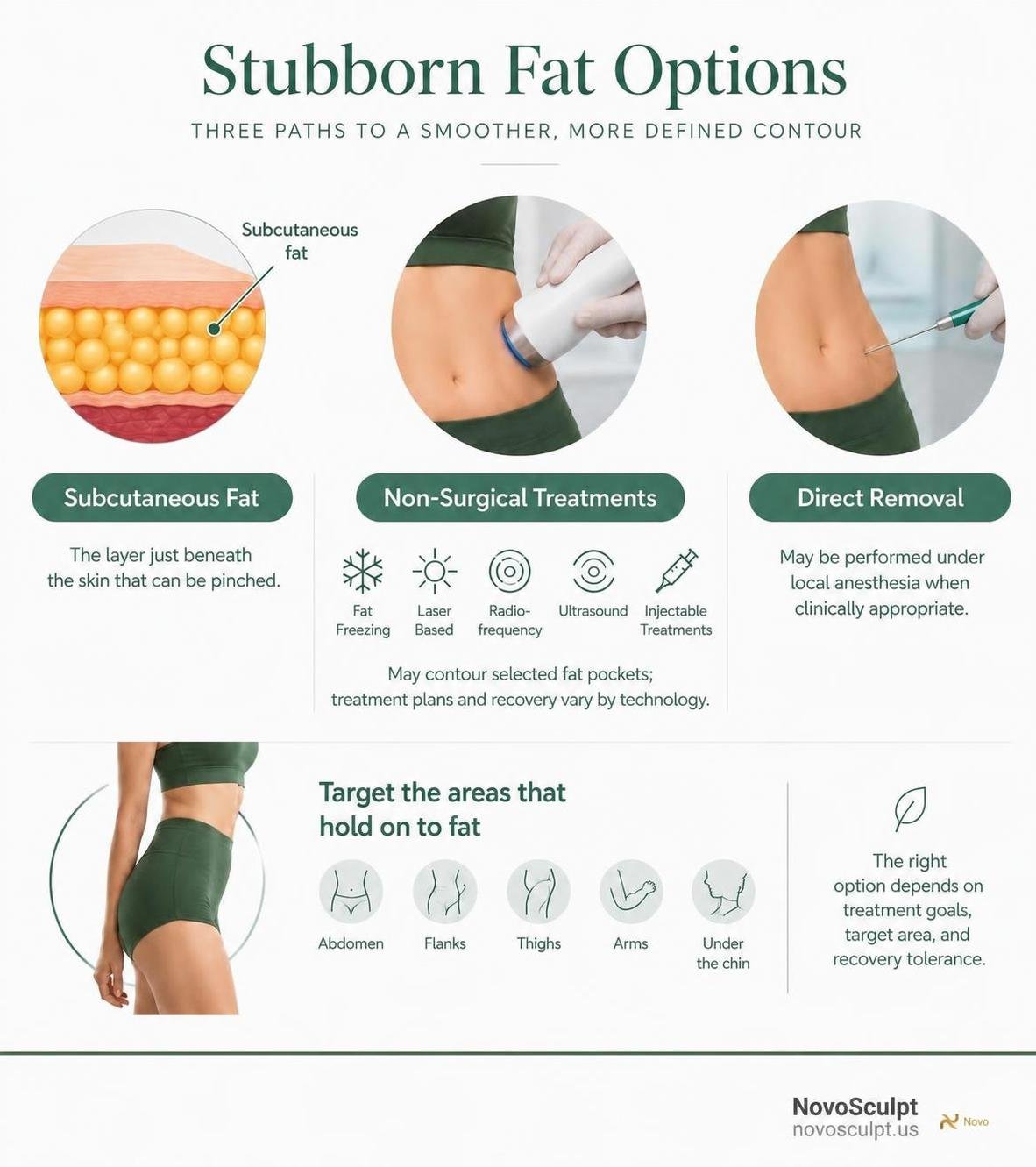
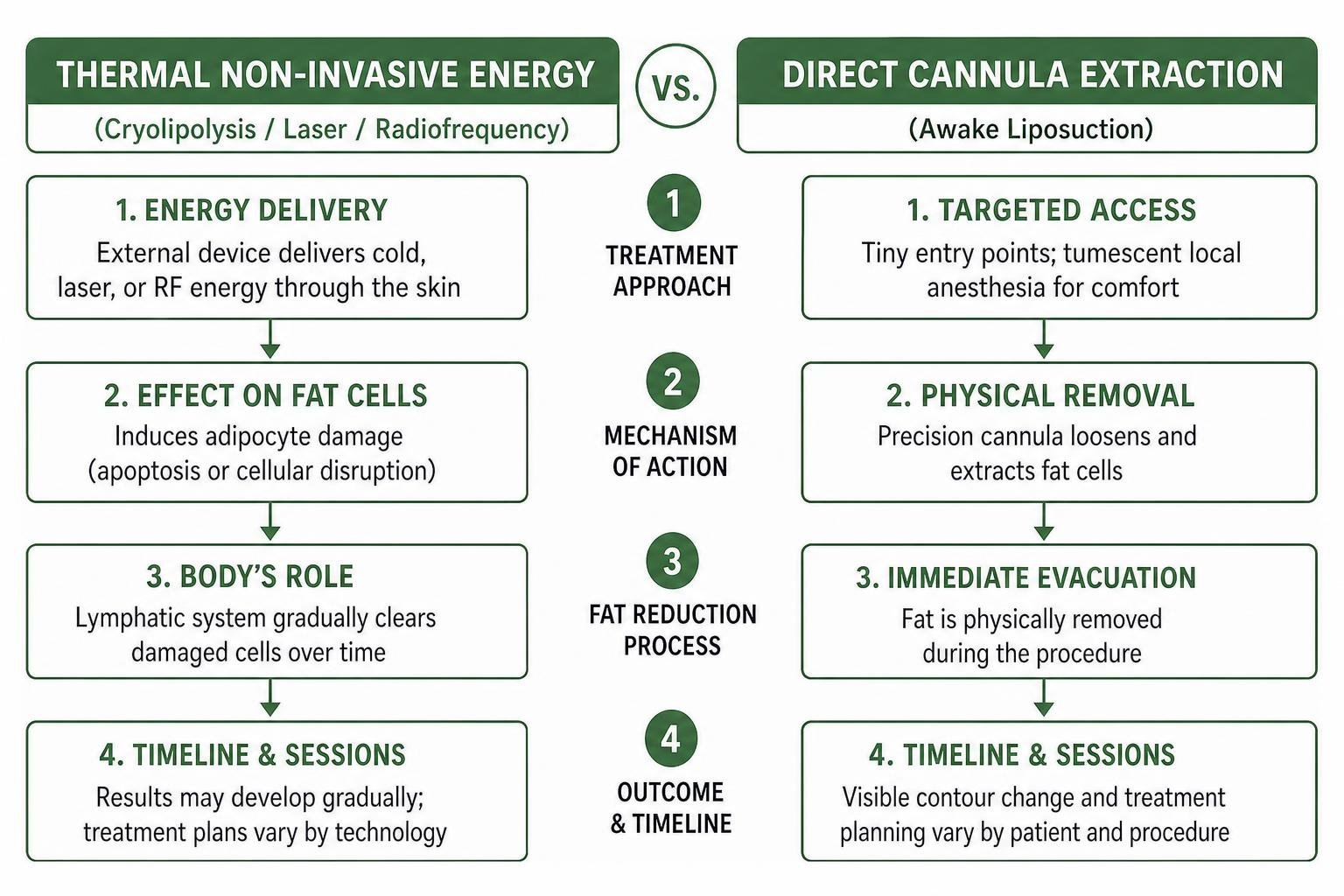
Non-surgical technologies and minimally invasive direct fat removal work in fundamentally different ways. External devices may use cooling, heat, laser energy, radiofrequency, or focused ultrasound to affect fat tissue over time. Direct fat removal uses a cannula to physically remove selected subcutaneous fat through small access points. Each option has different tradeoffs in treatment plan, recovery, predictability, cost, and risk.
A basic understanding of the biology of adipose tissue can provide helpful background, but a consultation should include an examination of fat distribution, skin quality, medical history, medications, prior procedures, and expectations. Some people may be better served by non-surgical treatment, conventional liposuction, skin-excision surgery, or weight-management care rather than a minimally invasive procedure.
The U.S. Food and Drug Administration explains that non-invasive body-contouring devices are intended for contouring rather than weight loss and that device-specific benefits and risks vary. The agency’s overview of non-invasive body-contouring technologies is a useful starting point for patients comparing device categories.
NovoSculpt incorporates proprietary, patent-pending technologies and processes within its physician-led, minimally invasive direct fat removal and body contouring. For appropriately selected patients, specialty-trained plastic surgeons may perform treatment awake under local anesthesia and may avoid general anesthesia for suitable procedures. This approach remains a procedure with individualized candidacy, recovery, and risk considerations.
Local Body Contouring Care Near Greenwich, CT
Located in Cos Cob, Greenwich, Connecticut, NovoSculpt welcomes patients from Greenwich, Stamford, Darien, New Canaan, communities throughout Fairfield County, and nearby Westchester County, New York, for personalized body-contouring consultations.
Understanding Localized Fat and Treatment Candidacy
Localized subcutaneous fat can persist even when a person is physically active and at a stable weight. Genetics, aging, hormonal changes, pregnancy, prior weight changes, and individual anatomy can influence where fat is stored. These factors do not make a specific area impossible to change, but they help explain why spot reduction through exercise alone is not a reliable strategy.
Earlier explanations often reduced localized fat to a simple comparison between alpha and beta adrenergic receptors. In reality, fat metabolism is regulated by many interacting factors, including hormones, blood flow, energy balance, inflammation, and the characteristics of the tissue itself. Receptor biology is still being studied and should not be used to predict an individual patient’s results.
Lifestyle changes can reduce overall body fat and improve health, but they do not selectively remove fat from one chosen area. NovoSculpt’s body-contouring resources and guide to the difference between weight management and body contouring can help patients explore this distinction before a consultation.
Factors That Affect Treatment Selection
A clinician considers more than the location of fat. Important factors include:
- Amount and type of tissue: Direct fat removal is intended for selected areas of subcutaneous fat, not visceral fat inside the abdomen.
- Skin quality: Fat removal can make loose skin more noticeable in some patients. Skin tightening or skin-excision treatment may be more appropriate when laxity is a primary concern.
- Health history: Smoking status, bleeding risk, medications, prior operations, medical conditions, and healing history can affect safety and candidacy.
- Goals and expectations: Some patients prefer a non-surgical approach with gradual change; others prioritize direct removal and accept a procedure with incisions, compression, and recovery requirements. Expectations should focus on localized contouring goals rather than overall weight reduction.
Non-Surgical Treatment and Direct Removal Are Different Categories
Non-surgical body-contouring devices act through the skin and do not physically remove tissue during the appointment. Minimally invasive direct fat removal involves small access points, local anesthetic techniques when appropriate, and cannula-based removal of selected fat. Neither category is right for every body area or every patient.
A careful assessment also helps identify when conventional liposuction, performed with local anesthesia, sedation, or general anesthesia depending on the procedure and patient, may be a better fit. More extensive contouring or skin-excision surgery may be recommended when tissue laxity, treatment scope, or safety considerations call for a different approach. When a fat-distribution concern may reflect an underlying medical condition, a clinician can help determine whether body contouring or another evaluation is appropriate.
Comparing Non-Surgical and Minimally Invasive Fat Reduction Technologies
The best comparison is not simply “non-surgical versus surgical.” It is a comparison of mechanism, treatment burden, expected degree of change, recovery, complications, and whether the approach fits a patient’s anatomy and goals. Device type and treatment protocol matter, so broad claims about results or downtime should be treated cautiously.
| Treatment Category | How It Works | What to Consider |
|---|---|---|
| Cryolipolysis | Controlled cooling is applied externally to target fat tissue. | Results develop gradually and may require follow-up treatments. Risks can include pain, sensory changes, contour irregularity, and paradoxical adipose hyperplasia. |
| Low-level laser therapy | Low-intensity light is marketed for non-invasive contouring. | Evidence, protocols, and regulatory clearance vary by device; patients should ask what outcome is realistic for the specific technology. |
| Thermal laser lipolysis | A laser fiber delivers heat beneath the skin during a minimally invasive procedure. | This is not the same as external low-level laser therapy. It involves an invasive procedure and its own anesthesia, wound, and recovery considerations. |
| Radiofrequency and focused ultrasound | External energy heats or disrupts selected tissue. | Suitability varies by area, tissue depth, device, and skin quality. Risks may include discomfort, burns, sensory changes, or uneven contour. |
| Direct fat removal | A cannula physically removes selected subcutaneous fat through small access points. | It can provide direct treatment of a selected area, but it is still a procedure with bleeding, infection, fluid, contour, scarring, anesthesia, and recovery considerations. |
What Non-Surgical Devices Can and Cannot Do
Cryolipolysis, radiofrequency, focused ultrasound, and other external technologies may be options for people seeking contouring without incisions. Their intended effects, evidence base, treatment schedules, and risks differ by technology. The FDA advises patients to review the specific device’s cleared indication and known risks rather than assuming that all non-invasive treatments perform the same way.
Non-invasive care may be appealing when avoiding an invasive procedure is the priority. However, it may require more than one appointment, results can be subtle or variable, and it does not correct significant skin laxity or replace weight loss. A peer-reviewed review of cryolipolysis literature illustrates why device-specific evidence and patient selection matter.
Minimally Invasive Direct Fat Removal Under Local Anesthesia
For selected patients, NovoSculpt incorporates proprietary, patent-pending technologies and processes within its minimally invasive direct fat removal and body contouring. It is designed to physically remove targeted subcutaneous fat through small access points, with awake local-anesthesia treatment considered when clinically appropriate. During an individualized evaluation, the surgical team may determine whether more than one eligible treatment area can be planned in a single session; the appropriate scope depends on anatomy, health history, procedural considerations, and safety.
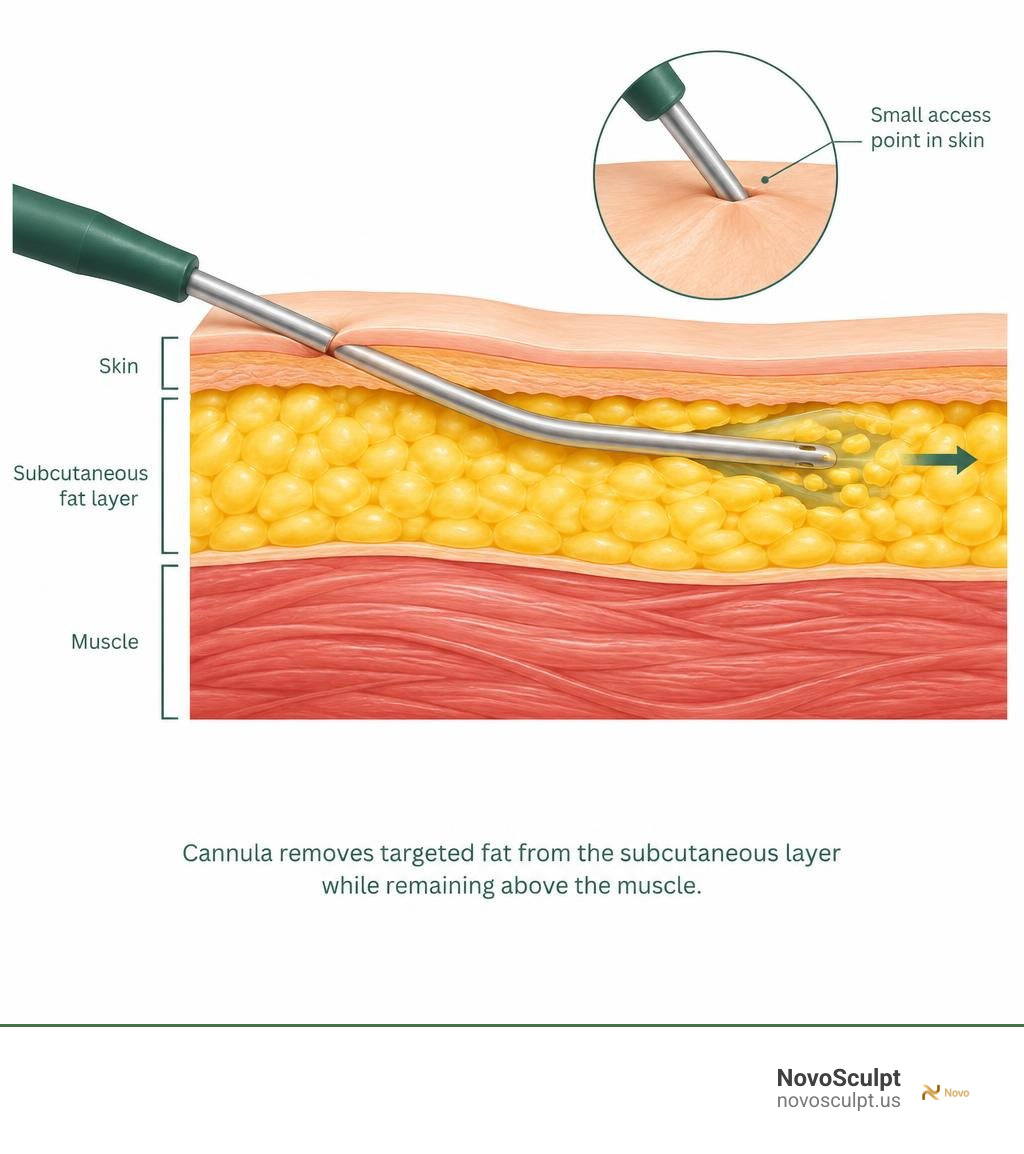
Tumescent local anesthesia typically involves placing a dilute anesthetic solution in the treatment area. It may support comfort and reduce bleeding during a suitable procedure, but it does not eliminate surgical or anesthesia-related risk, and the plan must be individualized. Traditional liposuction can also be performed under local anesthesia, sedation, or general anesthesia depending on treatment scope, patient factors, and surgeon judgment.
A direct approach may allow selected fat deposits to be treated in one procedure. For additional context, review local anesthesia vs general anesthesia body contouring. Important limitations remain: swelling and bruising are expected parts of healing for many patients, compression and activity restrictions may be recommended, and complications can include infection, bleeding, seroma, contour irregularity, numbness, scarring, thromboembolic events, or a need for revision. Skin tightening is not guaranteed by fat removal alone.
Finding the Right Body-Contouring Approach for Specific Areas
A body area is only one part of the treatment decision. The thickness and location of fat, skin elasticity, existing asymmetry, prior surgery, and recovery preferences all affect whether a treatment is reasonable.
Abdomen, Flanks, Thighs, Chin, and Arms
The abdomen and flanks are common areas for both non-invasive contouring and direct fat removal, but the appropriate approach depends on the amount of pinchable subcutaneous fat and the condition of the overlying skin. People with loose abdominal skin, muscle separation, or substantial weight change may need a different recommendation than someone with a small, localized fat deposit. Learn more about selecting the best body sculpting procedure for individualized goals.
Thighs and upper arms require particular attention to skin quality because removing fat can reveal laxity. Under-chin contouring may also involve skin, muscle, gland, or bone structure, not only fat. For selected patients seeking circumferential contouring, Novo360™ may be considered as part of a tailored treatment plan. NovoTight™ may also be discussed when selected skin-tightening concerns are part of the evaluation. A personalized evaluation is more useful than choosing a treatment solely from before-and-after photos or a device name.
Candidacy, Planning, and Recovery
Good candidates for body contouring are generally seeking improvement in a localized concern, have realistic goals and can follow pre- and postoperative guidance. A consultation should also address smoking, medications, medical conditions, pregnancy planning, previous surgery, and the possibility that a non-invasive option, conventional liposuction, or skin-excision surgery may be more appropriate.
Recovery after direct fat removal is individualized. Many patients are asked to wear compression and adjust activity while swelling and bruising improve, but the timeline depends on the area treated, treatment extent, healing response, and surgeon guidance. NovoSculpt’s physicians provide specific instructions after an in-person assessment rather than promising one recovery timeline for every patient.
For patients considering awake treatment, NovoSculpt’s minimally invasive liposuction resources provide additional context. A consultation is still necessary to determine whether a local-anesthesia approach is appropriate.
Frequently Asked Questions About Local Body Contouring
How many treatments may be needed, and how long can results last?
The answer depends on the technology, treatment area, and individual response. Non-invasive treatments may involve a series of visits and gradual change. Direct fat removal treats selected fat during a procedure, but it does not prevent future weight change or guarantee a particular contour.
Long-term appearance is influenced by weight stability, aging, skin elasticity, hormonal changes, and lifestyle. A clinician should explain what the proposed treatment can realistically address and what it cannot.
What are the risks and recovery times for non-surgical fat reduction?
Non-surgical does not mean risk-free. Depending on the technology, potential effects can include temporary discomfort, swelling, bruising, numbness, skin changes, burns, contour irregularity, or an uncommon adverse response such as paradoxical adipose hyperplasia after cryolipolysis. Recovery and restrictions vary by device and treatment area; NovoSculpt’s guidance on recovery after body contouring offers additional context.
The FDA recommends discussing the device, its cleared use, alternatives, and potential complications with a qualified clinician before treatment. Patients should seek prompt medical advice for severe pain, persistent skin changes, or symptoms that are concerning after any procedure.
How can a patient choose a cosmetic provider?
Patients can ask who will perform the procedure, what training and experience they have with the proposed technique, and how they assess candidacy. A high-quality consultation should cover treatment goals, medical history, treatment alternatives, expected recovery, and risks rather than presenting one option as the best fit for everyone.
It is also reasonable to ask how the practice handles complications, whether before-and-after photographs reflect comparable anatomy and treatment, and when a more extensive procedure or referral would be recommended. At NovoSculpt, consultations are led by plastic surgeons who evaluate each patient’s anatomy, medical history, and treatment goals.
A More Informed Way to Compare Stubborn Fat Removal Options
Non-surgical technologies and minimally invasive direct fat removal can each have a role in body contouring, but neither is universally better. The right choice depends on the area being treated, the amount and type of tissue, skin quality, health history, tolerance for recovery, and the degree of change sought. For some patients, conventional liposuction, skin-excision surgery, or non-procedural care may be more appropriate.
Treatment recommendations depend on the area, health history, and procedural plan. NovoSculpt’s specialty-trained plastic surgeons discuss direct fat removal alongside its limitations, possible complications, and individualized recovery needs.
Patients considering treatment can schedule a complimentary NovoSculpt consultation at the Cos Cob, Greenwich, Connecticut practice. The visit includes an individualized evaluation of treatment goals, anatomy, candidacy, appropriate treatment options, recovery considerations, and personalized pricing information. An in-person assessment can help determine whether direct fat removal, a non-invasive technology, traditional liposuction, or another approach best matches the patient’s goals and anatomy.
