
What 360 Liposuction Can Realistically Change
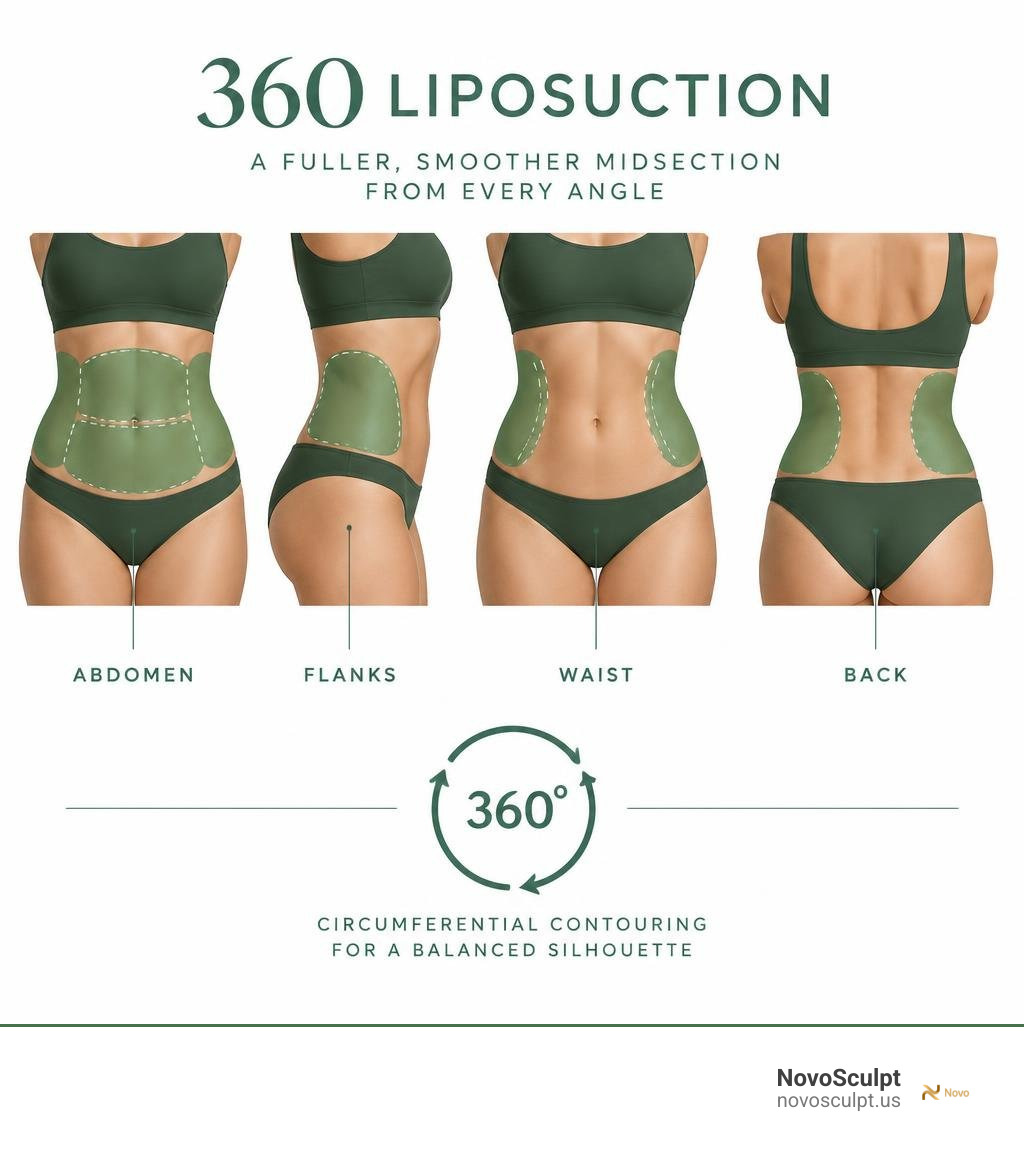
360 liposuction removes stubborn fat from around the full midsection, not just the stomach. It commonly treats the upper and lower abdomen, waist, flanks or love handles, and parts of the back to create a smoother, more balanced silhouette from every view.
Unlike isolated abdominal liposuction, this circumferential approach considers how each area blends into the next. It can sharpen waistline proportions, but it is not a weight-loss procedure or a fix for loose skin. Recovery involves temporary swelling, bruising, and compression garments, and final contour changes develop gradually over several months.
This guide explains who may be a good candidate, how to prepare, what recovery typically looks like, and how to set realistic expectations for lasting results. Liposuction is intended to remove localized subcutaneous fat for body contouring, not to treat obesity or replace weight-management care.
Written by: Roberto Magana, BSc, MBA — CEO, NovoSculpt
Last Updated: October 14, 2026
NovoSculpt’s specialty-trained plastic surgeons, who graduated from U.S. universities, provide individualized care at one physical location in Cos Cob/Greenwich, Connecticut, serving patients from Greenwich, Fairfield County, and nearby Westchester County, New York.
Understanding 360 Liposuction and Circumferential Contouring
The midsection is three-dimensional, so treatment planning may consider the abdomen, waist, flanks, and back rather than only the front of the abdomen. Whether one area or several connected areas are treated depends on anatomy, fat distribution, skin elasticity, health history, and individual goals.
Circumferential contouring treats connected areas around the torso with cannula-based removal of targeted subcutaneous fat. It may improve midsection proportions, but it does not guarantee an hourglass figure, a V-shaped torso, visible abdominal muscles, or perfectly smooth skin. A personalized plan should account for the body’s natural contours and the limits of liposuction.
| Feature | Targeted (Single-Area) Liposuction | 360 Circumferential Contouring |
|---|---|---|
| Treatment method | Cannula-based removal of targeted subcutaneous fat in one area | Cannula-based removal of targeted subcutaneous fat across several connected areas |
| Treatment scope | An isolated concern, such as the lower abdomen | The abdomen, waist, flanks, lower back, and selected upper-back areas when appropriate |
| Planning focus | Individual anatomy, fat distribution, skin elasticity, and goals | The same factors, considered across the midsection as a whole |
| Expected outcome | Localized contour improvement without a guaranteed shape | Broader midsection contour improvement without a guaranteed shape |
| Ideal candidate | A patient whose goals are limited to one area | A patient whose goals and anatomy support treatment of multiple connected areas |
Treatment Areas and Anatomical Focus
A comprehensive circumferential procedure addresses several interconnected anatomical regions across the core:
- Upper and lower abdomen: Targeted subcutaneous fat removal may improve abdominal contour when anatomy is suitable.
- Waist, flanks, and love handles: Flank and love handle sculpting may be included to address connected lateral areas.
- Mid-back and bra-roll areas: Upper and lower back fat reduction may be considered when appropriate to the treatment plan.
- Lower back: Treatment may be planned around the lower back to support overall midsection proportions; the extent depends on anatomy and goals.
Choosing Between Single-Area Liposuction and 360 Contouring
The main difference is treatment scope. Circumferential 360 contouring versus traditional lipo may involve several connected anatomical areas, while isolated liposuction focuses on one zone. Neither approach inherently causes or prevents contour irregularities, and neither guarantees a particular silhouette. Technique, anatomy, healing, skin quality, and adherence to postoperative guidance can affect the result.
At NovoSculpt, physician-led, minimally invasive direct fat removal may be performed under local tumescent anesthesia for appropriately selected patients, allowing them to remain awake without general anesthesia. This approach avoids exposure to general-anesthetic medications and certain associated effects, but it does not eliminate surgical or anesthesia-related risks. Conventional liposuction may be performed under local anesthesia, sedation, or general anesthesia depending on the procedure and patient.
What Is Novo360™ and How Does It Compare With Traditional Lipo 360?
Novo360™ is NovoSculpt’s branded, patent-pending approach to comprehensive circumferential body contouring. Like traditional Lipo 360, it uses targeted removal of subcutaneous fat to improve midsection proportions and may include the upper and lower abdomen, waist, flanks, love handles, lower back, and selected upper-back or bra-roll areas when appropriate.
Novo360™ is not a different category of fat removal from liposuction. Its differentiation is treatment planning: physician-led, minimally invasive cannula-based fat removal under local anesthesia for suitable candidates; possible integration of minimally invasive plasma-based subdermal skin tightening with NovoTight™ when clinically appropriate; selected fat-transfer options when medically suitable; and consideration of multiple areas or complementary procedures in one session when appropriate for safety and treatment goals.
Not every patient is a candidate for awake treatment, skin tightening, fat transfer, or combined procedures. A consultation determines whether the proposed anesthesia, treatment extent, and any combination are appropriate.
Candidate Criteria and Preparing for Surgery
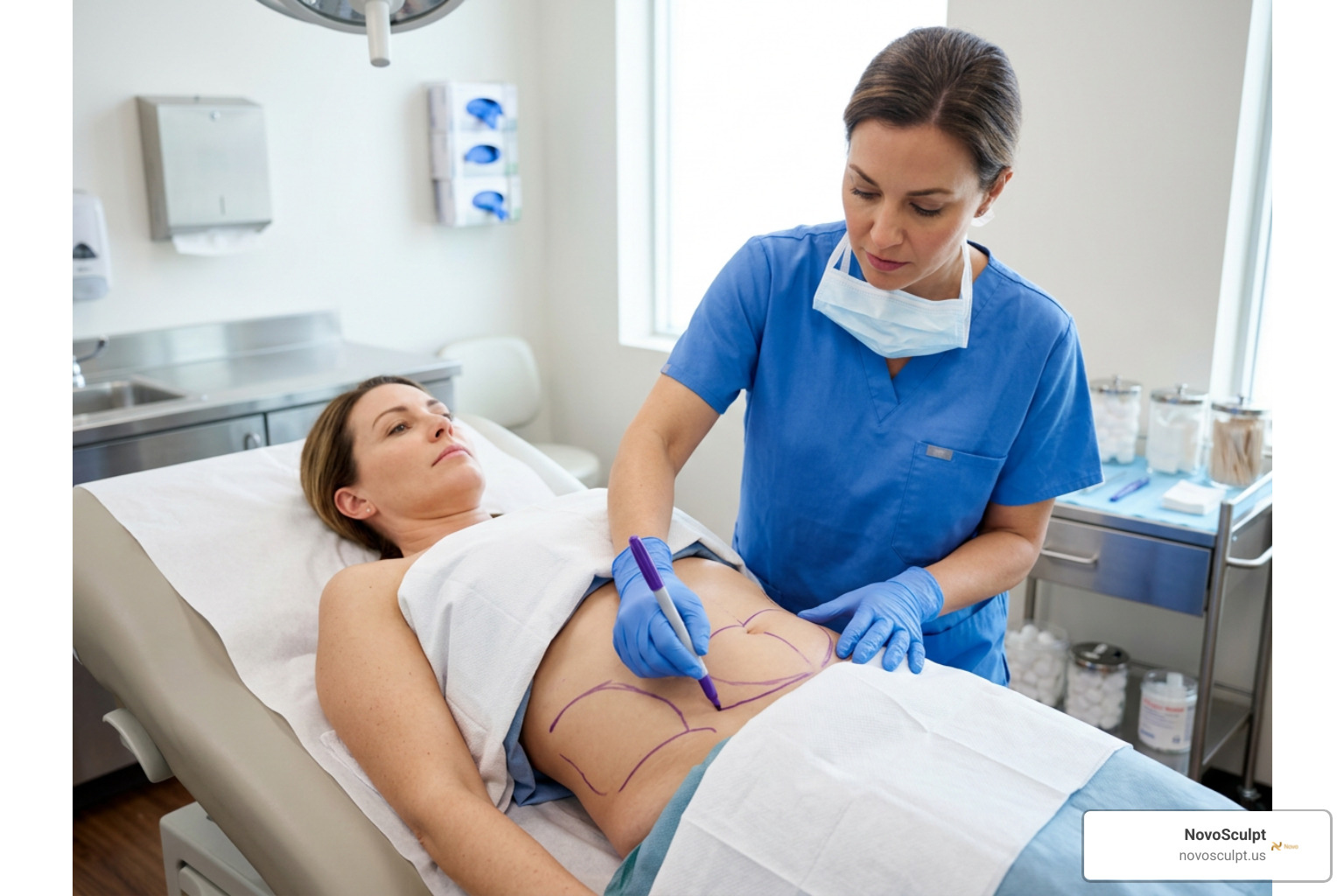
Achieving exceptional results starts with selecting the right candidates and setting clear surgical benchmarks. Because this is a body contouring procedure rather than a bariatric weight-loss intervention, establishing realistic expectations is essential to long-term patient satisfaction.
Who Is an Ideal Candidate for 360 Liposuction?
Candidacy is individualized and considers medical safety as well as aesthetic goals. Factors commonly reviewed include:
- Overall health and medical history: The treating team reviews health conditions, prior procedures, medication use, smoking or nicotine exposure, and suitability for the proposed anesthesia and treatment extent.
- Body size and weight stability: Body mass index, relatively stable body weight, and anatomical suitability may inform planning. 360 liposuction is for body contouring, not treatment of obesity.
- Subcutaneous versus visceral fat: Liposuction removes subcutaneous fat beneath the skin; it does not directly remove visceral fat inside the abdominal cavity. Lifestyle changes and appropriate medical weight-management interventions may influence visceral adiposity.
- Skin elasticity and laxity: Skin quality and the degree of laxity affect what contour changes may be realistic. Some patients may need an alternative or combined approach.
- Localized fat distribution and expectations: Candidates should have concerns that can be addressed by localized fat removal and realistic expectations about scars, recovery, risks, and achievable contour changes.
Pre-Operative Preparation and Medical Safety
Preoperative instructions must come from the treating surgical team. Nicotine exposure can impair healing, so patients should follow their surgeon’s specific cessation protocol. Medication, supplement, and alcohol instructions are individualized. Patients should not independently stop prescribed anticoagulants, antiplatelet medicines, or other medications; any change should be coordinated with the treating surgeon and the prescribing clinician.
A consultation should include a full discussion of treatment goals, medical history, anesthesia options, anticipated recovery, and risks. NovoSculpt’s fully accredited plastic surgeons use individualized planning and provide procedure-specific instructions. Nutrition and hydration may be part of general preoperative guidance, but they do not guarantee a particular surgical or recovery outcome.
Recovery Milestones, Realistic Results, and Longevity
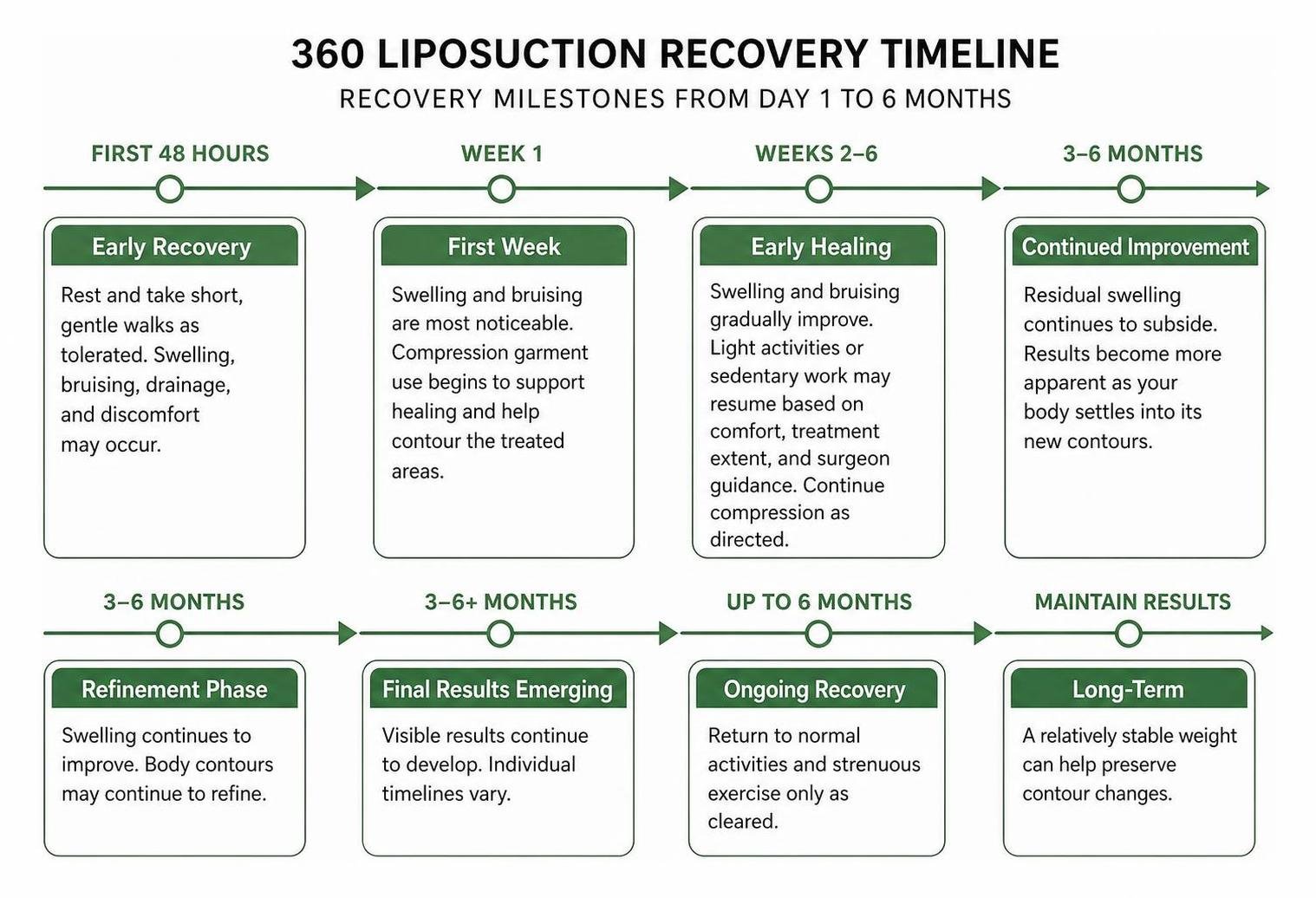
Recovery varies by the treatment extent, individual health, and the treating surgeon’s instructions. The following milestones are general expectations, not individualized medical instructions or guarantees.
The Step-by-Step 360 Liposuction Recovery Timeline
Following the proper abdominal recovery milestones and results ensures a steady, predictable healing process:
- First 48 hours: Rest and short, gentle walks as tolerated are commonly encouraged. Swelling, bruising, drainage, and discomfort may occur. Showering is generally permitted after approximately 48 hours, subject to the treating surgeon’s instructions.
- Early recovery: Some patients may return to light activities or sedentary work relatively early, depending on comfort, treatment extent, and clinical recovery. This is different from returning to normal daily activities or exercise.
- Compression and normal daily activities: Compression garments are generally recommended for at least two weeks, following the individualized prescribed schedule. Return to full daily activities often occurs around two weeks, depending on the procedure and surgeon’s instructions.
- Exercise and visible results: Strenuous exercise is often deferred until around six weeks and requires surgeon clearance. Contours develop gradually as swelling improves, commonly over three to six months; some patients need longer.
Managing Swelling, Compression, and Long-Term Results
Compression garments are commonly used according to the treating surgeon’s prescribed schedule. Postoperative lymphatic drainage massage may be recommended for selected patients, but it is not universally required and should not begin without approval from the treating surgeon. Massage should not be presented as a guarantee of faster healing, complication prevention, or improved final contour.
Fat cells physically removed during liposuction are not restored as the same cells. However, remaining fat cells can enlarge with weight gain, and longer-term adipose-tissue changes may occur. Maintaining a relatively stable weight can help preserve the resulting contour, while natural aging, changes in skin elasticity, pregnancy, and substantial weight fluctuations may influence long-term appearance. Maintaining body contouring results involves individualized lifestyle and follow-up guidance rather than a guaranteed duration of results.
Common Questions About Lipo 360 Recovery and Treatment
What does circumferential fat removal typically cost?
Costs vary. The total investment depends on the areas treated, treatment extent, anesthesia plan, and whether complementary procedures are clinically appropriate. Exact pricing is determined after an in-person consultation and individualized surgical plan.
Is Lipo 360 usually covered by health insurance?
No, in most cases. Circumferential body contouring is generally an elective aesthetic procedure rather than treatment for a medical condition, so private health insurance typically does not cover it. Financing options may be available after consultation.
What complications and safety issues should patients discuss?
Liposuction is an established surgical procedure, but it carries risks even when performed under local anesthesia. Potential complications include bruising, swelling, discomfort, infection, bleeding, seroma or hematoma formation, contour irregularities or asymmetry, temporary or persistent sensation changes, skin injury or tissue damage, local-anesthetic reactions including potential lidocaine toxicity, and thromboembolic complications such as deep vein thrombosis or pulmonary embolism. Other uncommon but serious complications can occur. Risk depends on patient characteristics, medical history, procedure extent, technique, and perioperative management. Care from fully accredited plastic surgeons and adherence to preoperative and postoperative instructions are important, but they do not eliminate risk. See the American Society of Plastic Surgeons’ liposuction safety guidance for additional patient information.
How long does 360 liposuction recovery take?
Recovery varies. Many patients have several weeks of active healing, while contour changes commonly develop over three to six months as swelling improves; some patients need longer. The treating surgeon provides the timeline that applies to the individual procedure.
When can I return to work after 360 liposuction?
It depends. Some patients return to sedentary work relatively early, while others need more time based on discomfort, treatment extent, and clinical recovery. Returning to full daily activities often occurs around two weeks, and strenuous exercise generally requires clearance around six weeks.
How long does swelling last after Lipo 360?
Swelling can fluctuate during early recovery and improve gradually over months. It should not be expected to resolve on one fixed date. Persistent, worsening, or concerning swelling should be discussed with the treating surgical team.
When will I see my final 360 liposuction results?
Visible contour changes emerge gradually. Many patients see ongoing refinement over three to six months, although the final timeline varies with healing, skin quality, treatment extent, and other individual factors.
Does 360 liposuction tighten loose skin?
Not reliably. Liposuction removes targeted subcutaneous fat but does not directly correct significant skin laxity. Skin elasticity helps determine whether skin contracts after treatment, and some patients may be candidates for a separate or combined approach.
What is the difference between Novo360™ and traditional Lipo 360?
Novo360™ is NovoSculpt’s patent-pending branded approach to comprehensive circumferential body contouring. Both Novo360™ and traditional Lipo 360 use targeted subcutaneous fat removal to improve midsection proportions. Novo360™ may include awake local-anesthesia treatment for appropriate candidates and selected options such as NovoTight™ integration or fat transfer when clinically suitable.
Can 360 liposuction be performed while awake?
Yes, for appropriately selected patients. NovoSculpt may perform physician-led, minimally invasive direct fat removal under local tumescent anesthesia without general anesthesia. Whether awake treatment is appropriate depends on the patient, procedure, and safety assessment.
Can skin tightening be combined with 360 fat removal?
Sometimes. NovoTight™ is a minimally invasive plasma-based subdermal skin-tightening option that may be combined with fat removal when clinically appropriate. It is not necessary or suitable for every patient, and it does not guarantee a specific degree of skin tightening.
Conclusion
Circumferential midsection sculpting offers a comprehensive way to reshape your waistline and restore balanced proportions from every angle. At NovoSculpt, our physicians are specialty-trained plastic surgeons who graduated from U.S. universities. We perform advanced, awake body contouring in our single, dedicated facility located in Cos Cob/Greenwich, Connecticut, serving patients from Greenwich, Fairfield County, CT, and nearby Westchester County, NY.
If you are ready to explore your aesthetic options, schedule a personal consultation today to learn how tailored flank and midsection contouring can help you achieve your ideal shape.
