
What to Expect From Abdominal Liposuction Recovery and Results
Abdominal liposuction removes localized fat just beneath the skin to improve the shape of the stomach, waist, and flanks. It is a body-contouring procedure, not a weight-loss treatment, and it does not remove visceral fat around the internal organs. It also cannot correct significant loose skin or separated abdominal muscles on its own.
For patients considering abdominal liposuction in Greenwich, Connecticut, a medical consultation should distinguish pinchable subcutaneous fat from deeper abdominal fullness, evaluate skin quality, and review whether a minimally invasive awake fat-removal approach is appropriate. Recovery and results vary by treatment area, amount of fat removed, anatomy, healing response, and clinical instructions.
NovoSculpt provides minimally invasive, awake body-contouring and fat-removal procedures in Greenwich, CT for patients from Fairfield County, nearby Westchester County, and surrounding communities. The care model emphasizes targeted fat removal without general anesthesia exposure, but no procedure is risk-free or right for every patient. Patients with substantial skin laxity, a large lower-abdominal fold, or diastasis recti may be better served by abdominoplasty, lipoabdominoplasty, or another treatment plan after clinical evaluation.
This guide explains how abdominal liposuction differs from awake minimally invasive abdominal fat removal and from tummy tuck surgery, what recovery can feel like, when results typically mature, and what evidence supports safe patient education. It is intended as educational content suitable for physician review, not a substitute for an in-person consultation.
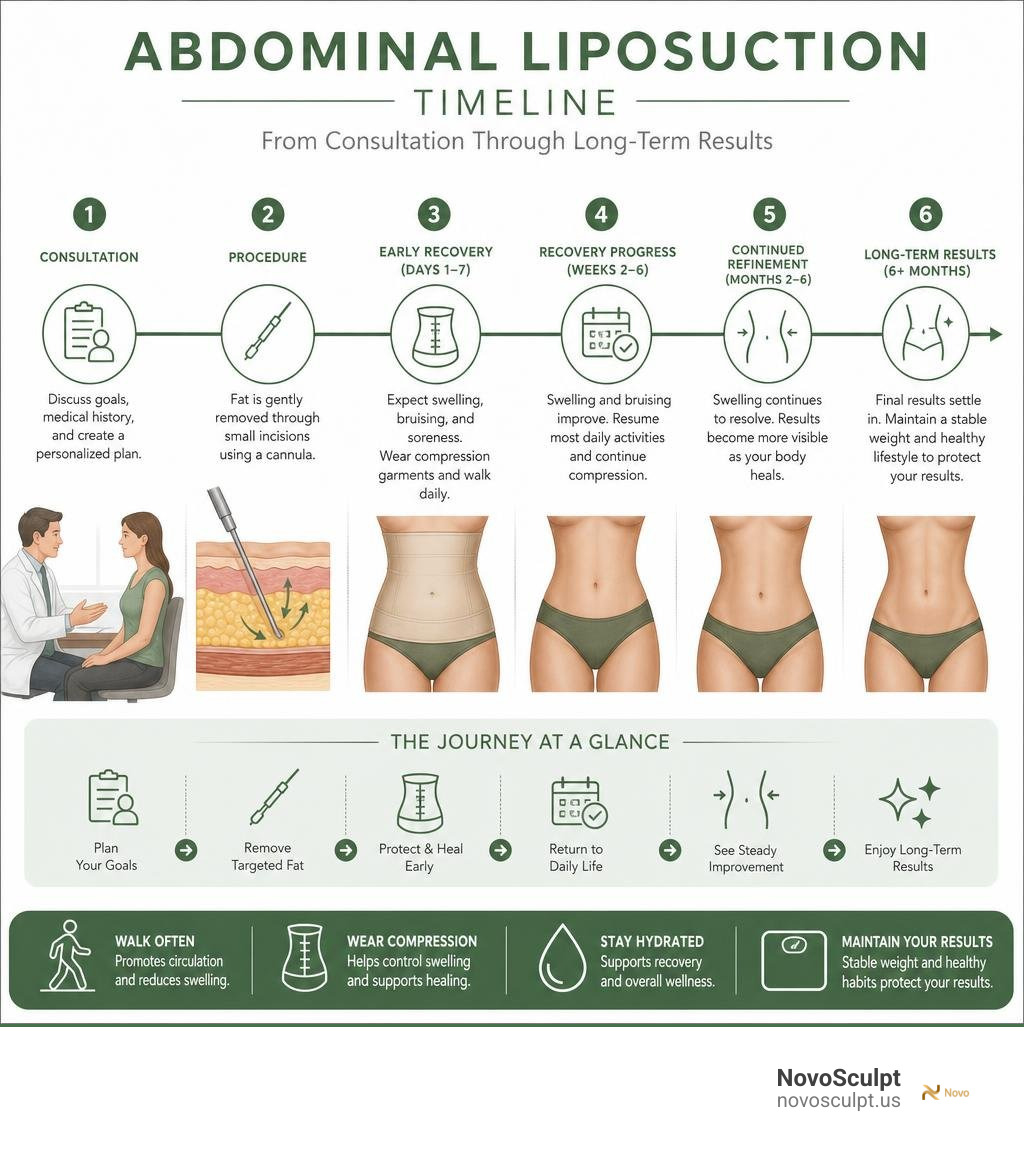
Understanding Abdominal Liposuction: Indications and Modern Techniques
A useful abdominal liposuction consultation begins by separating two types of abdominal fullness. Subcutaneous fat is the pinchable layer directly under the skin and above the abdominal muscle wall. Visceral fat sits deeper, around the internal organs, and is not treated with liposuction. Visceral fat responds to nutrition, exercise, weight management, and medical care rather than surgical suction.
For people exploring body transformation, understanding body contouring not weight loss is central to realistic expectations. Liposuction removes selected fat cells from the treated subcutaneous layer, but remaining fat cells in treated and untreated areas can enlarge with weight gain. Long-term results therefore depend on stable habits after the procedure.
| Fat Removal Modality | Primary Mechanism | Best Suited For | Typical Anesthesia | Recovery Considerations |
|---|---|---|---|---|
| Suction-Assisted Liposuction (SAL) | Manual cannula movement with vacuum aspiration | Localized fat deposits in appropriate candidates | Local, sedation, or general anesthesia depending on case | Bruising, swelling, and soreness vary by extent |
| Power-Assisted Liposuction (PAL) | Mechanically assisted cannula movement | Larger or more fibrous treatment areas in selected patients | Local, sedation, or general anesthesia depending on case | May reduce surgeon fatigue; recovery still varies |
| Ultrasound-Assisted Liposuction (UAL / VASER) | Ultrasound energy helps emulsify fat before removal | Fibrous areas or definition-focused contouring in selected cases | Often sedation or general anesthesia, depending on setting | Energy use requires careful technique to reduce burn or tissue risks |
| NovoSculpt Awake Minimally Invasive Fat Removal | Tumescent local anesthesia and small cannulas for targeted sculpting | Appropriately selected patients seeking localized abdominal contouring without general anesthesia | Local anesthesia without general anesthesia | Avoids general-anesthesia exposure, airway instrumentation, and some post-anesthesia grogginess; candidacy and recovery still require clinical evaluation |
Comparing Abdominal Liposuction and Awake Minimally Invasive Fat Removal
Abdominal liposuction is the broader procedure category: it means removing subcutaneous abdominal fat with cannulas. It can be performed with different tools, incision patterns, anesthesia plans, and recovery protocols. NovoSculpt’s awake minimally invasive abdominal fat-removal approach is a specific body-contouring option that uses tumescent local anesthesia and small cannulas so appropriately selected patients do not undergo general anesthesia.
For patients who are good candidates, an awake local-anesthesia approach can offer practical patient-facing advantages: avoiding general-anesthesia exposure, avoiding airway instrumentation, communicating with the clinical team during the procedure, and often having a less groggy immediate recovery experience than procedures performed under general anesthesia. Those advantages should be understood in context. Local anesthesia still has risks, patient selection matters, and conventional liposuction with sedation or general anesthesia, abdominoplasty, lipoabdominoplasty, or another plan may be more appropriate depending on anatomy, treatment extent, loose skin, muscle separation, prior surgery, and medical history.
Modern fat-removal techniques aim to remove the targeted fat layer while preserving smooth transitions, skin support, and surrounding tissues. A careful plan considers the upper and lower abdomen, waist, flanks, skin elasticity, scars, prior procedures, and the patient’s goals. Patients comparing options may find this explanation of minimally invasive liposuction and a postmodern approach to body sculpting helpful for understanding the practice’s philosophy.
Candidacy Criteria, BMI, Skin Tone, and Anatomy
There is no single measurement that makes someone an ideal candidate for abdominal liposuction. Instead, candidacy is based on a clinical exam, medical history, medication review, anatomy, expectations, and the amount and location of fat being treated. A surgeon may evaluate:
- Skin elasticity and retraction capacity: Liposuction removes volume beneath the skin. Patients with firmer, more elastic skin are more likely to see a smooth contour. Marked laxity, hanging skin, or extensive stretch-mark-related thinning may require a skin-removal procedure or another plan.
- Subcutaneous versus visceral fullness: If the abdomen feels firm and protrudes from deeper inside the abdominal wall, visceral fat or muscle separation may be contributing more than pinchable subcutaneous fat.
- Muscular integrity and diastasis recti: Liposuction does not repair separated abdominal muscles. Post-pregnancy or post-weight-loss patients with significant diastasis may need abdominoplasty or another procedure to address muscle support.
- Baseline health and body weight: Higher BMI and medical conditions can affect surgical risk, anesthesia planning, healing, and the predictability of contouring. Rather than relying on a universal cutoff, appropriate candidacy should be determined during medical evaluation.
- Expectations and maintenance habits: Liposuction can improve contour, but it cannot create weight loss, prevent future weight gain, or replace nutrition and exercise.
Understanding your unique anatomical baseline is why knowing what to expect at a body contouring consultation helps patients prepare for a personalized plan.
Clinical Safety, Fluid Management, and Procedure Combinations
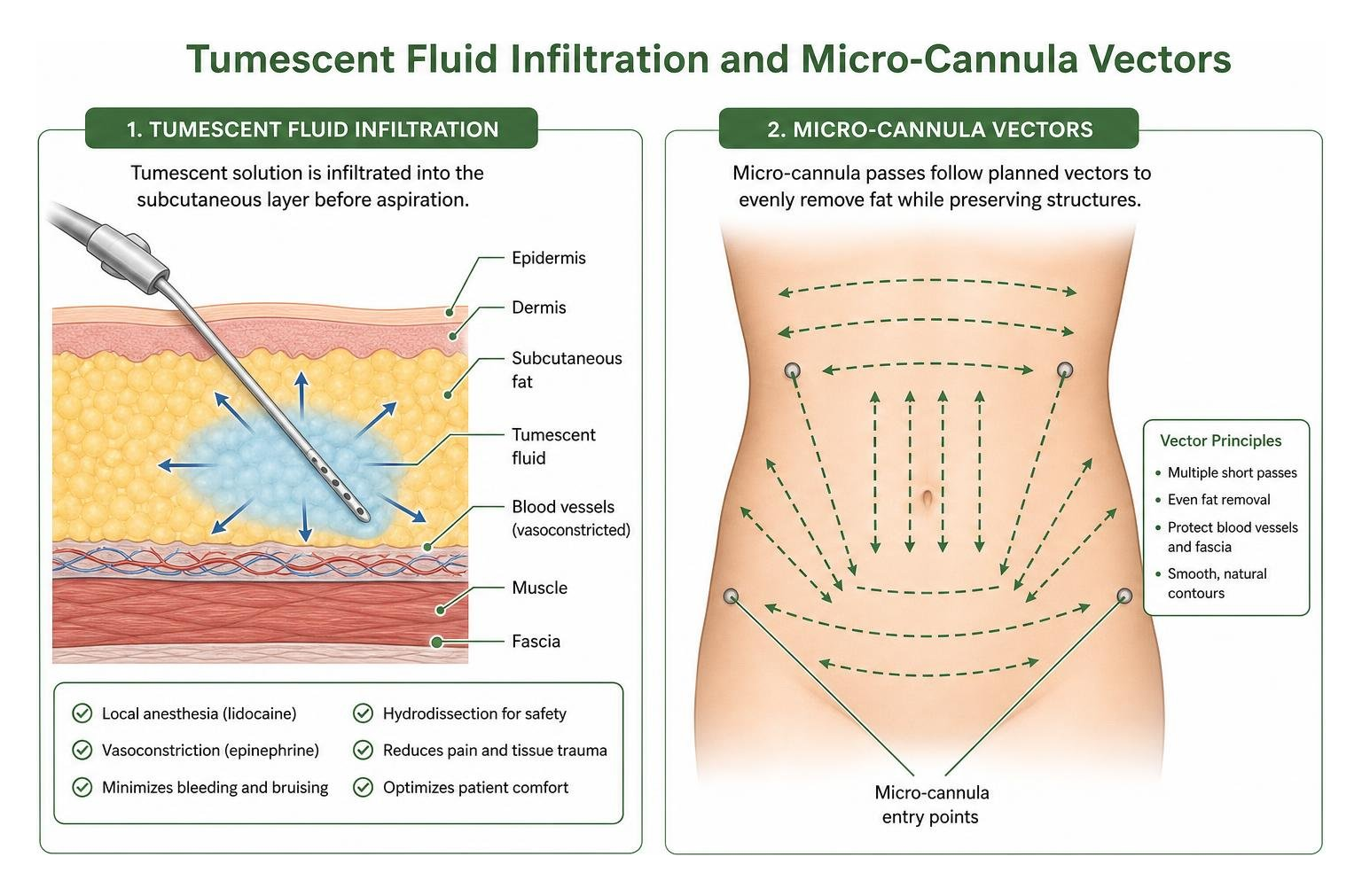
Patient safety during abdominal contouring depends on careful screening, sterile technique, controlled fluid and medication dosing, anatomical knowledge, and appropriate aftercare. Many liposuction procedures use the tumescent technique, in which a dilute solution containing local anesthetic and epinephrine is placed into the subcutaneous fat before removal. The solution helps numb the area, supports vasoconstriction, and creates a fluid-expanded treatment plane that facilitates controlled fat removal, but medication dosing and patient monitoring remain important.
General medical references describe liposuction as a body-contouring procedure rather than a weight-loss treatment, with swelling, bruising, contour change, and medical risk varying by patient and treatment extent. Epinephrine causes local blood-vessel narrowing, which can reduce bleeding and bruising. When comparing local anesthesia vs general anesthesia, the practical advantage of an awake local-anesthesia approach is that appropriate patients can avoid general-anesthesia exposure, airway instrumentation, and some of the grogginess or recovery considerations associated with general anesthesia. Local anesthesia still has potential risks and is not appropriate for every patient or every treatment plan.
Abdominal Liposuction Versus Abdominoplasty and Lipoabdominoplasty
Standalone abdominal liposuction removes subcutaneous fat through small access points. It does not remove excess skin, tighten the abdominal wall, or repair diastasis recti. Abdominoplasty, often called a tummy tuck, removes excess lower-abdominal skin and can repair separated abdominal muscles. Lipoabdominoplasty combines liposuction with abdominoplasty techniques.
This distinction is important when reading the medical literature. Studies of lipoabdominoplasty can provide useful information about flap blood supply, tissue handling, and complication prevention in combined surgery, but those findings should not be presented as proof of outcomes for standalone abdominal liposuction or for NovoSculpt’s awake procedure unless the comparison is clearly identified.
A 26-year clinical report on lipoabdominoplasty published in Plastic and Reconstructive Surgery – Global Open described how preserving perforating blood vessels, limiting undermining, and using progressive tension techniques may support flap safety in combined procedures. Because lipoabdominoplasty includes skin elevation and tissue removal that standalone liposuction does not, this evidence is best understood as context for combined surgery rather than as a direct claim about awake abdominal fat removal.
Managing Risk, Seroma, and Healing Variables
All abdominal contouring procedures require realistic discussion of risks. Potential issues after liposuction can include swelling, bruising, contour irregularity, numbness or altered sensation, fluid collection, infection, scarring, asymmetry, undercorrection or overcorrection, and the need for revision. Significant complications can occur, including complications that require urgent medical evaluation or additional treatment, which is why medical screening, procedure selection, dosing, monitoring, and follow-up matter.
Seroma, or a collection of fluid under the skin, is more commonly discussed in abdominoplasty and lipoabdominoplasty because those operations create larger tissue planes. Liposuction can also lead to fluid shifts or localized collections, especially when larger areas are treated. Compression, walking, follow-up visits, and adherence to postoperative instructions help reduce risk but do not guarantee a specific outcome.
For patients who have undergone prior procedures elsewhere resulting in contour irregularities, asymmetry, or tethering, specialized corrective body contouring after bad liposuction may be considered after evaluation.
Day-by-Day and Week-by-Week Recovery Timeline
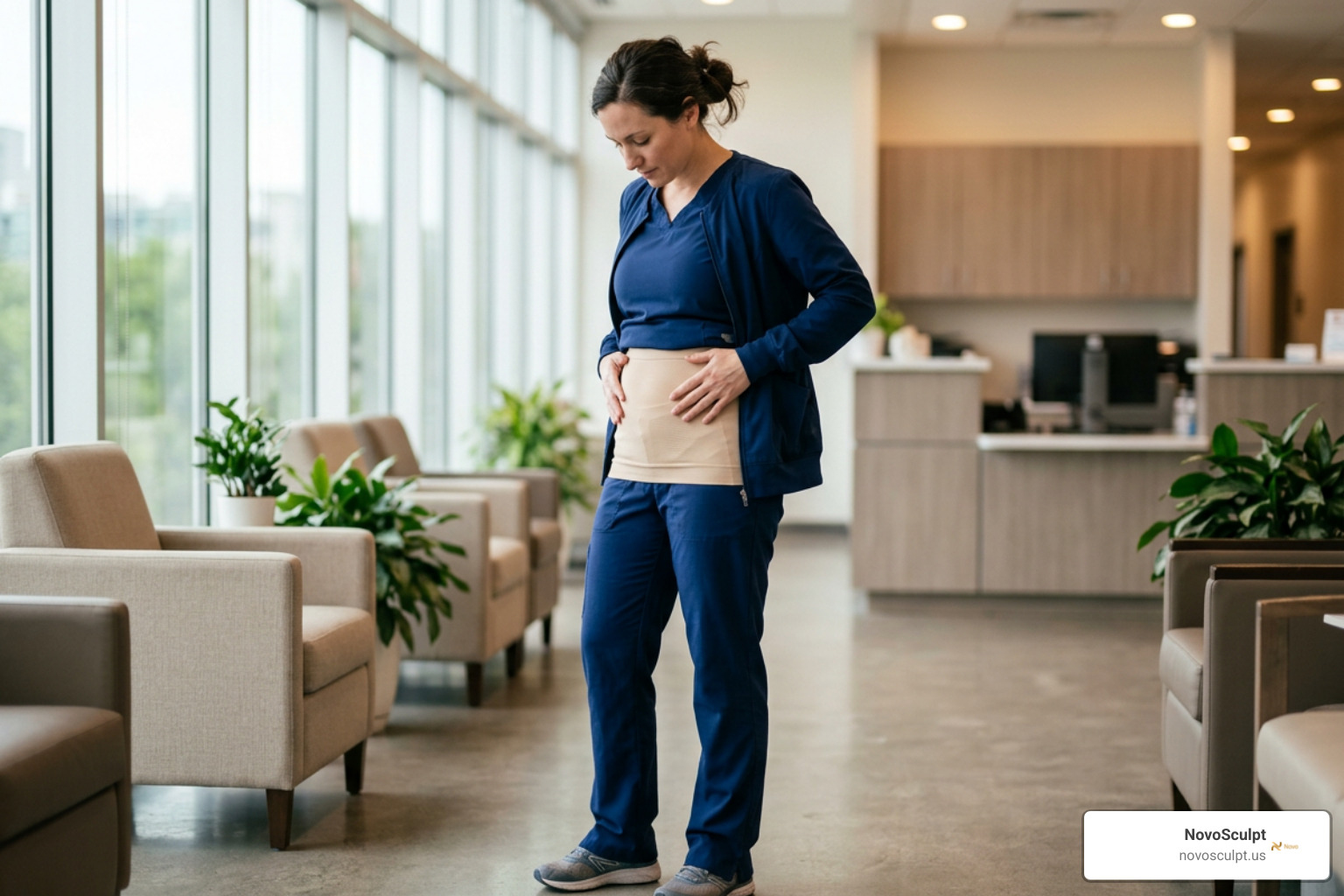
Recovery after abdominal fat removal is gradual. The timeline below describes common patterns, not a guarantee. Instructions may differ based on treatment extent, medical history, and the surgeon’s postoperative protocol.
Garment Protocols and Postoperative Care
Compression garments are commonly used after abdominal liposuction to support the treated area and provide compression as postoperative swelling changes. The exact garment type and duration should come from the treating clinician.
- First few days: Drainage from small access sites, soreness, swelling, and bruising can occur. Many patients are encouraged to walk soon after treatment to support circulation, but activity should stay light unless the clinical team advises otherwise.
- First 1–2 weeks: Some appropriately selected patients undergoing awake, minimally invasive fat removal may return to desk work and non-strenuous routines relatively quickly. Recovery varies according to treatment extent, anatomy, individual healing factors, and postoperative instructions.
- Weeks 3–6: Swelling and firmness usually continue to soften gradually. Some patients experience temporary numbness, tingling, itching, or areas that feel firm as tissues heal.
- Several months: Final abdominal liposuction results often take months to mature because residual swelling can persist and skin retraction is gradual.
Managing Swelling, Bruising, and Tissue Firmness
The guide to body sculpting recovery day by day can help patients understand symptoms and aftercare questions to discuss with the practice. Patients should follow the specific plan given at their visit rather than relying on a fixed online timeline.
Call the clinical team promptly for symptoms such as worsening one-sided swelling, increasing redness or warmth, fever, severe pain, shortness of breath, chest pain, fainting, or concerning drainage. These symptoms do not mean a complication is definitely present, but they deserve medical guidance.
Optimizing nutrition, hydration, and gentle movement can support healing. This guide on what to eat after body sculpting offers practical recovery nutrition ideas, while the treating clinician’s instructions should remain the primary guide.
Long-Term Results and Postoperative Maintenance
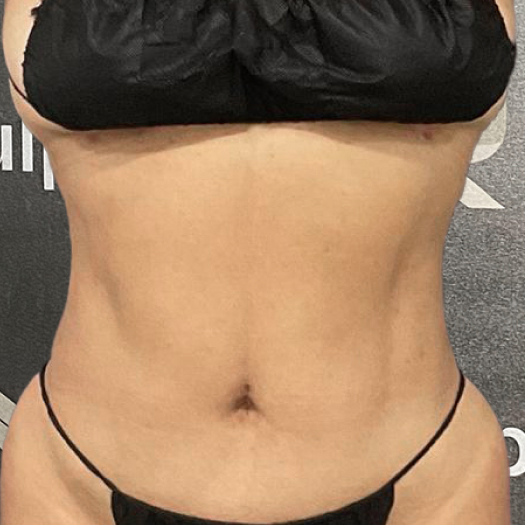
Abdominal liposuction can produce long-lasting contour improvement because treated fat cells are physically removed from the subcutaneous layer. However, the body can still change. Remaining fat cells in the abdomen and elsewhere can enlarge with weight gain, and aging, pregnancy, hormones, skin quality, and lifestyle can affect the final contour over time.
To maintain results after stomach liposuction or awake abdominal fat removal:
- Maintain a stable weight: Modest fluctuations are common, but significant weight gain can enlarge remaining fat cells and may change the balance between treated and untreated areas.
- Use nutrition and exercise as maintenance tools: Liposuction reshapes localized fat; it does not replace metabolic health, strength training, or cardiovascular exercise.
- Protect skin quality: Hydration, sun protection, smoking avoidance, and protein-rich nutrition can support skin health, although skin tightening varies by patient.
- Keep follow-up appointments: Postoperative visits allow the clinical team to monitor swelling, firmness, scars, and contour development.
Exploring clinical strategies on how to maintain results provides lifestyle habits that may help protect the investment in body contouring.
Frequently Asked Questions About Stomach Fat Removal
How does abdominal fat removal differ from a tummy tuck?
Liposuction removes localized subcutaneous fat through small access points using cannulas. It preserves the existing skin envelope and does not tighten the abdominal muscles. A tummy tuck, or abdominoplasty, removes redundant skin and can repair diastasis recti by tightening separated abdominal muscles. Some patients benefit from liposuction alone; others with significant loose skin, a lower-abdominal overhang, or muscle separation may need abdominoplasty or a combined plan after examination.
Is awake abdominal liposuction the same as traditional liposuction?
Not exactly. Traditional liposuction and awake minimally invasive fat removal both remove subcutaneous fat, but they may differ in cannula size, anesthesia plan, treatment setting, recovery expectations, and patient selection. NovoSculpt’s awake approach is designed for selected patients who want direct fat removal without general anesthesia exposure. A consultation is needed to determine whether that approach matches the patient’s anatomy and goals.
When can normal exercise and work routines be resumed?
Some patients who have minimally invasive awake body contouring return to non-strenuous desk work and light routines within a short period, while others need more time. Light walking is commonly encouraged early, but heavy lifting, intense core exercise, and high-impact workouts should wait until the treating clinician clears them. Recovery depends on treatment extent, anatomy, healing response, and the instructions provided by the clinical team.
Are fat reduction results in the abdomen permanent?
The fat cells removed during liposuction are gone from the treated area, which is why contour improvement can be long-lasting. Results are not immune to future body changes. Remaining fat cells can enlarge with weight gain, and pregnancy, aging, skin laxity, and lifestyle can affect the abdomen over time.
Who is a good candidate for abdominal liposuction in Greenwich, CT?
Good candidates are generally people with localized, pinchable abdominal fat, realistic expectations, stable overall health, and skin quality likely to retract after volume reduction. Patients in Greenwich, Fairfield County, and nearby Westchester County should expect an individualized evaluation rather than a one-size-fits-all rule. Substantial loose skin, significant diastasis recti, certain medical conditions, or goals focused on weight loss may point toward another treatment plan.
Conclusion
Abdominal liposuction can be an effective option for reshaping localized stomach, waist, and flank fat when the concern is subcutaneous fat rather than visceral fullness, loose skin, or muscle separation. Good outcomes depend on accurate diagnosis, appropriate patient selection, qualified clinical care, adherence to postoperative instructions, and realistic expectations about recovery and maintenance.
The Greenwich, CT practice offers minimally invasive awake body-contouring options for selected patients who want targeted abdominal fat removal without general anesthesia exposure. Patients from Fairfield County, Connecticut, nearby Westchester County, New York, and surrounding communities can review Novo Abs abdominal sculpting and schedule a consultation to discuss whether abdominal liposuction, awake fat removal, abdominoplasty, or another approach best fits their anatomy and goals.
